

Water Supplies Department Logo
Download Full Book IconFlip Book Icon
From Raw Water to Drinking Water
The Four Stages of Water Treatment
State-of-the-Art Water Treatment Technology
Desalination as a Strategic Water Resource
In‐situ Reprovisioning of Sha Tin Water Treatment Works
The Expansion of Green Water Treatment Works - Tai Po Water Treatment Works
Research and Development of Automated Water Treatment Monitoring
Water Treatment Works Crisis Management
Water Treatment Works Crisis Management

A water treatment works receives raw water, turning it into potable water ready for consumption from the tap. Treated water involves a series of processes and tests, and each stage is interdependent. The Sha Tin Water Treatment Works (STWTW) has the largest daily treatment capacity in Hong Kong and is typical of the city’s treatment facilities whose uninterrupted operation requires many supporting facilities as well as the collaboration of frontline staff. “The personnel responsible for daily operations always respond to the ever-changing situations," says TANG Cho-fung, the STWTW Plant Manager.

The raw water sources for STWTW are more complex than other water treatment works. Apart from receiving Dongjiang water and raw water from reservoirs, the STWTW also receives rainwater during typhoons and heavy storms. This rainwater is collected through rainwater interception tunnels and vertical shafts between Tai Po and Sha Tin. Previously, when water resources were scarce, they had been built to collect as much rainwater as possible. TANG points out that rainwater typically contains sediments; without having time to settle these sediments remain in the raw water making it turbid. The water quality of recently fallen rainwater is normally not satisfactory and requires extra water treatment. Irrespective of the quality of the raw water, the requirements for treated water quality remain unchanged, reiterating the importance of the water treatment process.

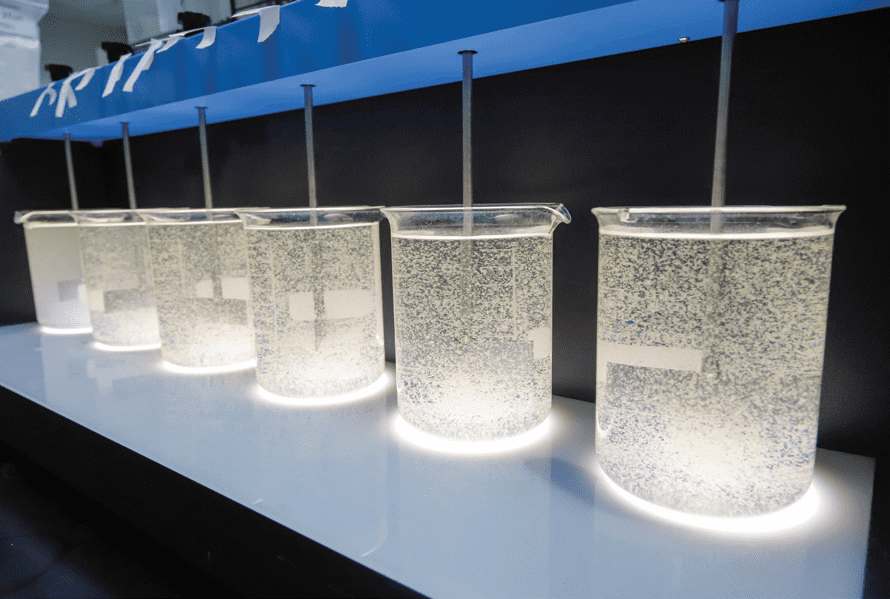
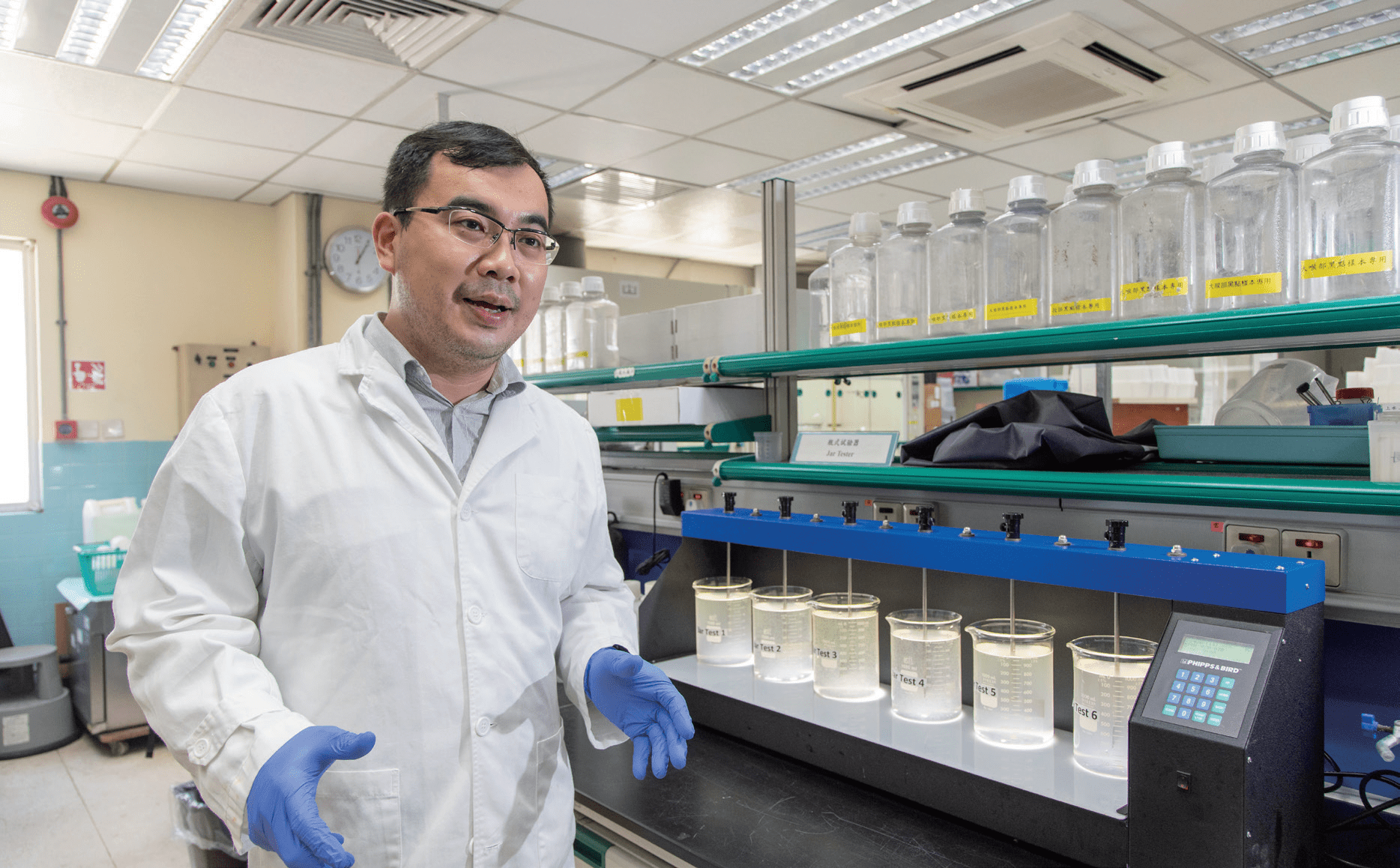
Raw water quality is highly variable in the rainy season, so the operations of the treatment works must be very adaptable to water quality conditions. “Apart from weather forecasting, there is little preparation possible. The quality of the raw water can only be determined through real-time data at the time it is received," explains TANG. In fact, staff at the water treatment works conduct jar tests on every shift. The method involves adding varying amounts of alum to a number of test jars containing raw water samples to determine the optimum flocculation dose. According to Waterworks Chemist CHAN Yuk-chi, if there is an increase in turbidity during rainstorms or a change in the ratio of raw water sources, staff from the laboratory and water treatment works will conduct jar tests more frequently to determine the optimal alum dosage.

Before the current reprovisioning of the STWTW South Works, the STWTW accounted for about a quarter of Hong Kong’s total daily production, supplying water to Sha Tin as well as central Kowloon and Hong Kong Island1. On top of that, STWTW needs to be on-standby to give emergency support. Maintaining continual water output is crucial, placing an immense burden on frontline workers. TANG states that due to the lower electricity tariff at night, STWTW would activate extra pumps between 9p.m. to 9a.m. daily to increase its capacity. This increased activity puts additional strain on equipment and increases the possibility of breakdowns.

Functioning at the heart of STWTW, the water treatment works’ six large pumps transfer treated water from the plant to Kowloon through the Lion Rock Tunnel. A separate electricity substation drives these large motors within the works premises. TANG said that the electricity supply was very stable, but there had been a temporary power outage on one occasion, "The first thing we had to do was to close the gate valve for the intake of raw water. If the raw water had kept coming in while the output of treated water was halted, the system would be in trouble during the emergency repair. The gate valve is operated by electricity, so during the power failure we immediately mobilised six or seven staff to take turns to manually close the gate valve. It took thousands of turns to finally close the gate valve."
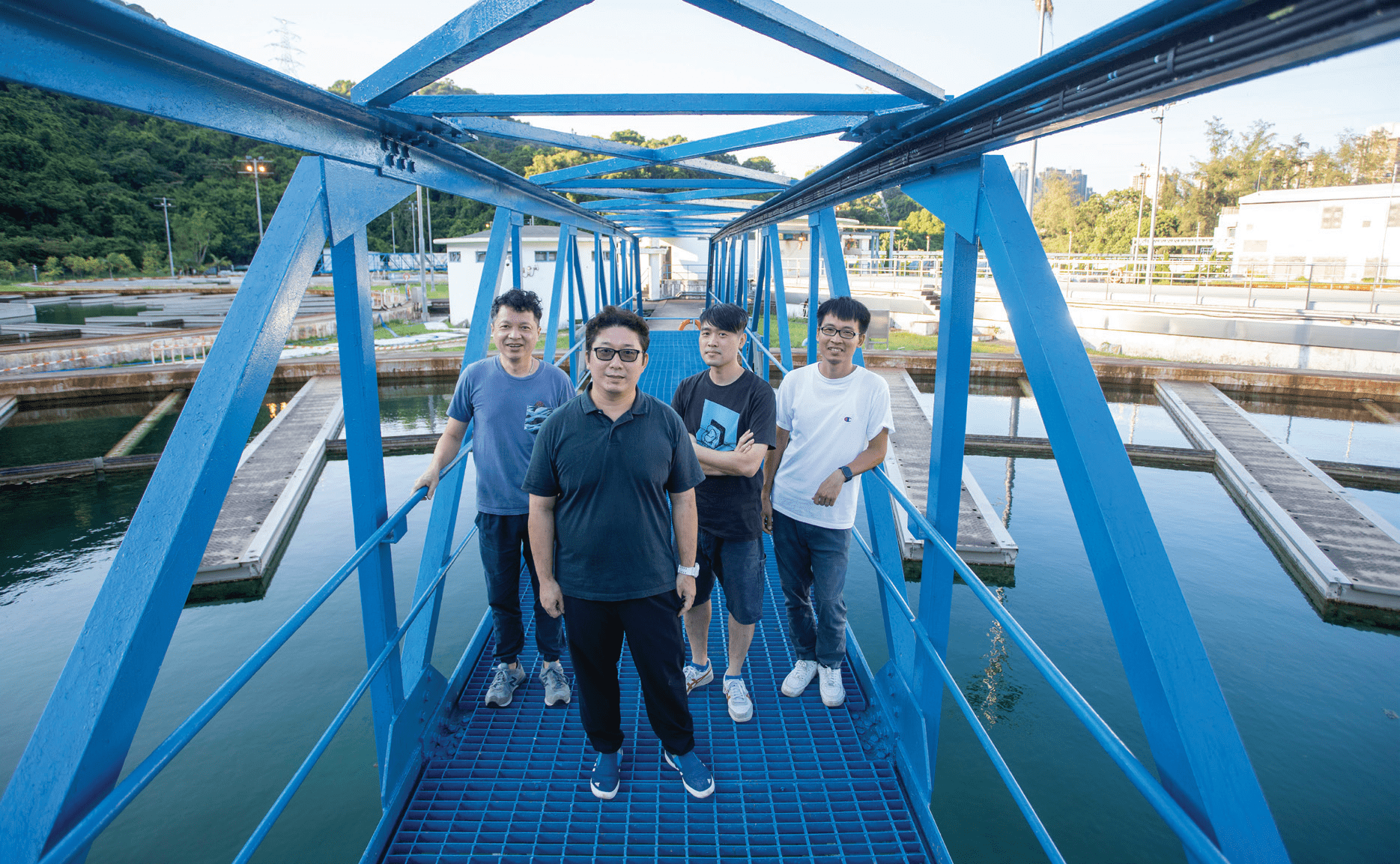
TANG Cho-fung, the STWTW Plant Manager, says the plant’s raw water sources are the most complex amongst all the treatment plants
TANG Cho-fung, the STWTW Plant Manager, says the plant’s raw water sources are the most complex amongst all the treatment plants.
Waterworks Chemist CHAN Yuk-chi says that during heavy rainfall, they sometimes require conducting three jars tests in one night
Waterworks Chemist CHAN Yuk-chi says that during heavy rainfall, they sometimes require conducting three jars tests in one night.
The chemist determine the alum dosage in raw water through jar tests
The chemist determine the alum dosage in raw water through jar tests.

Familiarity with Systems to Prepare for Crises

In recent years, many water treatment and water quality monitoring processes in the plant have become automated. To ensure gauges are issuing accurate measurements, it is essential to monitor and maintain the system. “From raw water, flocculated water, sedimented water, filtered water to drinking water, each stage of the water treatment process is equipped with water quality monitoring sensors. When we notice abnormal data, we have to find what is going on. What components or machinery are at fault? What treatment processes will be affected later on? The automatic monitoring system gives us a clue. But, it is up to our colleagues to decide how to remedy the situation,” says TANG.

While STWTW has undergone the reprovisioning of the South Works, challenges arising from the transition from the old to the new facilities is inevitable. Normally, the pH level of treated water is adjusted between 8.2 and 8.8 by dosing hydrated lime before output. When the readings show an increase in the turbidity of the treated water, operators know something is wrong. "There was once a partial mechanical failure in the chemical house that resulted in overdosing of hydrated lime to the treated water, hence the turbidity of treated water increase. By then, the treated water had already been delivered to the pump and was ready to be supplied to the service reservoirs for delivery to consumers," revealed TANG.

To handle the situation, the frontline staff promptly implemented emergency measures to prevent the affected water from reaching consumers. Fortunately, a nearby service reservoir was undergoing maintenance and could be utilised. With the collaborative efforts of colleagues, the team closed individual valves to create a separate waterway, eventually isolated and temporarily stored the affected water in the service reservoir. Simultaneously, while the water treatment facilities had handled the affected water, staff had to also swiftly clean the facilities in the shortest possible time before restoring regular services. "We noticed the water level in the local fresh water supply reservoirs was dropping, so we had to speed-up the treatment process to meet the water demands in the area. There was hardly time to make a decision and deal with the problem," says TANG. To avoid similar incidents in the future, the water treatment works has reviewed its operating procedures and engaged a consultant to design a programme that monitors the thickness of the hydrated lime layer in the hydrated lime water to prevent any build-up or dispersion.

Every crisis offers an opportunity to enhance the system. Frontline personnel are able to quickly identify and rectify problems due to their familiarity with the design principles and daily operations of water treatment works. It is this daily appraisal approach that is instrumental in forming and strengthening management expertise.

  1. Prior to the recent reprovisioning, the STWTW had a design capacity of 1.227 million cubic metres (mcm). The 20 water treatment works in Hong Kong have a combined capacity of 4.68 mcm per day.