





Water, in a liquid or solid form and mainly as seawater, covers over 70% of the globe's surface area. Water is also the most common solvent in the world, capable of dissolving many substances. As water flows, it dissolves different sorts of substances along its way. Rainwater falling onto a mountainside or into a reservoir has a shorter distance to travel and generally accumulates fewer substances. However, after reaching the sea, as the run-off distance is longer, more substances are collected by water as it is carried along. Since ancient times, due to the metabolic and chemical action of numerous marine organisms, seawater has harboured high chemical levels and accumulated elements. Scientists have discovered that seawater contains more than 90 substances and elements. Oxygen and hydrogen have the highest levels, as well as chlorine, sodium, sulphur, magnesium, calcium and potassium, etc.
Various treatment processes including filtration and disinfection are thus required for turning naturally collected raw water into potable water for human consumption, which involves the removal of a large number of visible and invisible substances. Drinking water standards are set to limit these substances below the permissible health levels. The Hong Kong Drinking Water Standards (HKDWS) have been developed with reference to World Health Organization recommendations and international practices. Furthermore, a set of drinking water standards suitable for local context has been established after being reviewed by water experts. The drinking water standards promulgated in April 2021 include 57 chemical parameters, 2 radiological parameters and 1 microbiological parameter. Each of these has an upper limit. The Government of the Hong Kong Special Administrative Region (HKSAR Government) also includes a series of aesthetic guidelines to ensure that the appearance, taste and odour of water are acceptable (see "Hong Kong's Drinking Water Standards" in Chapter 5 for details).
The previous chapter discusses Hong Kong's efforts and achievements over the last century in exploiting and harvesting its water resources. These efforts resulted in the creation of a reservoir system that has become a collection of iconic and elegant architectural structures, and the introduction of Dongjiang water has put an end to Hong Kong’s century-long water supply issues. The raw water treatment or filtration presented in this chapter shows the growing demand for enhancing water quality, following the stabilisation of the water source supply. While water purification and filtration are concepts that have been developed by different societies since ancient times, the regulation of water quality is a more recent practice. The City of London in the United Kingdom was the first to enact legislation in 18521 and has become a precedent for many places to follow. In Hong Kong, the first Albany Filter Beds at Mid-Levels were completed in 1890 in conjunction with the construction of the city’s second reservoir system, the Tai Tam Reservoirs.
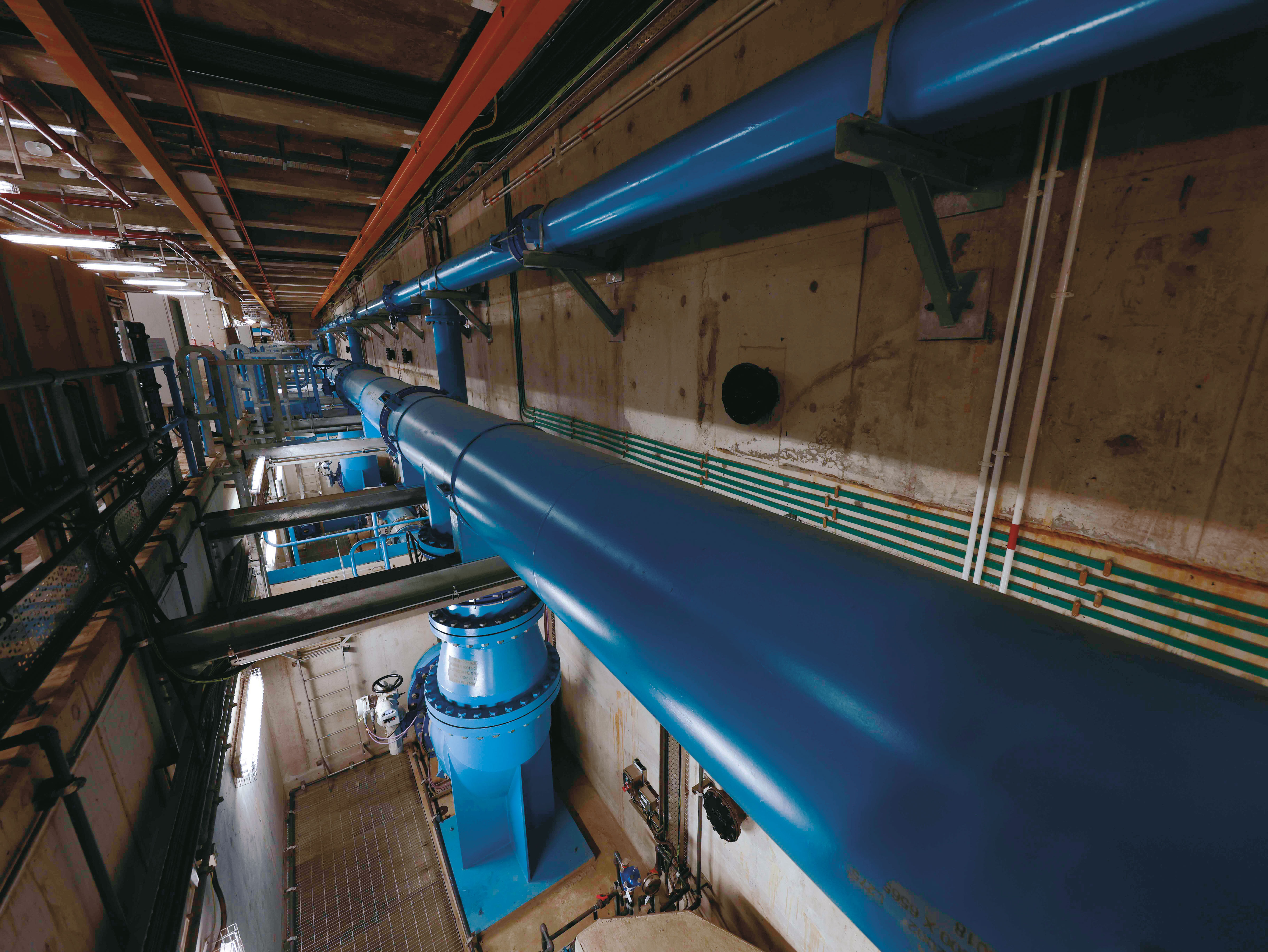
There are currently 20 water treatment works in Hong Kong. In addition to treating raw water to comply with the HKDWS, these facilities are also subject to stringent water quality monitoring and control. Raw water originates from a wide range of outdoor areas and its quality varies with the surrounding environment. To meet that challenge, the treatment processes adopted at the water treatment works use different biological, physical and chemical processes, and have adopted recent technological developments for safeguarding the water quality of the public water supply.
In response to climate change and to create a wider range of local water resources, the Water Supplies Department has further explored the use of seawater and grey water by applying new filtration technologies and systems. This chapter, entitled “Water Treatment”, outlines the evolution of water treatment technology in Hong Kong, including its scientific principles, with particular reference to new technologies adopted since the turn of the millennium.
List of Water Treatment Works in Hong Kong (as at 31 March 2022)
| Year of Commissioning | Name | Raw Water Source(s) and status | Capacity (million cubic metres per day) |
|---|---|---|---|
| 1928 | Shek Lei Pui Water Treatment Works | Decommissioned | 0.08 |
| 1948 | Eastern Water Treatment Works | Decommissioned | 0.05 |
| 1956 | Tai Po Road Water Treatment Works | Kowloon Reservoir, Shek Lei Pui Reservoir, Kowloon Reception Reservoir, Kowloon Byewash Reservoir | 0.03 |
| 1958 | Tsuen Wan Water Treatment Works | Shing Mun Reservoir, Tai Lam Chung Reservoir | 0.32 |
| 1960 | Aberdeen Water Treatment Works | Decommissioned | 0.02 |
| 1963 | Silver Mine Bay Water Treatment Works | Tai Lam Chung Reservoir, Shek Pik Reservoir | 0.16 |
| 1964 | Sha Tin Water Treatment Works | Dongjiang Water, Plover Cove Reservoir, High Island Reservoir, Lower Shing Mun Reservoir | 0.54 |
| 1970 | Red Hill Water Treatment Works | Tai Tam Upper Reservoir, Tai Tam Byewash Reservoir, Tai Tam Intermediate Reservoir, Tai Tam Tuk Reservoir | 0.02 |
| 1972 | Tai O Water Treatment Works | Shek Pik Reservoir, Yi O Intake | 0.002 |
| 1982 | Tuen Mun Water Treatment Works | Tai Lam Chung Reservoir | 0.37 |
| 1985 | Sheung Shui Water Treatment Works | Dongjiang Water, Plover Cove Reservoir | 0.20 |
| 1985 | Yau Kom Tau Water Treatment Works | Dongjiang Water, Plover Cove Reservoir | 0.25 |
| 1989 | Pak Kong Water Treatment Works | Plover Cove Reservoir, High Island Reservoir | 0.80 |
| 1989 | Cheung Sha Water Treatment Works | Shek Pik Reservoir | 0.006 |
| 1992 | Au Tau Water Treatment Works | Dongjiang Water, Plover Cove Reservoir | 0.33 |
| 1996 | Sham Tseng Water Treatment Works | Tai Lam Chung Reservoir | 0.037 |
| 1996 | Siu Ho Wan Water Treatment Works | Tai Lam Chung Reservoir, Shek Pik Reservoir | 0.15 |
| 1997 | Ma On Shan Water Treatment Works | Plover Cove Reservoir | 0.23 |
| 2000 | Ngau Tam Mei Water Treatment Works | Dongjiang Water, Plover Cove Reservoir | 0.23 |
| 2003 | Tai Po Water Treatment Works | Dongjiang Water, Plover Cove Reservoir | 0.80 |
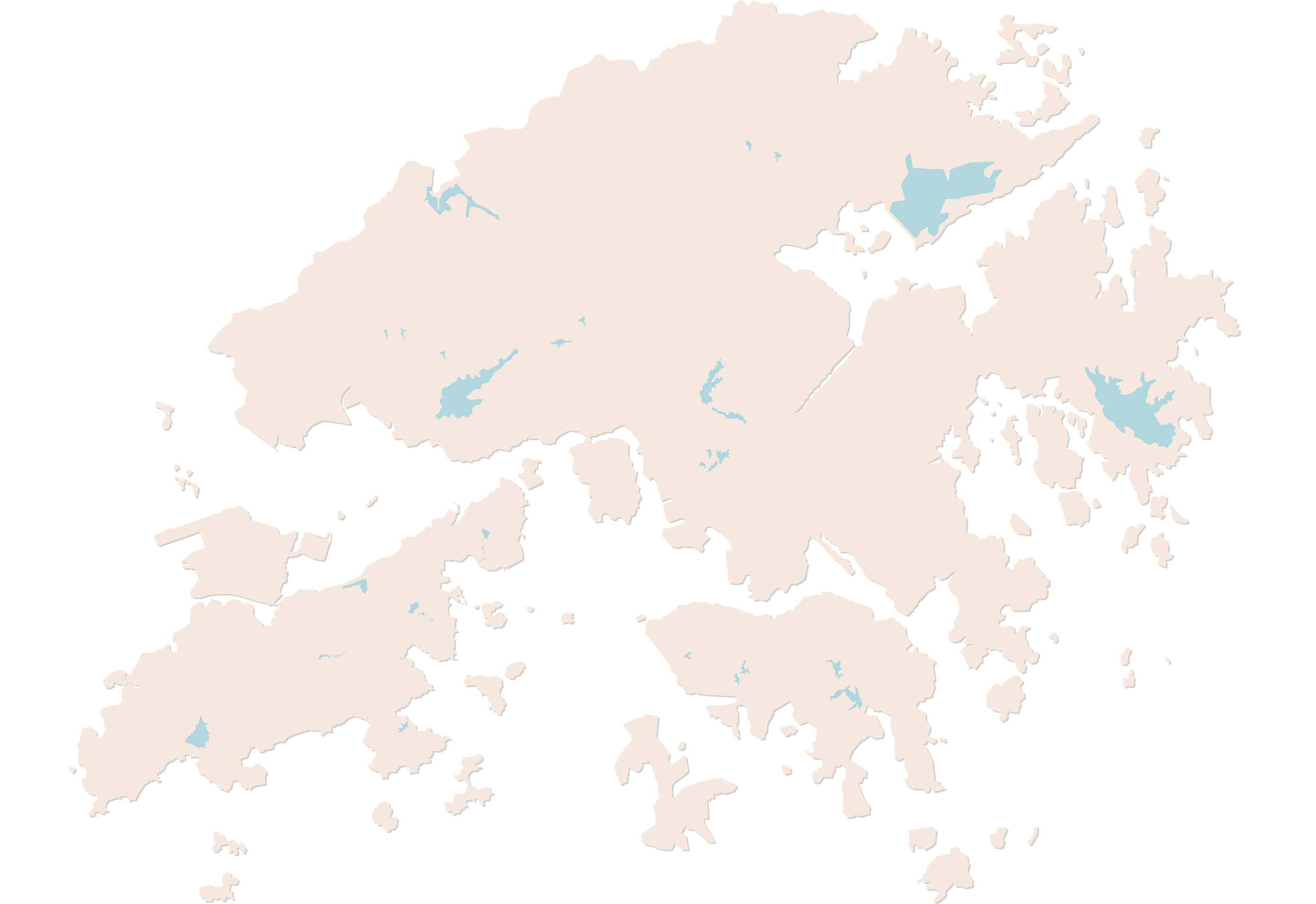
- Sheung Shui Water Treatment Works
- Tai Po Water Treatment Works
- Ngau Tam Mei Water Treatment Works
- Au Tau Water Treatment Works
- Tuen Mun Water Treatment Works
- Sham Tseng Water Treatment Works
- Yau Kom Tau Water Treatment Works
- Tsuen Wan Water Treatment Works
- Sha Tin Water Treatment Works
- Ma On Shan Water Treatment Works
- Pak Kong Water Treatment Works
- Shek Lei Pui Water Treatment Works
- Tai Po Road Water Treatment Works
- Siu Ho Wan Water Treatment Works
- Tai O Water Treatment Works
- Cheung Sha Water Treatment Works
- Silver Mine Bay Water Treatment Works
- Aberdeen Water Treatment Works
- Eastern Water Treatment Works
- Red Hill Water Treatment Works
- Tseung Kwan O Desalination Plant
- King's Printer of Acts of Parliament. (n.d.). An Act to make better Provision respecting the Supply of Water to the Metropolis. https://www.legislation.gov.uk/ukpga/Vict/15-16/84/enacted