




Hong Kong was founded. In the first census the population was 7,450.
Hong Kong set-up the Surveyor General’s Office, responsible for the city’s infrastructure. The first appointed Surveyor General was Alexander GORDON.
Hong Kong’s population rapidly increased following the outbreak of the Taiping Rebellion in China.
The Kowloon Peninsula, south of Boundary Street, became part of the British colony.
The third deadliest typhoon ever recorded in Hong Kong killed over 2,000 people, equivalent to nearly 8% of the population at the time.
The Colonial Office appointed Consulting Engineer, Osbert CHADWICK, to undertake a comprehensive review. His report on Hong Kong’s sanitation of the living environment and water supply was published.
The government established the Sanitary Board, whose duties included the collection of waste buckets, commonly known as “night soil”.
In the same year, the Surveyor General’s Office was renamed as the Public Works Department.
The Water and Drainage Department was established under the Public Works Department and responsible for relevant capital works.
Waterworks Ordinance enacted.
The position of Surveyor General was renamed the Director of Public Works.
Hong Kong suffered a large outbreak of bubonic plague. The plague was most serious in the Tai Ping Shan district of Sheung Wan, where the Chinese population was particularly concentrated.
Britain leased the New Territories from China.
The Colonial Office commissioned Osbert CHADWICK to conduct a study on the sanitary conditions of Hong Kong.
CHADWICK recommended to divide the Water and Drainage Department into two independent departments. This was deemed unfeasible by the Director of Public Works, who instead proposed the appointment of two Executive Engineers to oversee waterworks and drainage respectively.
Amendments to the Waterworks Ordinance introduced volumetric charging, using meters and the rider main system.
Establishment of The University of Hong Kong - the first university in Hong Kong.
A serious shortfall in rainfall occurred during the summer of 1928. During the next 12 months, the total rainfall in Hong Kong amounted to only 946.7 mm, a 60% decrease in the average annual rainfall.
The government’s Administrative Report for the year noted that the Public Works Department comprised 13 sub-departments, including a separation of the waterworks and drainage departments.
The Public Works Department is underpinned by 14 sub-departments, including the Construction of Waterworks and the Maintenance of Waterworks.
The outbreak of the Second Sino-Japanese War resulted in significant migration to southern China. As a consequence, Hong Kong’s population exceeded one million people.
The Waterworks Ordinance was amended. The water-related divisions of the Public Works Department reorganised as the Waterworks Office in the following year. Operating on a separate budget and self-financed, the Waterworks Office was partially decentralised from the Public Works Department.
The Japanese army attacked and took control of Hong Kong, which remained under its occupation for three years and eight months.
The Japanese army formally surrendered.
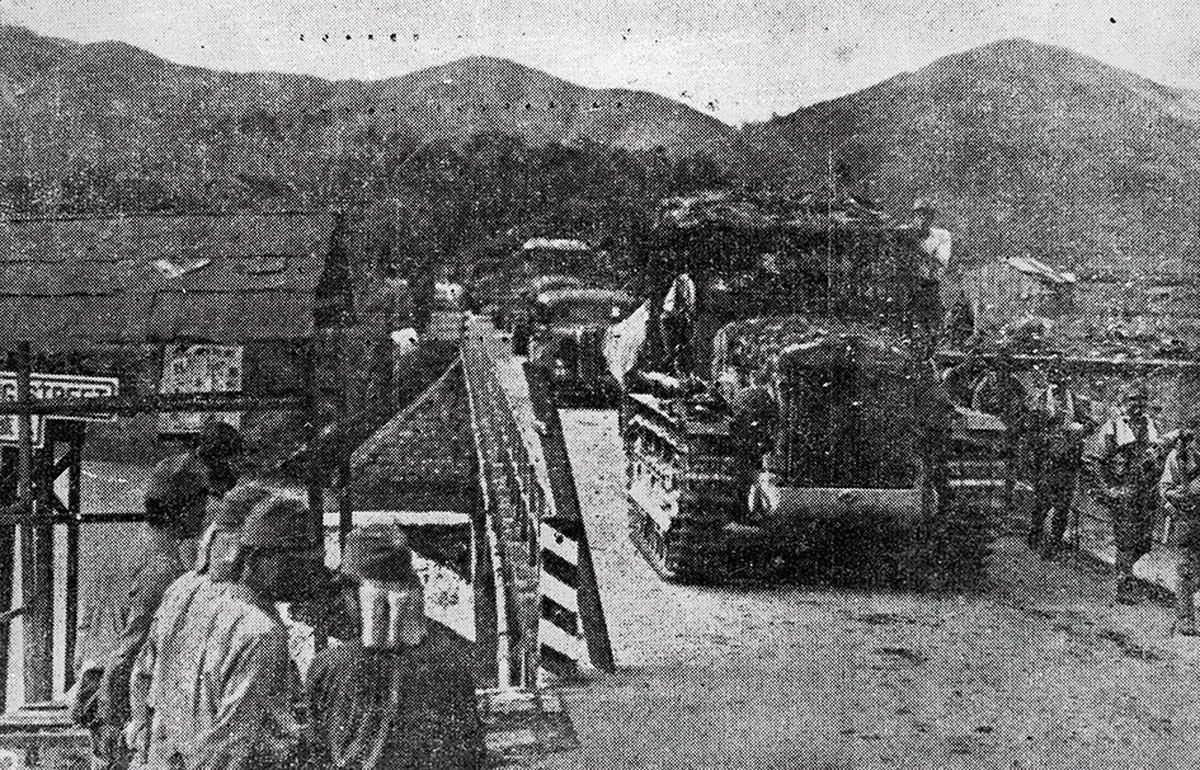
A large fire broke out in the Shek Kip Mei squatter area, resulting in nearly 58,000 people being left homeless.
Hong Kong experienced an annual rainfall of only 901.1mm.
As a consequence of the water shortage, the government declared a plan for water rationing. At its most severe, the city’s water supply was restricted to four hours every four days.
There was a substantial increase in the price of crude oil during the second oil crisis.
Hong Kong’s final period of water rationing was imposed in May 1982, after which the government announced the lifting of all water restriction measures and restored round-the-clock water supply.
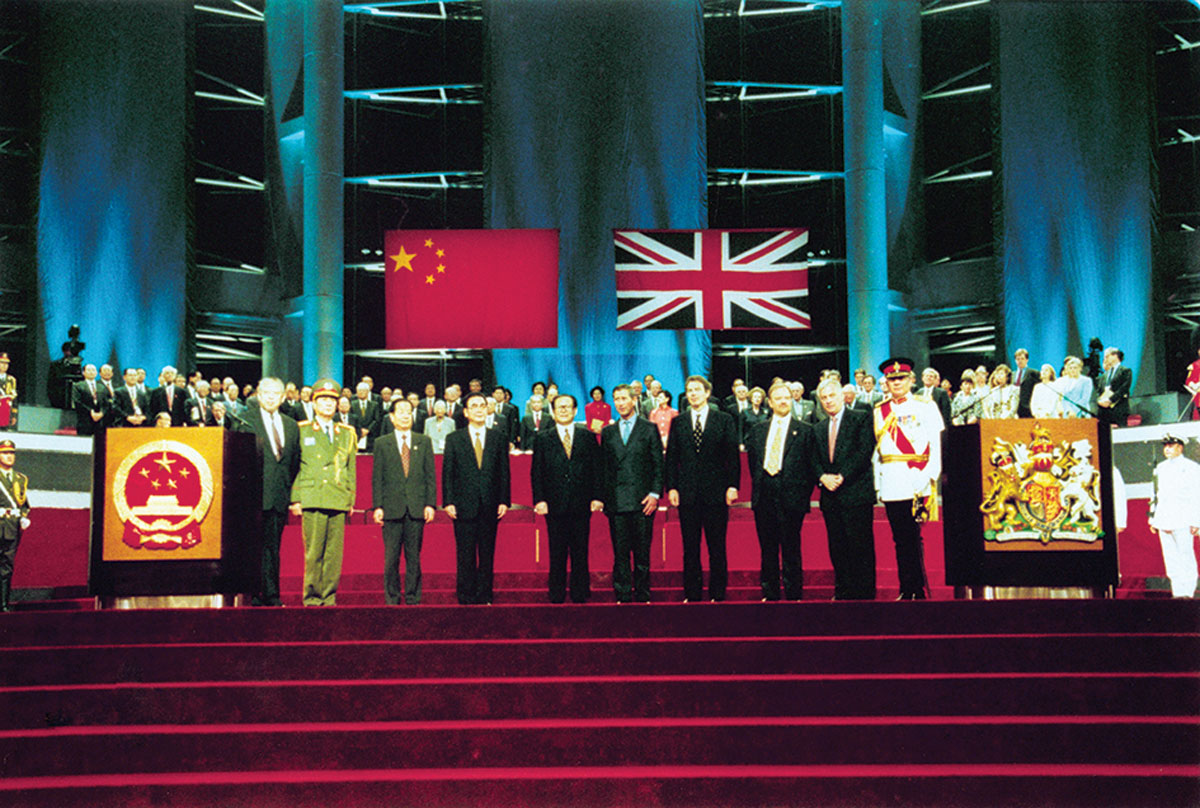
Hong Kong returned to China.
After the Sichuan earthquake on 12 May, the Water Supplies Department (WSD) joined the HKSAR Government’s public health professional team to assess the water quality of affected areas.
The Central Government formulated the ‘Water Resources Distribution Plan in the Dongjiang River Basin of Guangdong Province’, stipulating upper limits of water supply for each region.
Tap water samples of some housing estates were found to have an excessive lead content. The HKSAR Government established a task force to investigate and carried out a comprehensive review of the water safety monitoring system for improvement.
The HKSAR Government launched the "Hong Kong Smart City Blueprint”.
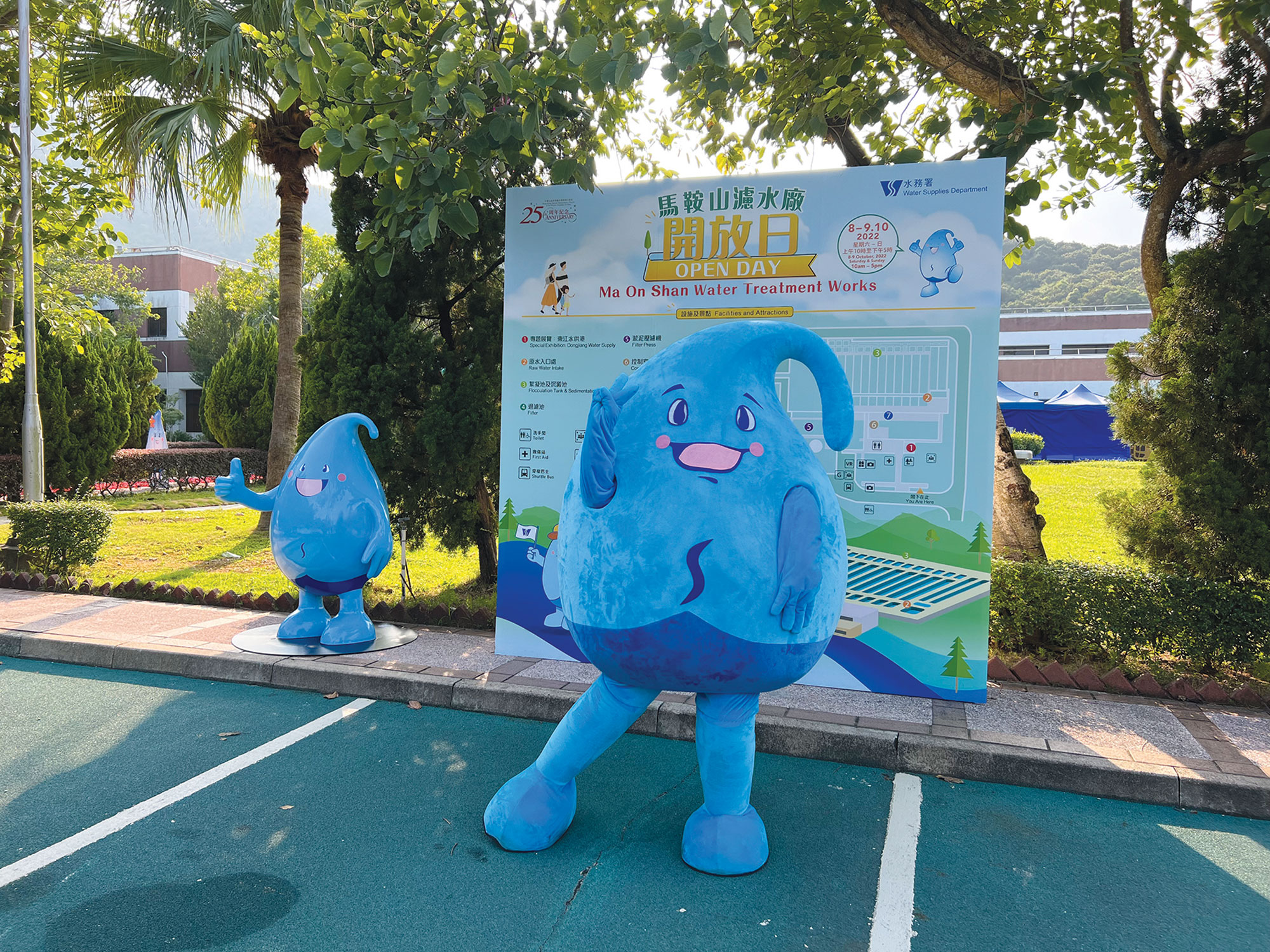
The 25th Anniversary of Hong Kong’s return to China.
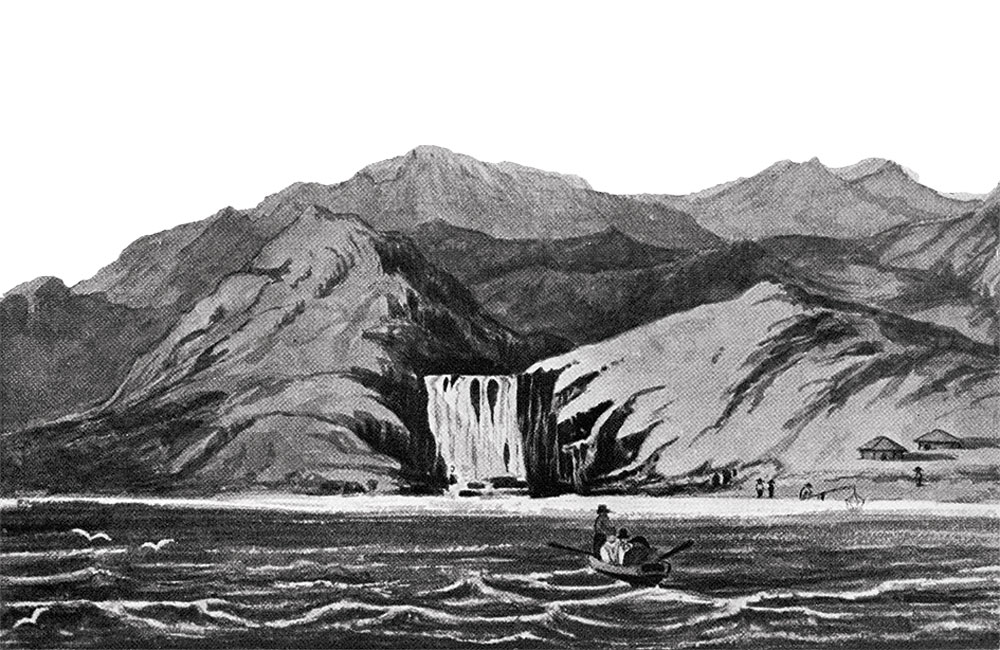
Hong Kong lacked fresh water resources. Local residents mainly relied on mountain streams or wells for daily use and farming irrigation.
The government allocated funds to excavate wells for free water supply to the public.
The government invited plans for proposals for the development of fresh water supply, offering a prize of £1,000. The proposal put forth by S.B. RAWLING, a Clerk of Works in the British Royal Engineering Department, advocating a reservoir in the Pokfulam Valley was accepted.
The government introduced a 'water rate', levied annually at 2% of the gross annual value of a property, to fund the construction of waterworks.
Construction of the first impounding reservoir in Hong Kong was completed, the Pokfulam Reservoir at the western side of Hong Kong Island.
The Pokfulam Reservoir extension and construction of the Pokfulam Conduit were undertaken to enhance the water supply.
Construction of the first phase of the Tai Tam Group of Reservoirs, located in the southern part of Hong Kong Island.
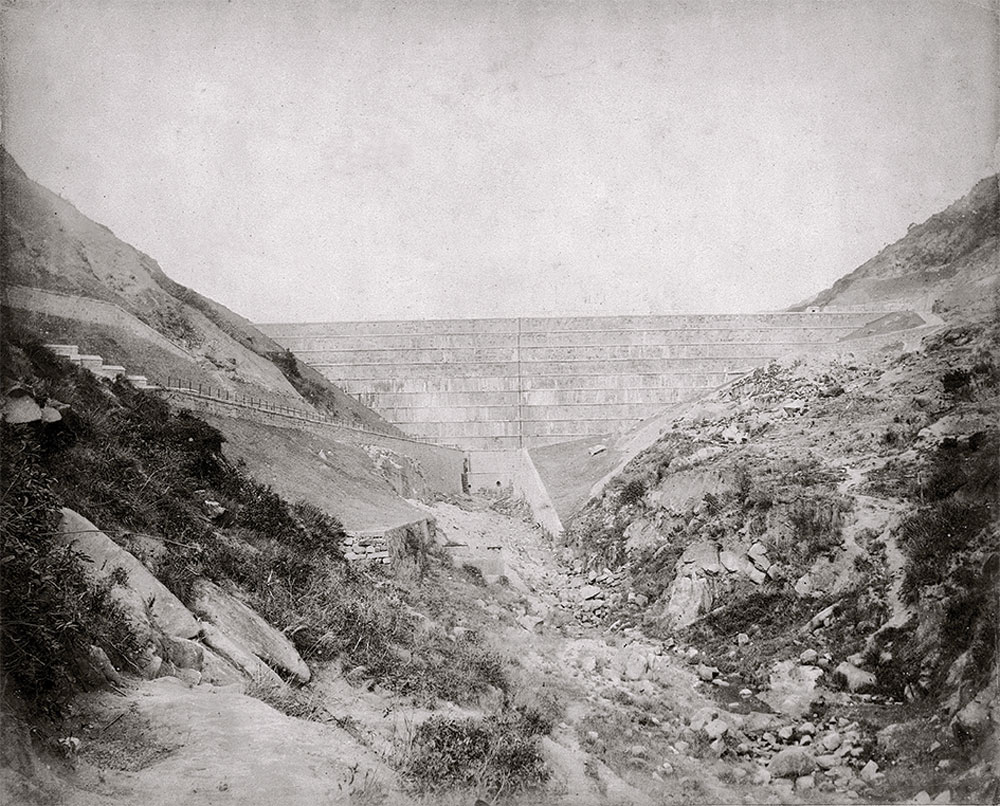
Albany filter beds under construction.
Water treatment was introduced.
The first water supply system for Kowloon was completed with a water pumping station at Yau Ma Tei. Part of this water pumping station still stands at 344 Shanghai Street as a Grade I historical building.
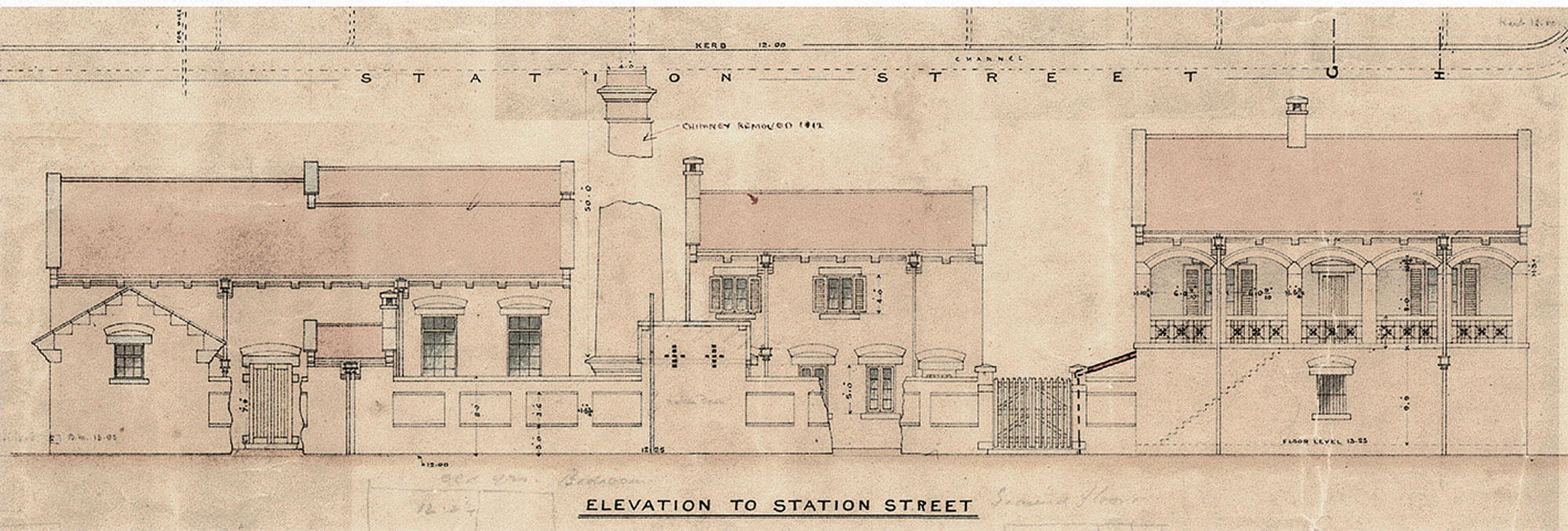
The government introduced a water metering and charging system in Kowloon.
Wong Nei Chung Reservoir was completed.
The government commenced the construction of Kowloon Reservoir.
The government introduced a new provision in the Waterworks Ordinance mandating the installation of water meters for all consumers in Hong Kong and a "user pays" policy, which was opposed by the local Chinese community in Hong Kong Island.
In addition to the implementation of a water metering system, the government also introduced a rider main system to supply water to its users free of charge. In case of insufficient fresh water supply, the rider mains would be the first to be shut off. Affected areas would then be supplied with water by rotation.
Tai Tam Byewash Reservoir and Tai Tam Intermediate Reservoir were completed.
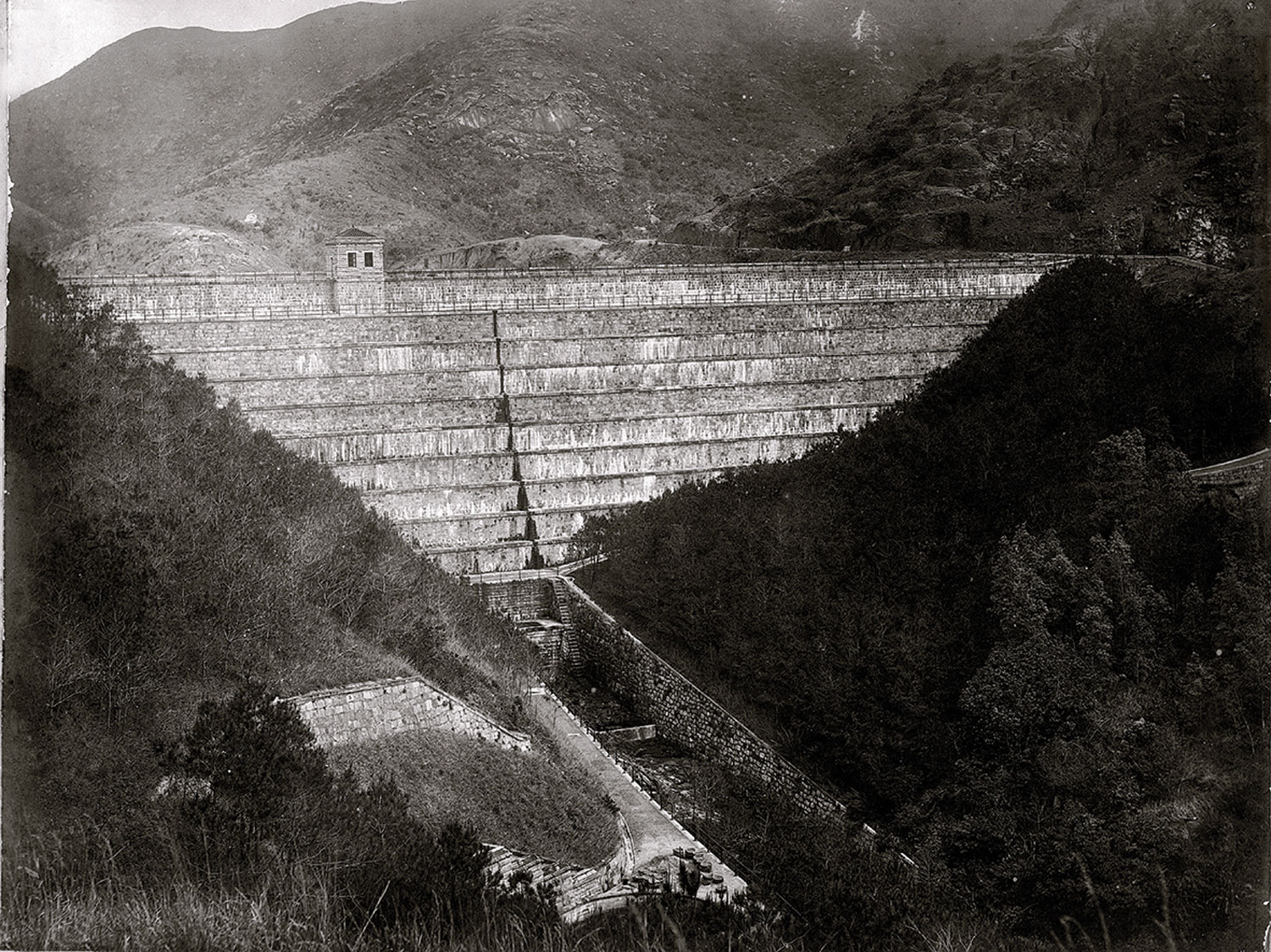
Kowloon Reservoir was completed for harvesting rainwater. Kowloon’s first reservoir-based water supply system replaced the previous system of three wells and the Yau Ma Tei Pumping Station.
Tai Tam Tuk Reservoir was completed. Its main dam was 1,200 feet long. At the time, it was recognised as “Asia’s Number One Dam."
Shek Lei Pui Reservoir was completed.
Kowloon Reception Reservoir was completed.
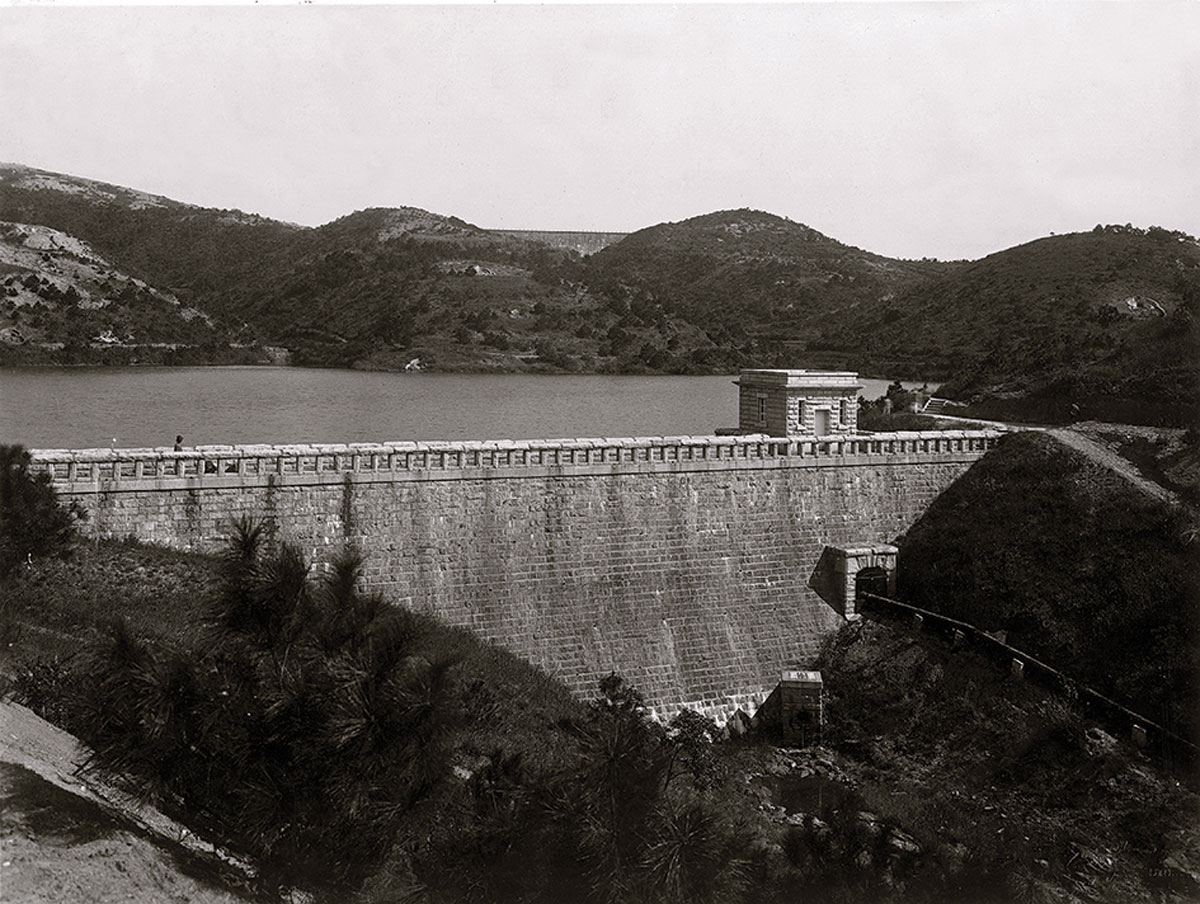
In the second half of the year, the government implemented Stage VII water rationing, its highest-level of water rationing.
The first cross-harbour submarine pipeline was completed. It transferred rainwater gathered from reservoirs in the New Territories to Hong Kong Island.

Kowloon Byewash Reservoir was completed.
Aberdeen Upper and Lower Reservoirs were completed.
The government enacted regulations to abolish the rider main system.
Shing Mun Reservoir was completed.
The licensing of plumbers was first introduced in the Waterworks Regulations under the Waterworks Ordinance.
Tai Lam Chung Reservoir was completed.
The Water Authority proposed installation of seawater flushing systems for the resettlement areas at Shek Kip Mei and Lei Cheng Uk.
The government amended the Regulation 19 of the Buildings Ordinance, mandating newly built private buildings to be equipped with a flushing sewerage system. This led to a gradual expansion of the seawater flushing network.
The government reached an agreement with the Guangdong authorities to provide 22.73 million cubic metres of water per year from the Shenzhen Reservoir.
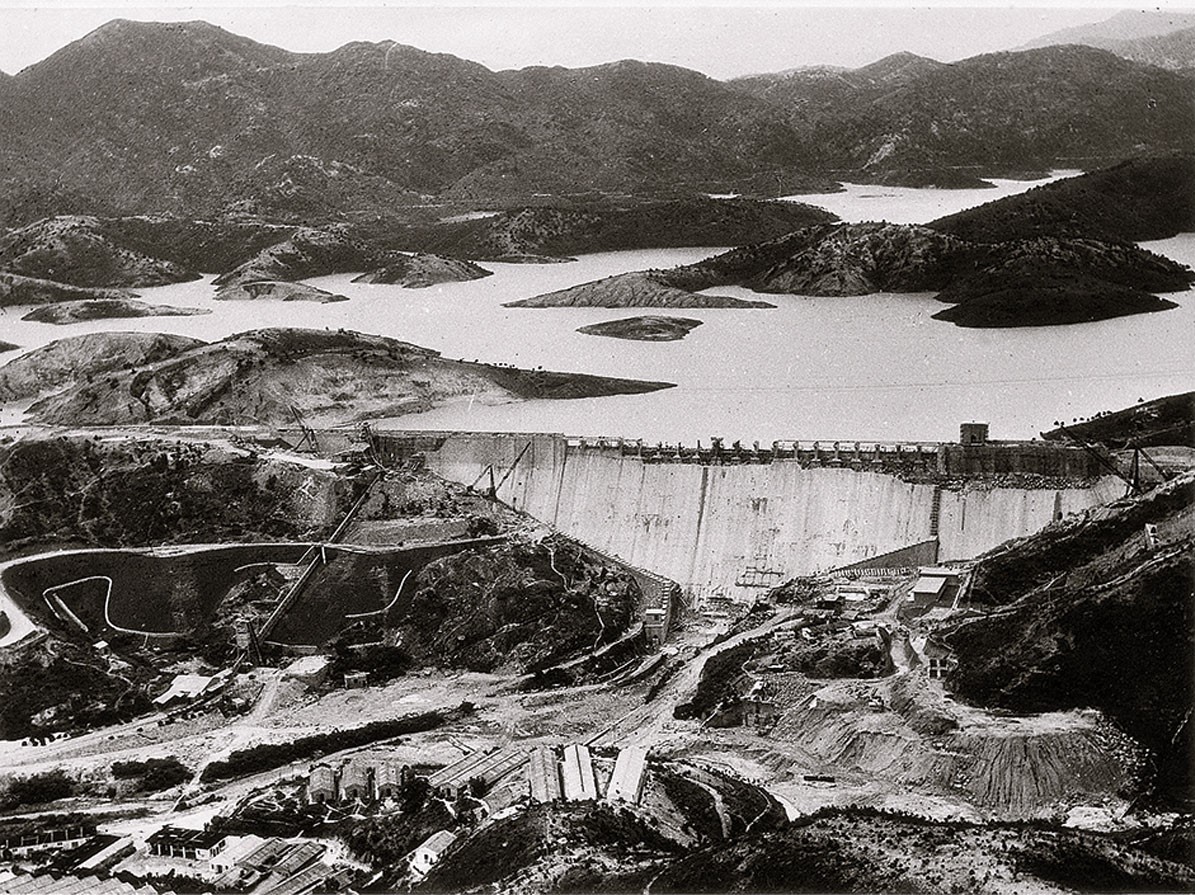
Shek Pik Reservoir was completed.

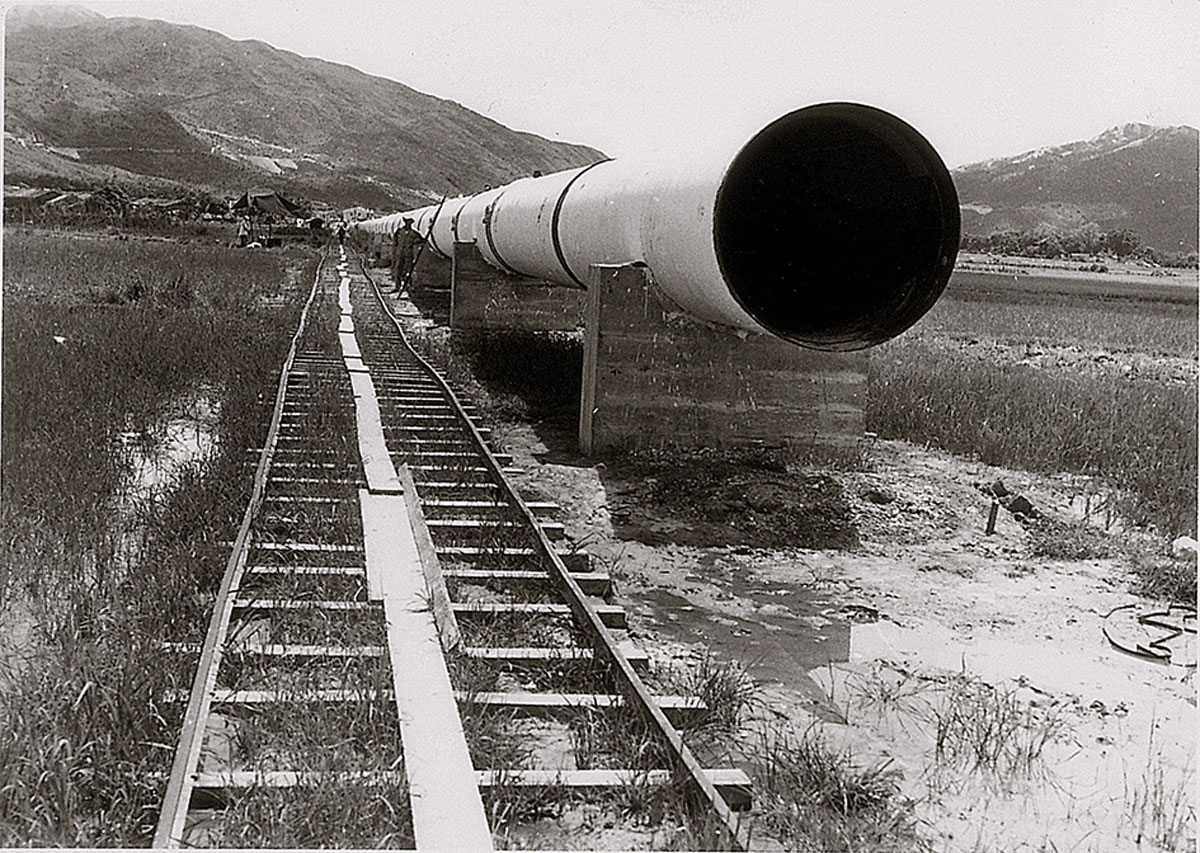
The Guangdong Provincial Government officially began to supply water to Hong Kong through the Dongjiang-Shenzhen Water Supply Scheme.
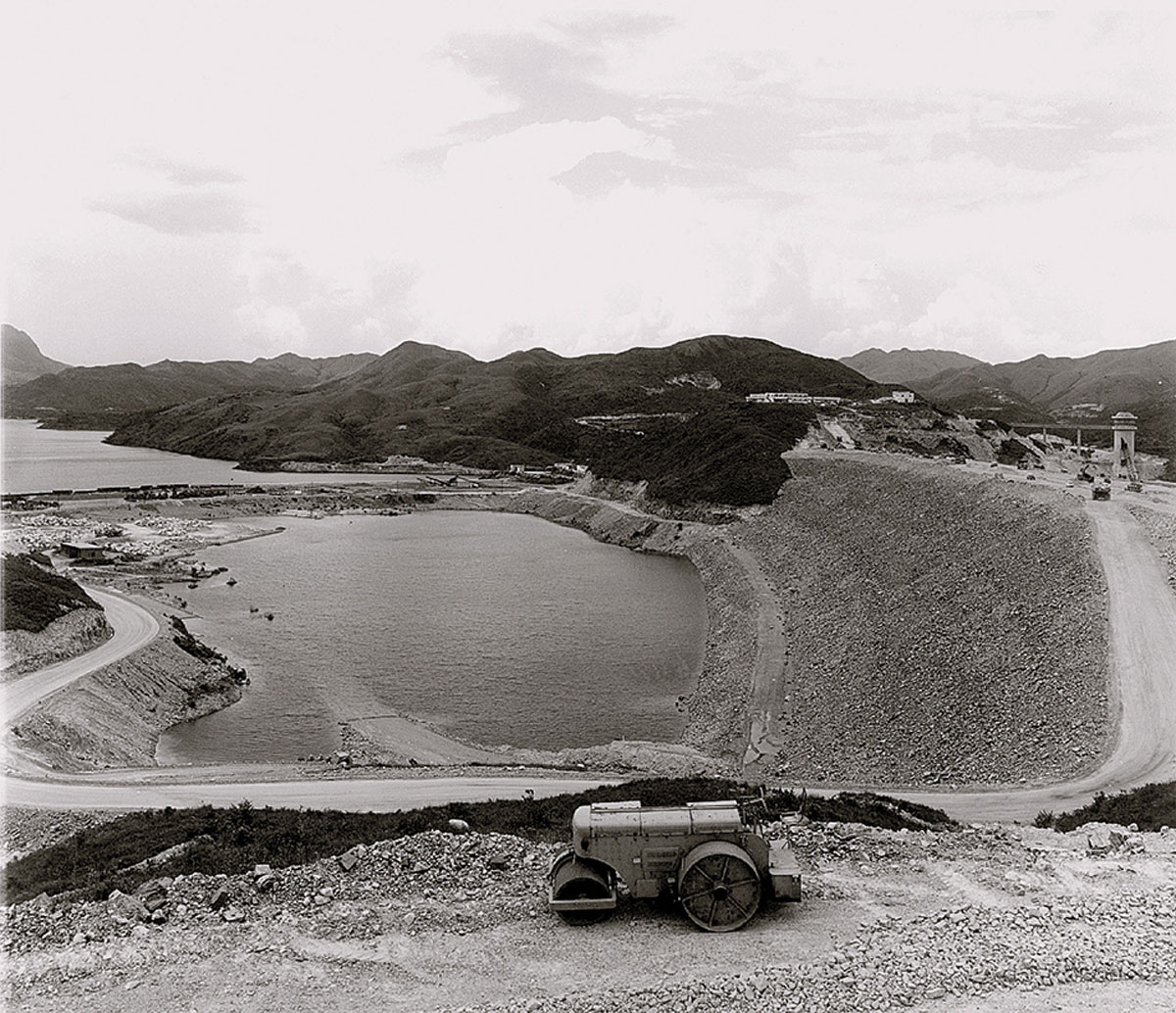
Plover Cove Reservoir was completed, making it the second largest reservoir in Hong Kong, and the first reservoir in the world built in the sea.
Flushing seawater was supplied free of charge.
Lok On Pai Desalter at Castle Peak was officially commissioned. At that time, it was the largest of its kind in the world.
High Island Reservoir was completed. It is the largest reservoir in terms of capacity in Hong Kong.
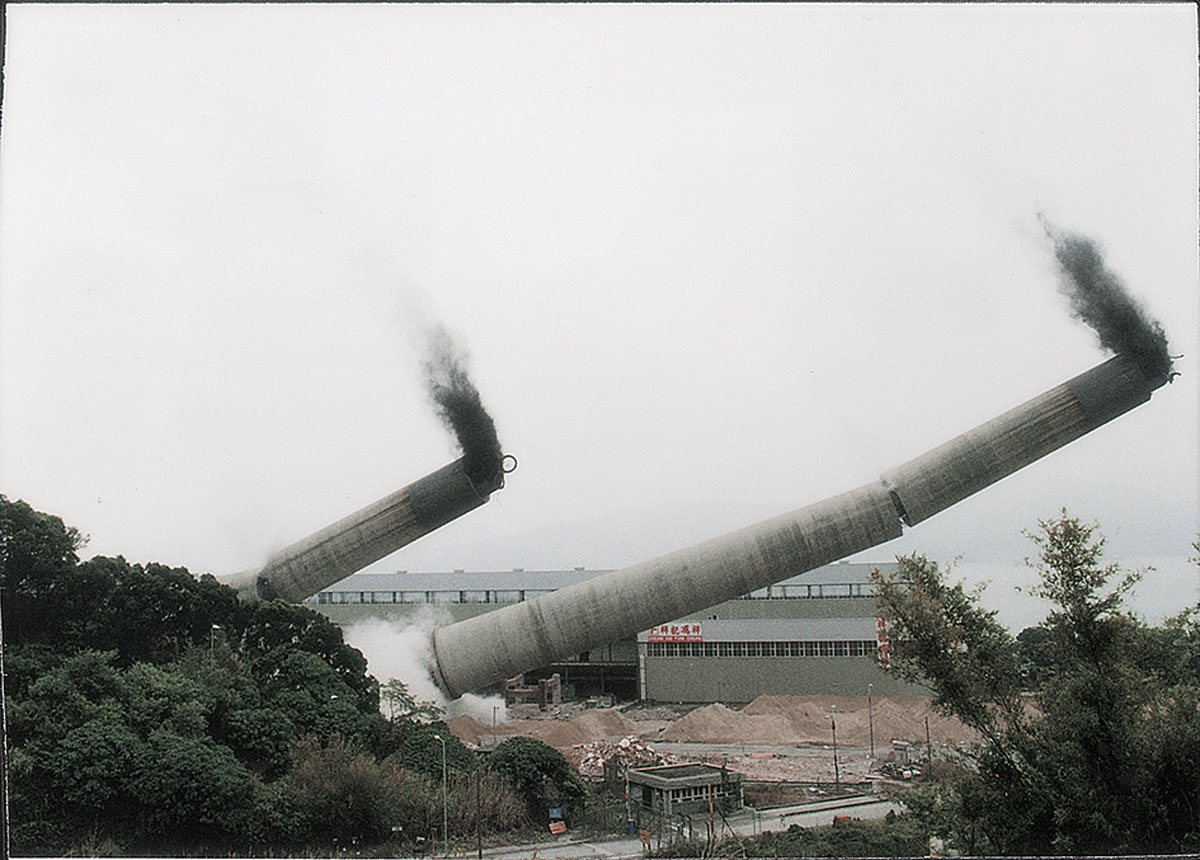
Lok On Pai Desalter was decommissioned due to the rise in fuel prices.
The Waterworks Office was formally upgraded to the Water Supplies Department.
In its first ever decline, Hong Kong’s industrial water consumption decreased by 1.7%.
Water supplied from the mainland accounted for 80% of Hong Kong’s total water consumption.
The Advisory Committee on the Quality of Water Supplies was founded.
The WSD’s seawater flushing project was presented the Chris Binnie Award from the Chartered Institution of Water and Environmental Management in recognition of its achievements in sustainable water management.
The government endorsed the Master Metering Policy.
The Agreement for the supply of Dongjiang water to Hong Kong adopted a “package deal lump sum” approach, which guaranteed Hong Kong an annual supply of up to 820 million cubic metres of Dongjiang water.
The WSD implements its own Water Safety Plans in accordance with World Health Organization’s recommendations.
The HKSAR Government implemented the Total Water Management Strategy.
Forty-one waterworks structures were declared monuments.
The WSD’s first two service reservoirs built in a cavern, Western Salt Water Service Reservoir and Western No.2 Salt Water Service Reservoir, were commissioned.
The WSD enhances water quality monitoring at impounding reservoirs with an unmanned surface vessel system.
The Advisory Committee on the Quality of Water Supplies was renamed the Advisory Committee on Water Resources and Quality of Water Supplies.
The Biosensing Alert System is awarded the Silver Prize of the Team Award (Internal Service) in the Civil Service Outstanding Service Award Scheme. The system also received the Bronze Prize of the Departmental Service Enhancement Award (Large Department Category).
A hydropower system was introduced at the Tuen Mun Water Treatment Works.
Expansion of Tai Po Water Treatment Works commenced.
The WSD launched the Voluntary Continuing Professional Development Scheme for Licensed Plumbers.
The Advisory Committee on Water Resources and Quality of Water Supplies was renamed the Advisory Committee on Water Supplies.
The first floating solar power system installed at Shek Pik Reservoir.
The HKSAR Government launches an Action Plan for Enhancing Drinking Water Safety in Hong Kong. This plan includes the introduction of the “Hong Kong Drinking Water Standards”.
The WSD launched its Smart Water Model.
The Drinking Water Safety Advisory Committee was established.
The construction of the Tsuen Kwan O Desalination Plant commenced, aiming to expand fresh water supply in Hong Kong by 5-10%.
Following the completion of its strategy review and update, the WSD launched the Total Water Management Strategy 2019 with the formulation, evaluation and recommendation of strategic options.
H2OPE Centre at Tin Shui Wai, a water resources education centre, opened to the public.
The masonry bridge of Pok Fu Lam Reservoir was declared a monument.
Regulation 47 of the amended Waterworks Regulations enacted, to regulate landlords against overcharging tenants for water.
Q-Leak Underground Water Mains Leak Detection Training Centre opened.
The HKSAR Government signed a new agreement with the Water Resources Department of Guangdong Province for the supply of Dongjiang water; the previous “package deal lump sum” approach was enhanced to a “package deal deductible sum”.
The Antiquities Advisory Board designated five service reservoirs as Grade I Historic Buildings; and Grade III Historic Building status for a pumping station and a service reservoir tunnel portal.
First stage of the Tseung Kwan O Desalination Plant is expected to be commissioned.
The WSD commenced the mid-term review of the Total Water Management Strategy 2019.
Expected completion of Shek Wu Hui Water Reclamation Plant.
Grey Water Treatment Plant for Development of Anderson Road Quarry to be commissioned in phases from 2024 onwards.
Installation of around 2,400 District Metering Areas for the Water Intelligent Network scheduled for completion.
Expected completion of the reprovisioning of Sha Tin Water Treatment South Works.
Relocation of Diamond Hill Fresh Water and Salt Water Service Reservoirs to Caverns scheduled for completion.