



"Hong Kong people’s recent awareness of water quality issues has encouraged us to improve our various services. For example, we have tried to shorten the duration of water staying in the supply system to be more effective in maintaining the water’s residual chlorine levels and prevent the growth of bacteria in the pipes. In other words, Hong Kong’s water is generally “fresher” in recent years," says Chief Waterworks Chemist CHOY Tak-yip.
CHOY, who has worked in the WSD for more than 20 years, says a chemist’s duties in the WSD seem subtle but every small adjustment in the water treatment process can make a significant difference to the overall water quality. He added, “Chemists are the gatekeepers of the water supply system, ensuring that the quality of Hong Kong’s drinking water is maintained at a high standard through testing, research and development, as well as training and monitoring of global trends in water quality requirements and control.”
The work of a waterworks chemist includes collecting and testing water samples for monitoring and the control of water quality at various strategic points, from raw water sources, impounding reservoirs to water treatment works, service reservoirs, supply connection points and recently, taps at customers' premises. The number of samples taken each year is approximately 170,000. The objective is to ensure that at all stages of the water supply system, water quality is normal and safe for consumption. Water quality is measured by being in compliance with the 60 parameters of the Hong Kong Drinking Water Standards (HKDWS) and the 10 parameters of the Aesthetic Guidelines. To this end, the WSD has kept abreast of the latest technologies by using advanced equipment, such as inductively coupled plasma-mass spectrometers and gas chromatograph-mass spectrometers. The equipment is highly sensitive and efficient, which allows the testing of water samples for a wide range of metals and organic compounds to be quickly completed. Chemists are able to promptly verify the safety of drinking water using scientific data from this equipment.
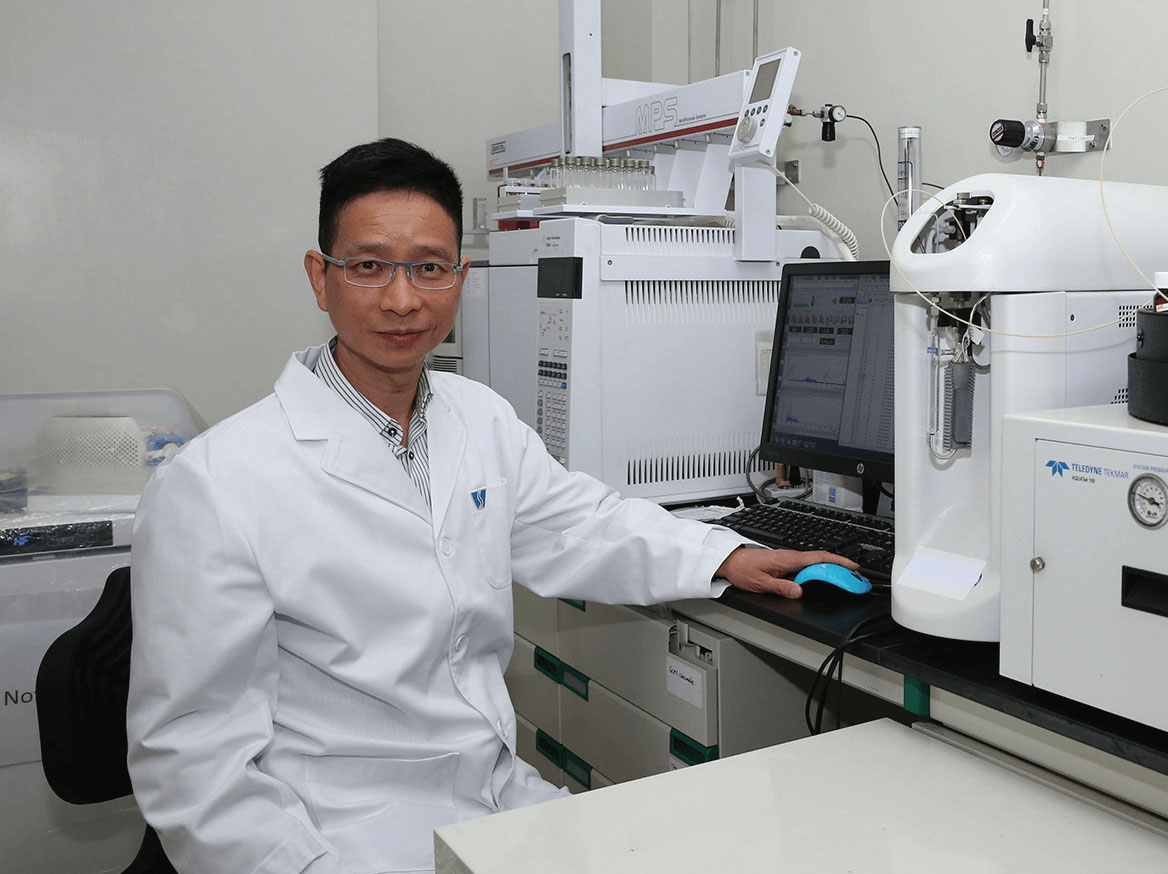
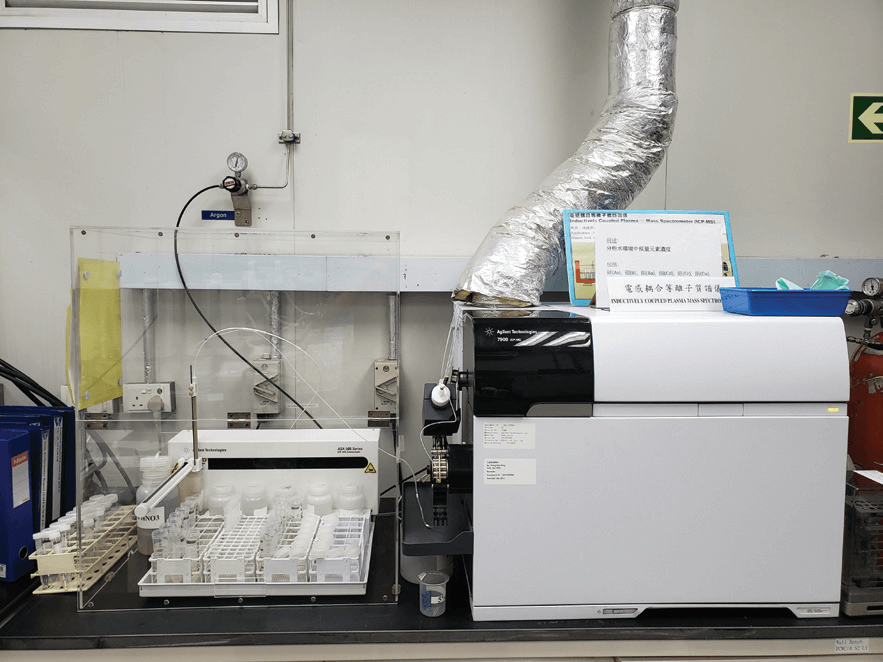
"Apart from routine work, we also carry out independent research and development, such as using unmanned surface vessels (USV) to monitor water quality and take water samples. We also developed a Biosensing Alert System using zebrafish and light-emitting bacteria. These are innovative developments in enhancing water quality control,” says CHOY. Waterworks chemists’ dedication and their work has been well recognised, for example the Biosensing Alert System won a Silver Prize as a Team Collaboration Award (Internal Service) and a Bronze Prize for the Departmental Service Enhancement Award (Large Department Category) in the Civil Service Outstanding Service Award Scheme 2013; and, the USV system was awarded the Merit Award in the Innovation and Technology Bureau's "Leading Towards Robotics Technologies Innovation Competition" in 2021.
Waterworks chemists also work beyond the laboratory and regularly exchange and collaborate with the academic community to further monitor and enhance the quality of Hong Kong's drinking water. For example, an ecological floating island was set up at Lam Tsuen River on which plants are cultivated to absorb nutrients from the river water, thereby avoiding the proliferation of bacteria and aquatic organisms in the raw water and maintaining water quality.
CHOY highlighted that the “lead in drinking water incident” in 2015 was a significant experience for him. This was especially true when the drinking water in a kindergarten water dispenser was found to contain excessive amounts of lead. This prompted the WSD to step-up testing of all kindergarten water dispensers in Hong Kong. During the incident, the WSD laboratory operated 24 hours a day for three to four weeks, and also mobilised non-WSD laboratories to quickly assist the daily water testing workload. Apart from the workload, CHOY was worried about the impact on children as well as the pressure from teachers, parents and the media. “I reminded myself that we needed to handle the incident carefully, without creating any panic. We also had to deal with it promptly to prevent children from drinking any contaminated water.” He explained further, "On the positive side, the incident has greatly raised the public's concern about water quality, especially the maintenance of the inside service in their properties. The WSD has also implemented a series of measures to enhance water safety, which is an opportunity to bring about improvements in society."
In 2004, the WHO introduced a risk-based Water Safety Plan that recommended the world’s water suppliers to assess their entire supply chain from source to tap, identify possible risks at each stage, and strengthen monitoring at critical points as early as possible to prevent water quality incidents. The three most important elements of the Water Safety Plan are “system assessment”, “monitoring” and "management and communication”.
Using the WHO recommendations as reference, the WSD developed and implemented its own departmental Water Safety Plan in 2007 to review its supply processes and ensure Hong Kong’s quality of water from source to the distribution system. It also highlighted the regulatory and advisory role of the government towards inside services. In 2017, the WSD further developed an integrated "Drinking Water Quality Management System", which can be regarded as a more advanced version of WSD's Water Safety Plan that included an enhanced risk assessment and monitoring of inside services.
The WSD conducts regular assessments and planning under the Drinking Water Quality Management System to ensure Hong Kong’s water safety. It covers five major components, including: Hong Kong's Water Quality Policy, Principles of Water Quality Management, Health-based Targets, WSD's Water Safety Plan and Independent Surveillance. The key points are as follows:
- To establish Health-based Targets for drinking water;
- To further develop a Water Safety Plan using the risk-based and multiple barriers approach to ensure that the quality of drinking water meets the Health-based Targets; and
- To establish an Independent Surveillance System to verify compliance with the Health-based Targets and the effective implementation of the Water Safety Plan through a Public Health Context and Health Outcomes.
- Establish a dedicated working group comprising staff from various sections of the WSD who are familiar with the operation of the water supply system;
- The team reviews the entire water supply system to identify potential risks and to develop control measures and improvement plans;
- Set-up monitoring procedures, frequency and targets, and develop handling procedures if the targets are not met; and
- Crisis management plans, emergency response manuals, water quality incident management plans, training programmes and information dissemination mechanisms have been developed to facilitate early preparedness.