



In September 2017, the DEVB and WSD launched the "Action Plan for Enhancing Drinking Water Safety in Hong Kong” (Action Plan). Then, the DEVB established the Drinking Water Safety Advisory Committee in January 2018, engaging multi-disciplinary professionals to examine drinking water safety in Hong Kong from different disciplines, including engineering, chemical and medical, as well as drawing from overseas experience. As part of the Action Plan, the HKSAR Government strengthened the monitoring of water safety, the regulation of plumbing materials and the commissioning requirements for new plumbing installations. The HKSAR Government also provides training and support for the industry. According to Ir Edmund LEUNG Kwong-ho, Chairman of the Committee: “The water supply monitoring system has improved over the years. I hope that the public ensures that water tanks in private buildings are kept clean and contractors use appropriate plumbing materials. Hong Kong can then leverage its advantage of having a closed water supply system to maintain drinking water safety.”
Appointed to the Committee at the invitation of the DEVB, Ir Edmund LEUNG Kwong-ho is an engineer by profession and Chairman of the Committee. The Committee’s duties include reviewing Hong Kong’s regulatory regime for drinking water safety, Hong Kong Drinking Water Standards and related policies. They are also tasked with formulating new research directions based on global drinking water safety concerns and to review the work of the WSD in safeguarding and enhancing drinking water safety in Hong Kong. Ir LEUNG explained, “I recognised the significance of drinking water safety upon assuming this public service role and the responsibilities of the Committee. We don’t have any preconceptions to examine Hong Kong’s drinking water supply system and understand the risks involved and the countermeasures taken. The experts from various disciplines will discuss their areas of expertise and exchange views from different perspectives, such as chemistry, medicine, and engineering. We clarify issues and explore opportunities for improvement of the WSD.”
Ir LEUNG says that the dense population in Hong Kong’s urban areas facilitated the development of a cost-effective drinking water surveillance system. The closed drinking water supply system that has been in place for years has proven its effectiveness in safeguarding drinking water safety. The Committee has witnessed Hong Kong’s drinking water safety system becoming more sophisticated over time, ensuring a high level of safety.
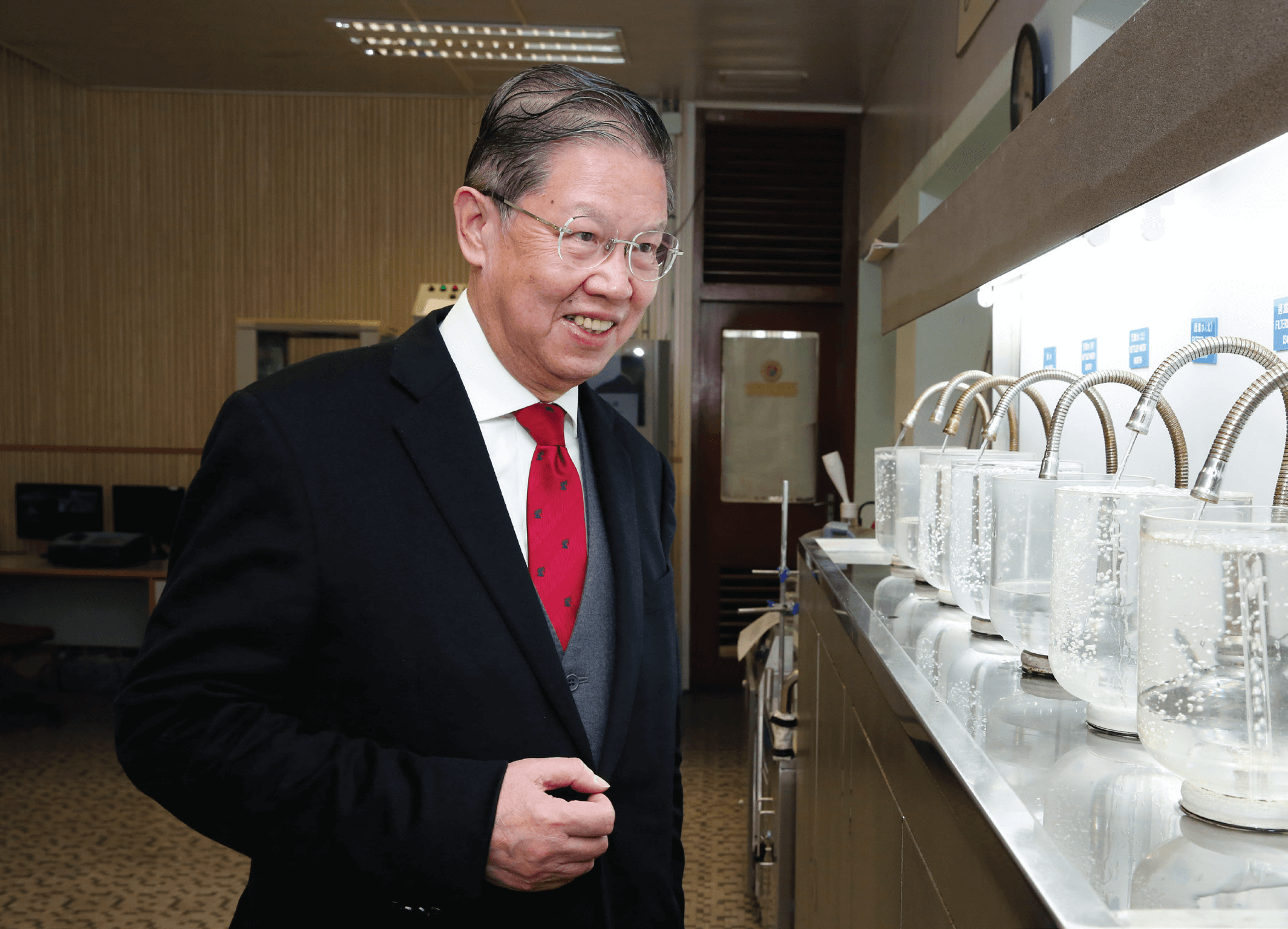
Ir LEUNG says that while the Committee is autonomous and reports directly to the DEVB, its responsibilities includes reviewing the WSD's efforts towards ensuring water safety. “Based on my project management experience, I believe that communication and collaboration can enhance job performance.” He mentioned that the Committee occasionally raises questions with the WSD on current water safety issues. “For instance, we have discussed the effects of the discharge of radioactive wastewater from the Fukushima Daiichi Nuclear Power Plant in Japan into the sea on Hong Kong’s drinking water in the aftermath of Fukushima nuclear incident.” The committee also questioned WSD staff about the soil samples taken from the top of a service reservoir in Sham Shui Po which tested positive for the bacterium Burkholderia pseudomallei (melioidosis). Ir LEUNG explained, “This gave the Committee confidence in the safety of drinking water as the WSD promptly addressed these public concerns by providing specific replies.”
Ir LEUNG further explained that radioactive waste water would naturally dilute in the ocean and the WSD has developed radiological monitoring and contingency plans for the desalination plants to ensure that desalinated seawater meets safety standards. “Regarding melioidosis, the Committee understands that there was no evidence linking infection to drinking water. To address our concerns, the WSD has taken additional safety measures including increasing the residual chlorine content in the treated water supply and installing high efficiency particulate air filters at the air vents of the service reservoirs.” The Committee members discuss these issues from their professional perspectives and periodically review the measures taken by the WSD to safeguard drinking water safety.
After the water is delivered to private properties through the drinking water supply system, the most critical aspect of drinking water safety is the maintenance of the inside service. According to Ir LEUNG, risks from water filters and dispensers are often overlooked by the public. “So, to ensure safety, water filters should be used in accordance with the manufacturer's guidelines. Components, such as filter cartridges, should be regularly replaced to avoid damage and failure.” Not installing a backflow prevention valve or having a clogged water filter can cause contaminants to accumulate in the filter, leading to contamination of the drinking water in an individual unit or even the entire building’s inside service. He added, “When purchasing dispensers, ensure that they have safety test certification to avoid the use of leaded solder. Leaded solder has a low melting point and is sometimes used in the construction of non-water supply facilities.” Consumers should pay attention to a product’s certification to ensure it is safe and of good quality.