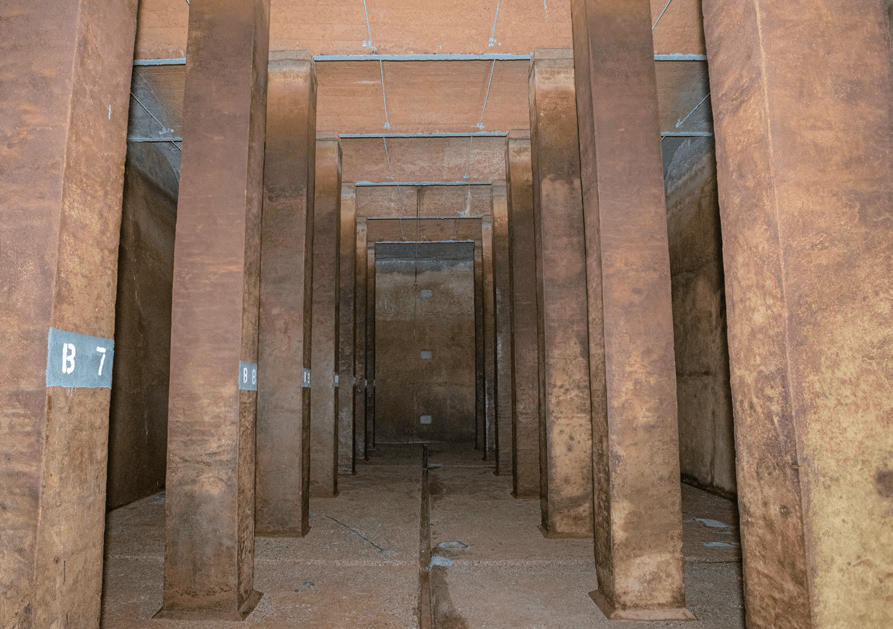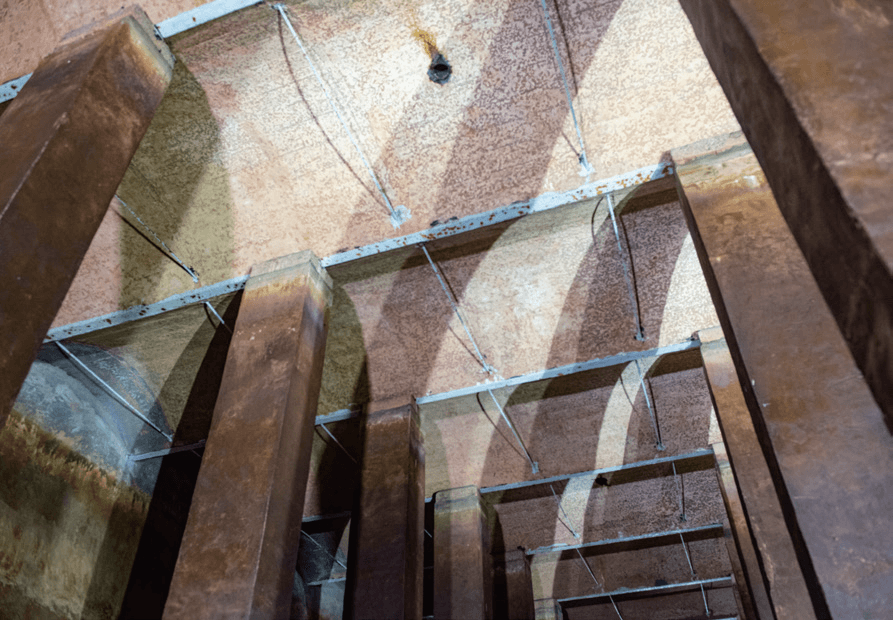



The preservation and granting of a Grade 1 historic building status to the long-decommissioned Ex-Sham Shui Po Service Reservoir by the Antiquities Advisory Board (AAB) in 2021 set a precedent for the assessment of the city’s underground historic buildings. The building and reservoir’s preservation allows the public a glimpse of the century-old gravitation water supply system and the internal structure of its huge water storage facility, revealing excellent engineering design that had previously been hidden from the public. Hong Kong’s first service reservoir, the Albany Fresh Water Service Reservoir in Mid-levels, has been serving the city for over 130 years and is still in operation today. In a rapidly developing city like Hong Kong, it is one of the very few historic public facilities that have maintained their original use.
Grade 1 historical buildings are defined as those of "outstanding merit" due to their historical, architectural, social, rarity, and/or group value. In addition to the city’s large-scale reservoirs and related buildings and facilities, the AAB has also granted five underground and hidden service reservoirs as Grade 1 historic buildings in 2021. This official recognition acknowledges their heritage value.
(Reduced to 4,800 after alteration in 1951)
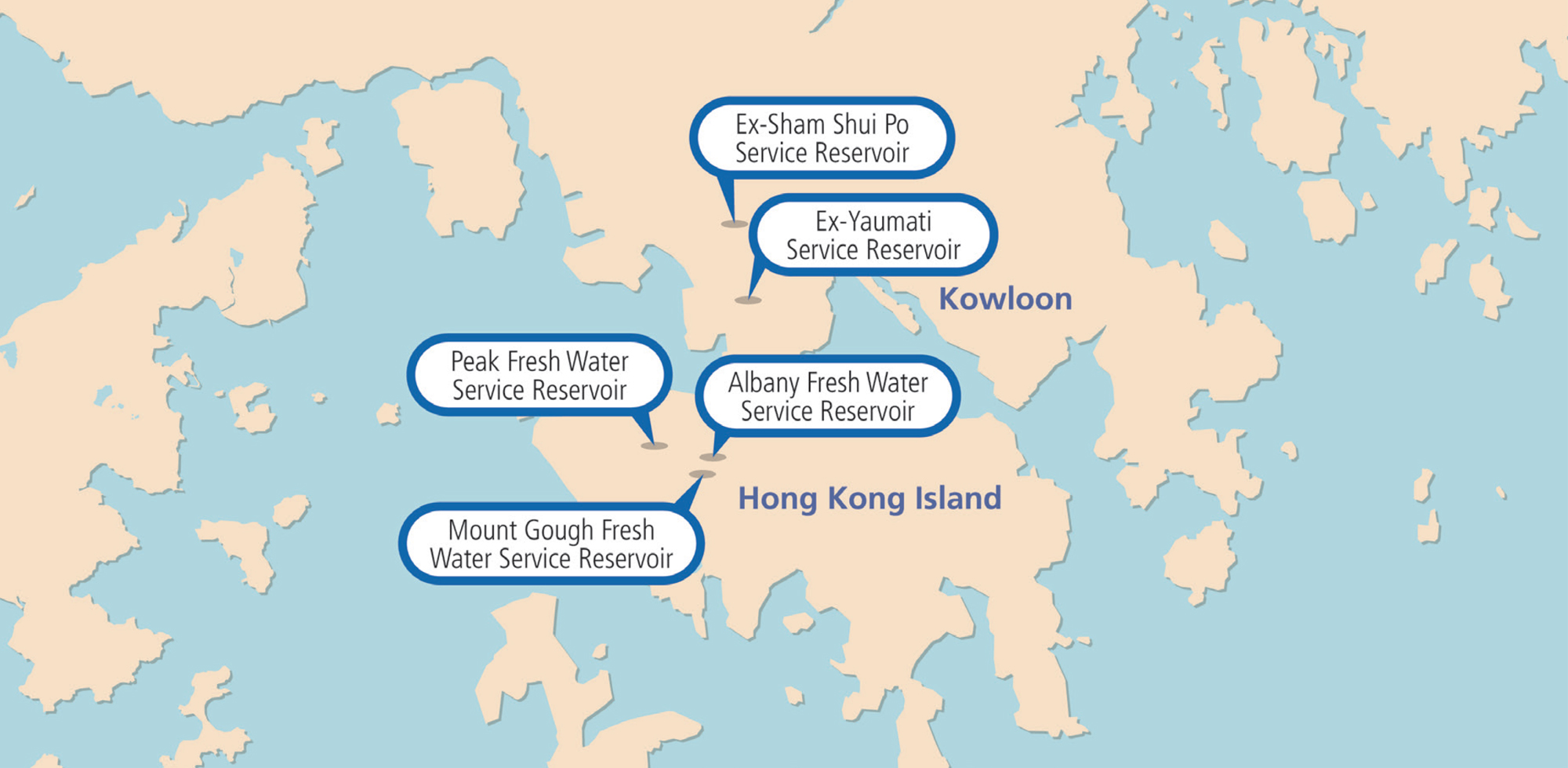
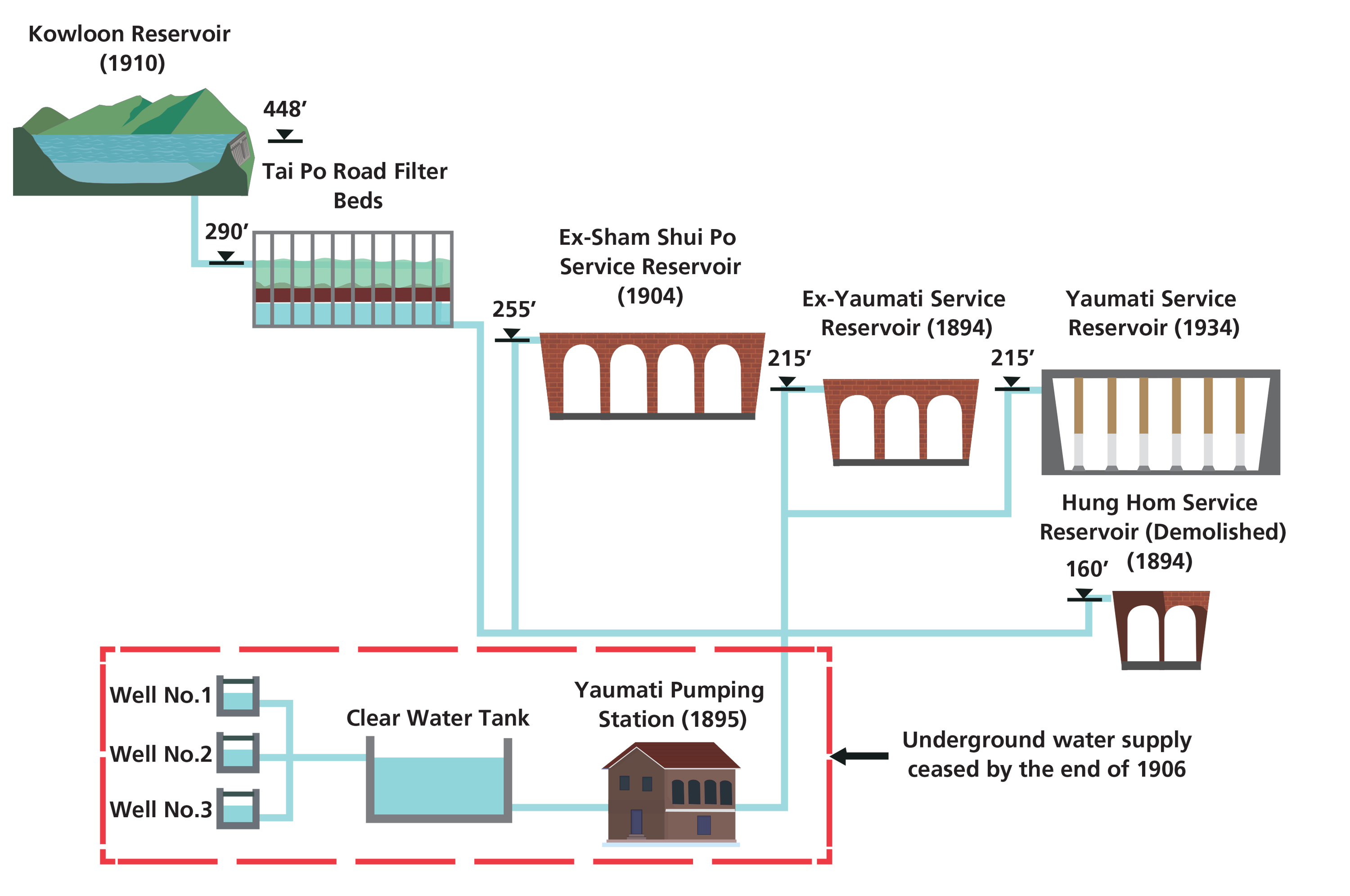
The Ex-Sham Shui Po Service Reservoir dates back to the leasing of the New Territories by the British from China in 1898, a time when Hong Kong’s population and demand for water was significantly increasing. During the construction of the Kowloon Reservoir, the Hong Kong Government made plans for the development of the water supply system throughout Kowloon. As part of this expansion, the Ex-Sham Shui Po Service Reservoir was built as a supporting facility. Kowloon had previously relied on only three wells for its water supply, providing a very limited volume of water. The construction of this service reservoir is a testimony to Kowloon’s urban development and the corresponding increase in water demand. The Ex-Sham Shui Po Service Reservoir is the first service reservoir to be graded as a historic building. Until recently it had been closed for half a century, but nowadays it is an historic water facility open to the public and located amongst green hills and a popular recreation area for local residents.
The old Kowloon water supply system comprised the Kowloon Reservoir, the Filter Beds at Tai Po Road in Cheung Sha Wan, and the Ex-Sham Shui Po Service Reservoir. It was also connected to the Ex-Yaumati Service Reservoir and Hung Hom Service Reservoir (now demolished), which had been in use since 1894. This system relied on the principle of gravitation to deliver water from an elevated point to a distant low-level user without the need for an electricity-consuming pumping system. The Ex-Sham Shui Po Service Reservoir was initially designed as a balance tank. It temporarily stored any excess water that had not been transferred to the filter beds or directly to consumers.
The Ex-Sham Shui Po Service Reservoir is the first circular-shaped service reservoir in Hong Kong, covering an area of 1,600 m². The circular shape was designed to achieve the maximum area with the shortest perimeter, saving on the cost of the reservoir’s wall construction. When it was completed, it had a diameter of 46 metres, a floor-to-ceiling height of 6.85 metres and a capacity of 9,900 m³, ten times the capacity of the earlier service reservoirs built at Yau Ma Tei and Hung Hom in Kowloon. However, due to leakage, the wall of this service reservoir was thickened during repairs in 1951 and its inner diameter was reduced to 38 metres. As a result, the capacity of the reservoir was also reduced to 4,800m³.
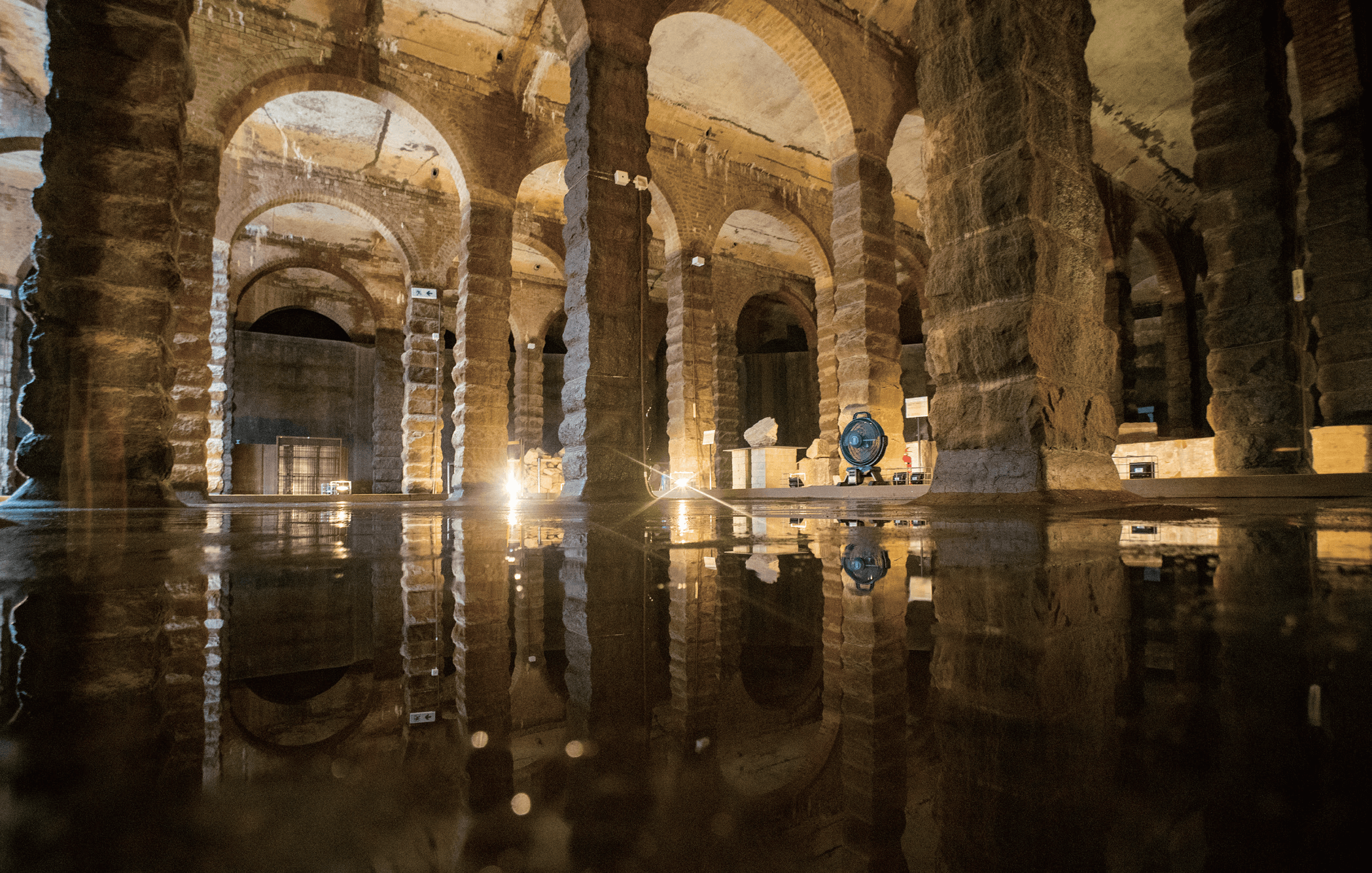
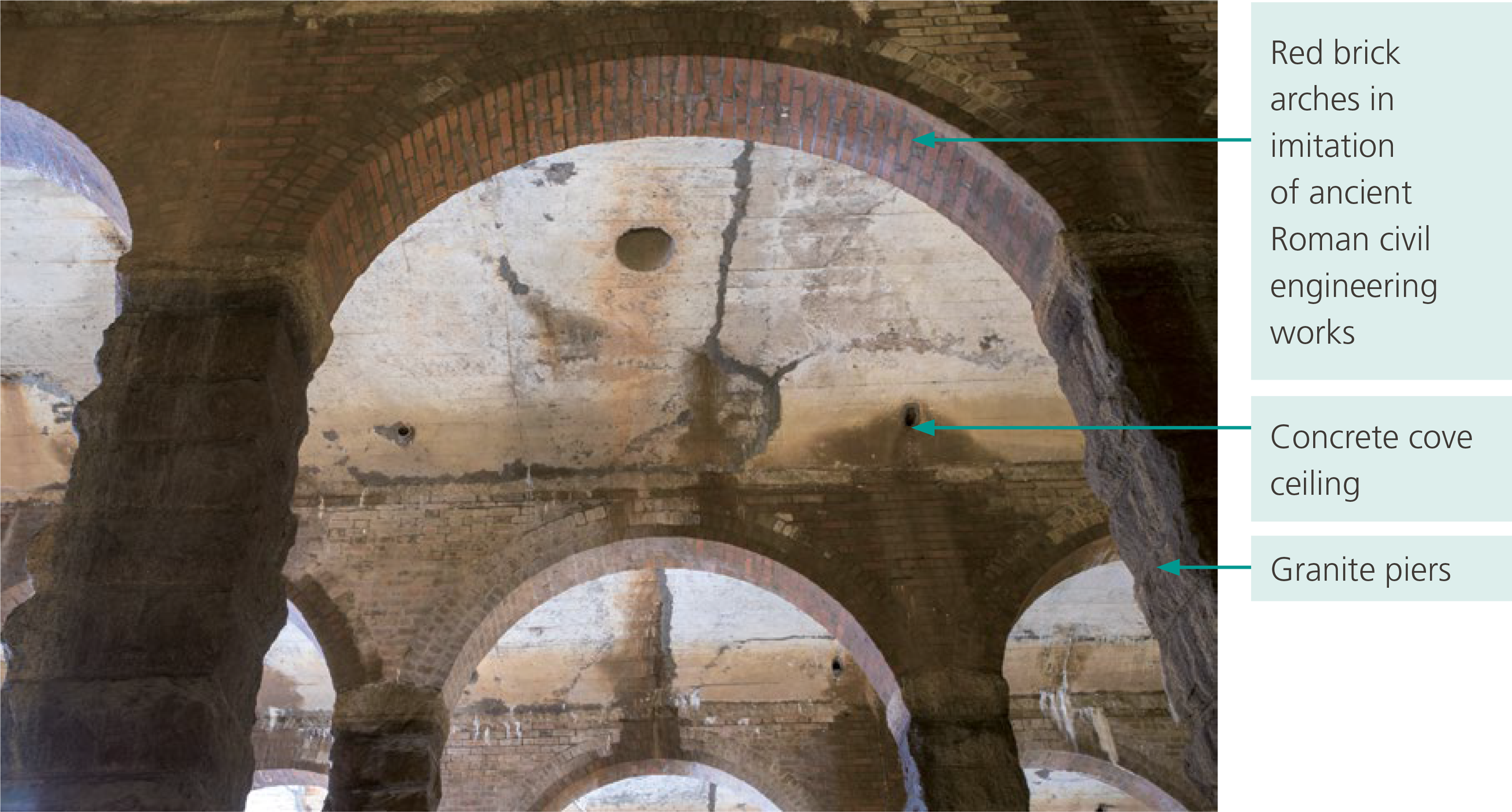
The architectural design of the service reservoir placed emphasis on its capacity and span, which required considering feasible construction practices and materials. The concrete ceiling of the Ex-Sham Shui Po Service Reservoir was cast in-situ. As such, the weight of the concrete ceiling and topsoil was transferred from the interior vaulting to the granite spring rocks on either side, and then down to a number of brick arches and their associated 108 rectangular granite piers. It is interesting to note that the rusticated rectangular granite support blocks have been revealed to be of a stunningly even design. These blocks provide a slightly varied visual rhythm within the overall simplicity of the structure, it is both practical and aesthetically beautiful.
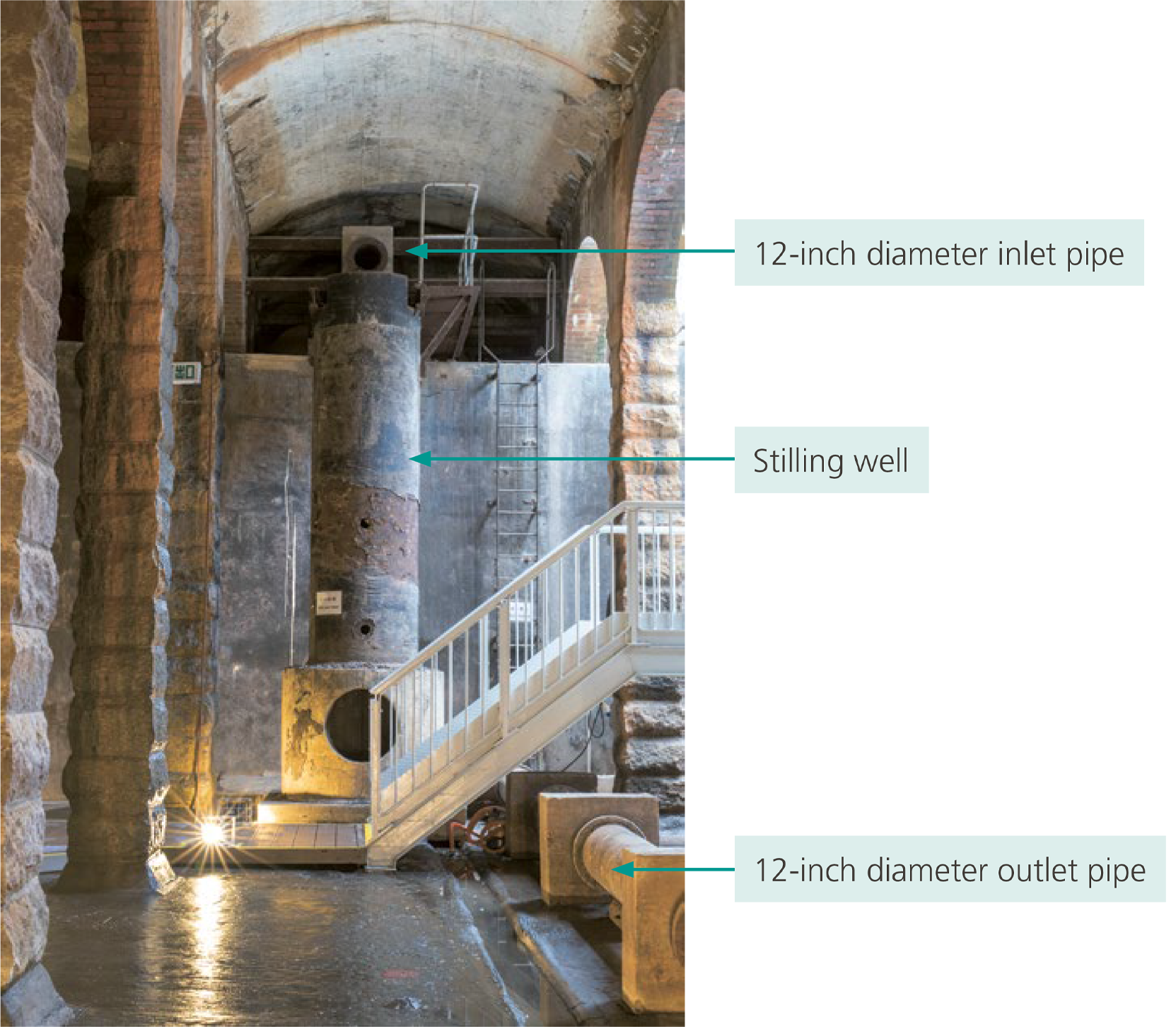
In addition to the structure, the service reservoir also includes inlet and outlet components. These include an inlet pipe at a high level, a stilling well, and an outlet at a lower level that extends to a central location. The difference in position and height allows water to efficiently flow in and out, preventing stagnation.
In 2021, the WSD conducted temporary strengthening works for the service reservoir. Also launched at the same time is an interactive virtual tour on the WSD website and in-person on-site guided tours for the public to see the service reservoir’s previously inaccessible waterworks facilities. The tours also provide education to the public on how the current modern water supply system provides convenience in daily life.
Virtual Tour of the Ex-Sham Shui Po Service Reservoir
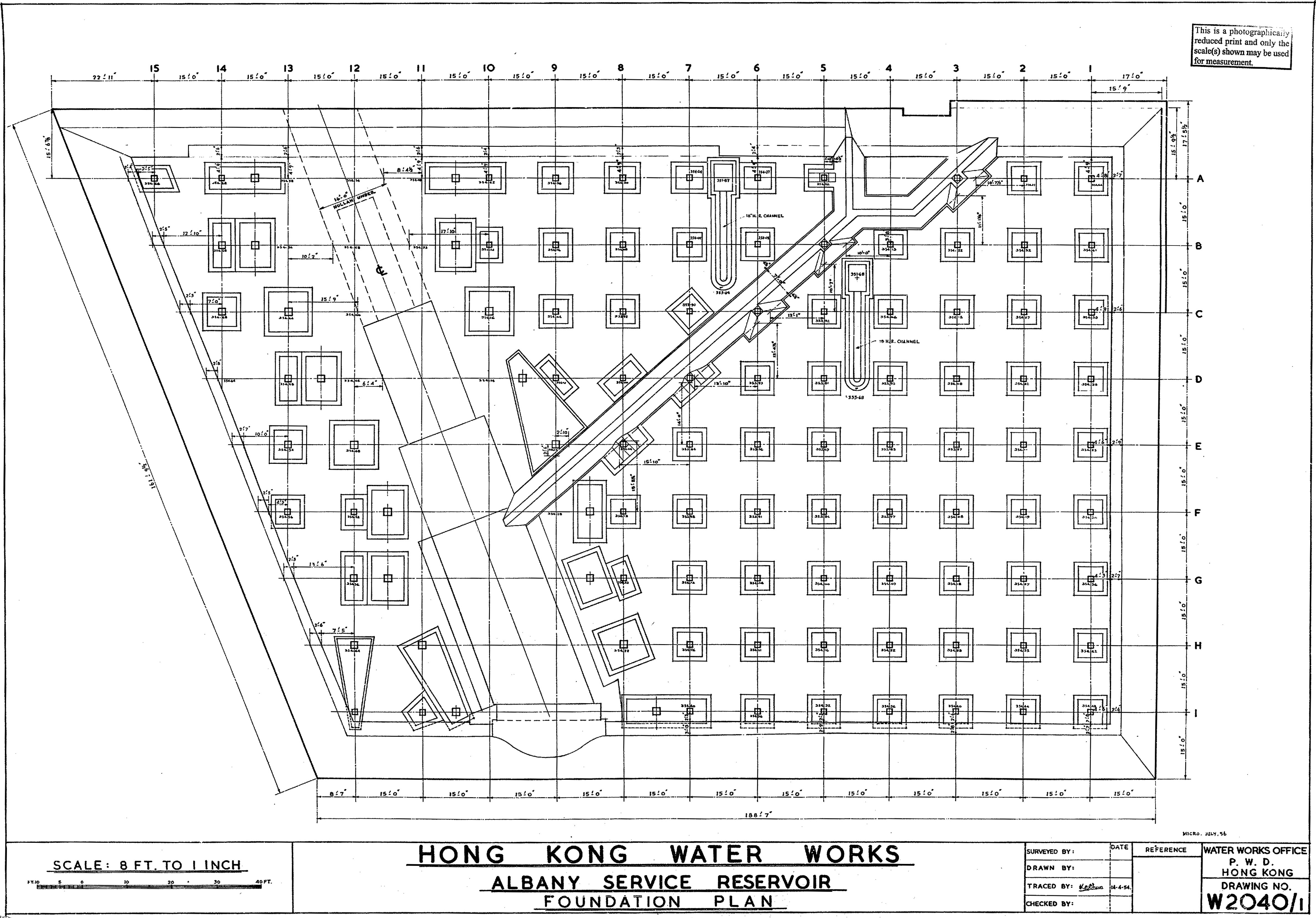
The Albany Fresh Water Service Reservoir is the oldest preserved service reservoir in Hong Kong. Located near Magazine Gap Road in Mid-levels in Central, the service reservoir is one component of the Tai Tam Reservoir System built in Tai Tam Valley to transport water to the old city of Victoria, now the Central and Wan Chai areas. The service reservoir has been operating since being developed in the 1880s and is connected by a tunnel that passes through Wong Nai Chung Gap and features a water channel that connects to Bowen Aqueduct. As water descends the hill along the Albany Valley, it is filtered through the filter beds before being transferred to the Albany Fresh Water Service Reservoir for storage.
Originally designed as an open reservoir, the Albany Service Reservoir is 45.7 metres wide and 9.1 metres deep, with a capacity of 25,912 m³. It is the largest of the city’s five reservoirs that have survived for over a century. It can cater to a maximum water level of approximately 116.9 metres above Hong Kong Principal Datum (+mHKPD). This service reservoir was originally designed to deliver water by gravity by delivering it along cast iron pipes to households in the coastal areas of the city of Victoria. Water originally flowed downwards running through two pumping stations located at Garden Road and Arbuthnot Road at that time, generating hydraulic power to transfer water to the then Peak Road Fresh Water Service Reservoir and another south of Belilios Terrace on Robinson Road.
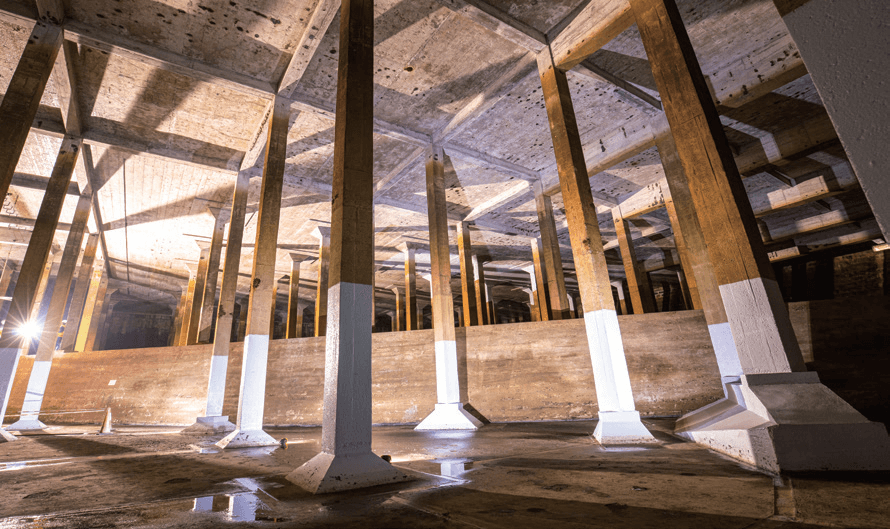
The Albany Service Reservoir is a concrete structure with perimeter walls faced with rubble (i.e. irregular gravel). The western part of the service reservoir was built over a culvert, with an arched structure arranged from large to small in the storage space. In 1929, a dividing wall was added to create two separate water supply storage spaces, allowing for maintenance works to be carried out without interrupting the water supply. In 1953-54, a reinforced concrete roof was added to the service reservoir. Before this addition, the reservoir was uncovered, and the water quality was affected by rain. The historic building is still in service, but not open to the public as it still holds fresh water.
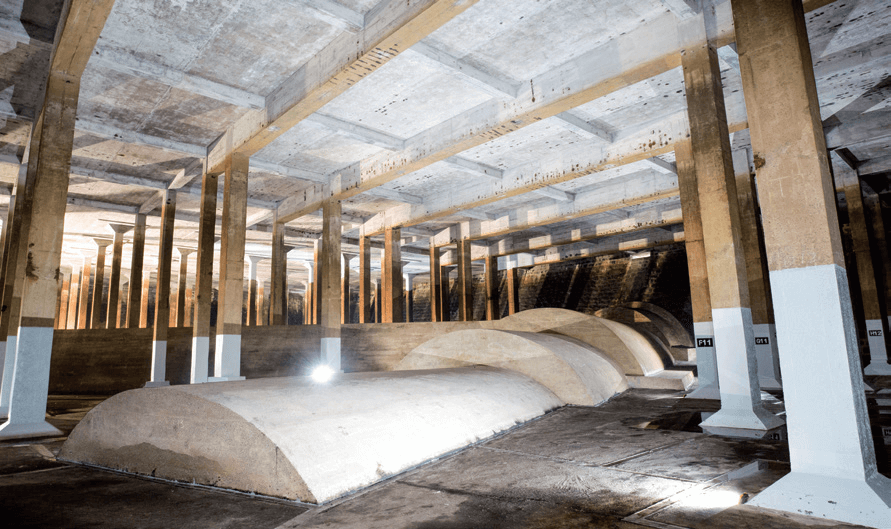
The Ex-Yaumati Service Reservoir was constructed in 1894 and is the oldest service reservoir in Kowloon, predating the Ex-Sham Shui Po Service Reservoir. Prior to the British leasing of the New Territories, there was insufficient high ground in Kowloon to construct reservoirs. As a result, the only means of obtaining water was by digging wells and using a pumping system to deliver fresh water directly to consumers. The surplus water was pumped to two service reservoirs, the Ex-Yaumati Service Reservoir at King's Park and the now-demolished Hung Hom Service Reservoir, both used to control the water supply.
The rectangular Ex-Yaumati Service Reservoir covers an area of approximately 163 m², with a building height of around 5.21 metres at its highest point. The service reservoir had a water capacity of 740 m³. It is significantly smaller in scale than other reservoirs. The walls, cove ceiling, arches and piers are all made of red brick, imitating Roman civil engineering. The roof is supported by six piers with a span of 2.89 metres and 3.48 metres. Although the building has survived, it has been out of use since 1934, probably due to severe leaks or replaced by a newer service reservoir.
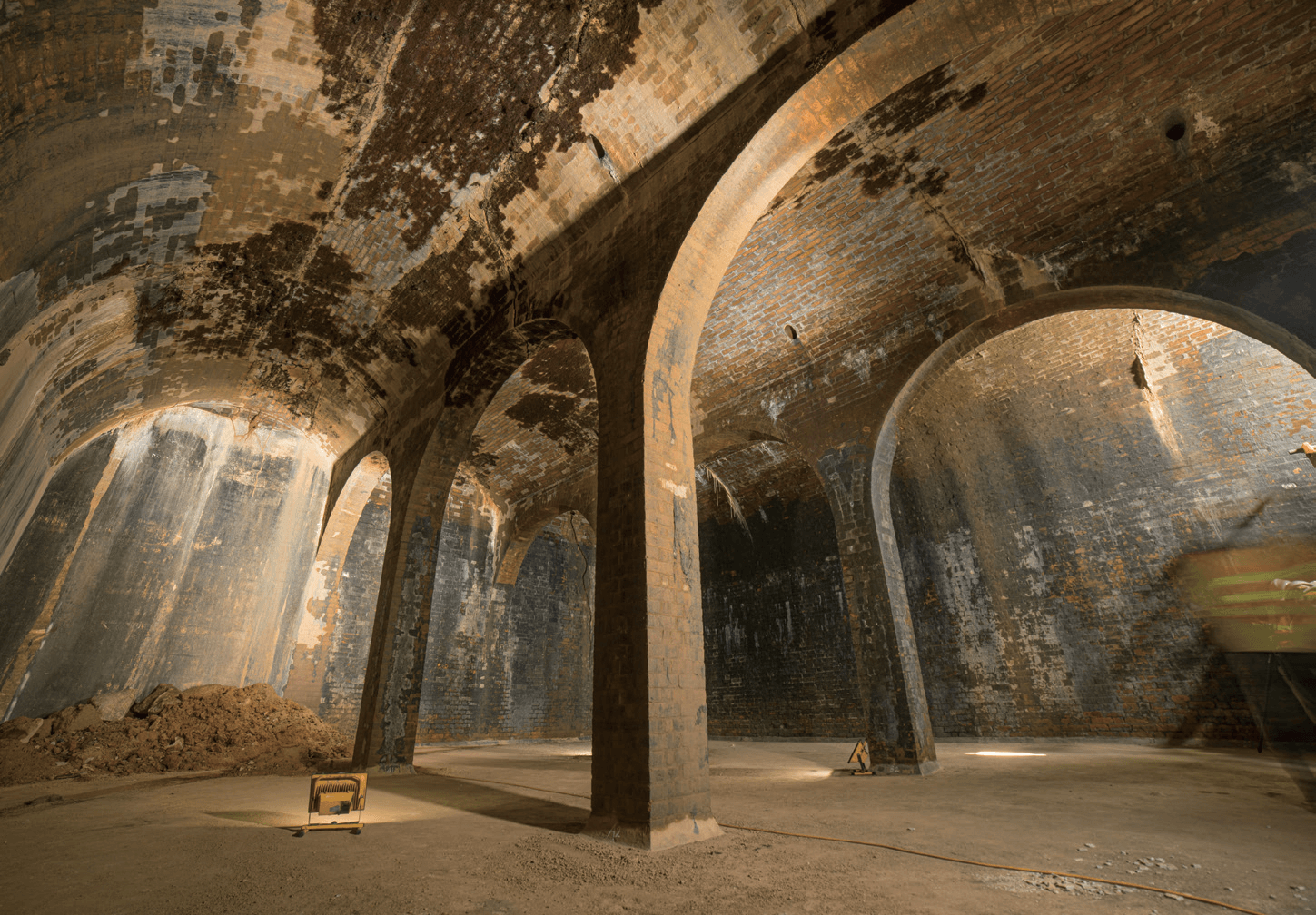
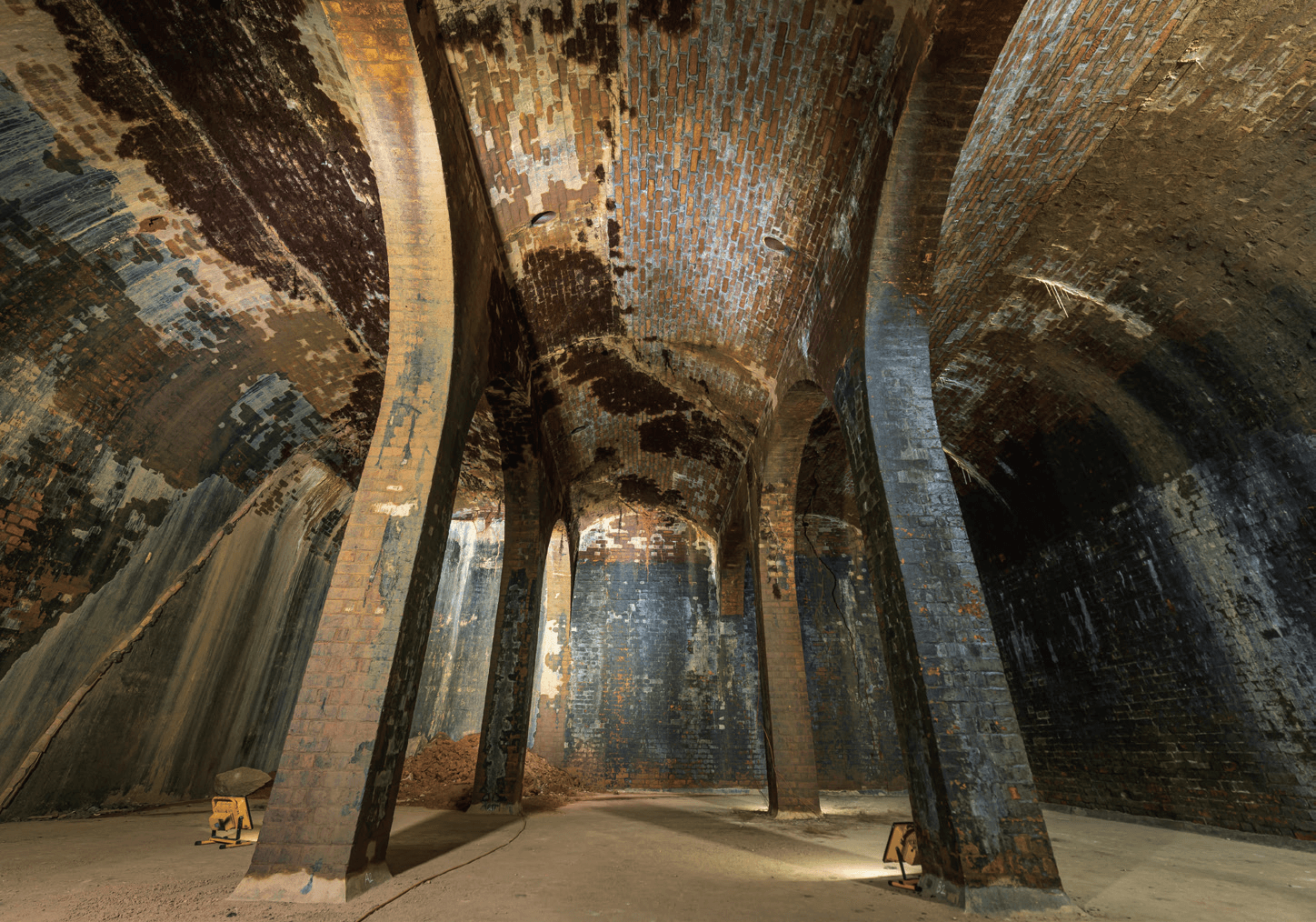
The Peak Fresh Water Service Reservoir, situated on Victoria Peak with a maximum water height level of +533mHKPD, was constructed in 1897. It is located at a higher elevation than its water supply reservoir, Pok Fu Lam Reservoir. Initially, when Hong Kong's first reservoir was completed, the residents of the Peak were not an immediate priority and their water supply was mainly from wells. The government proposed a reservoir-based water supply system for the Peak only after a further decade of population growth. To support the water supply system, a pumping station at Bonham Road was required as the Peak area is higher than the supplying reservoirs.
Today, the Peak Fresh Water Service Reservoir is still in use, with water supplied from either Tai Po or Sha Tin Water Treatment Works. Although different from its original design, the structure is still connected to the surviving heritage group of the Pok Fu Lam Reservoir water supply system. Its longevity is a testament to the excellent development of the water supply system in those early years.
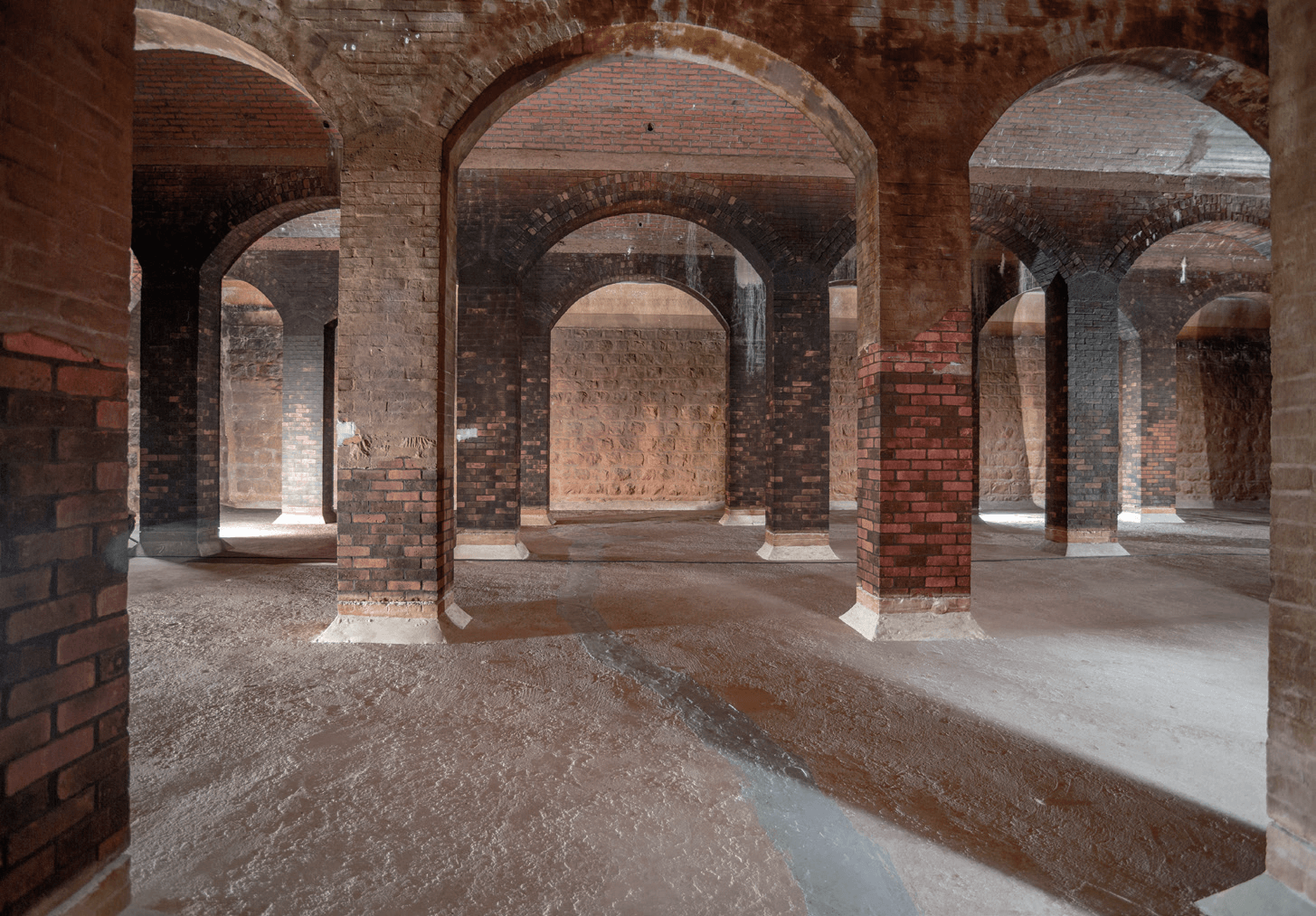
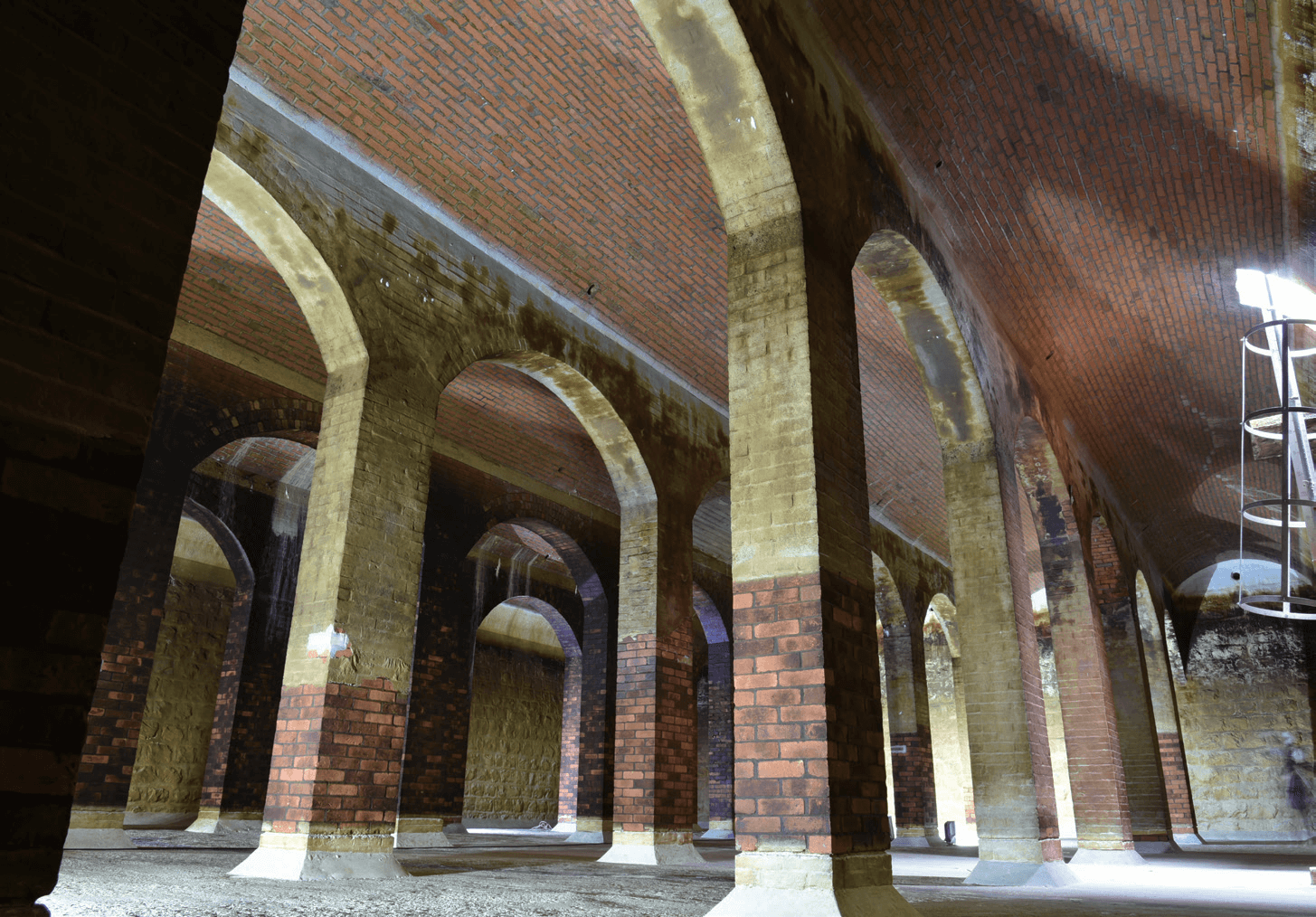
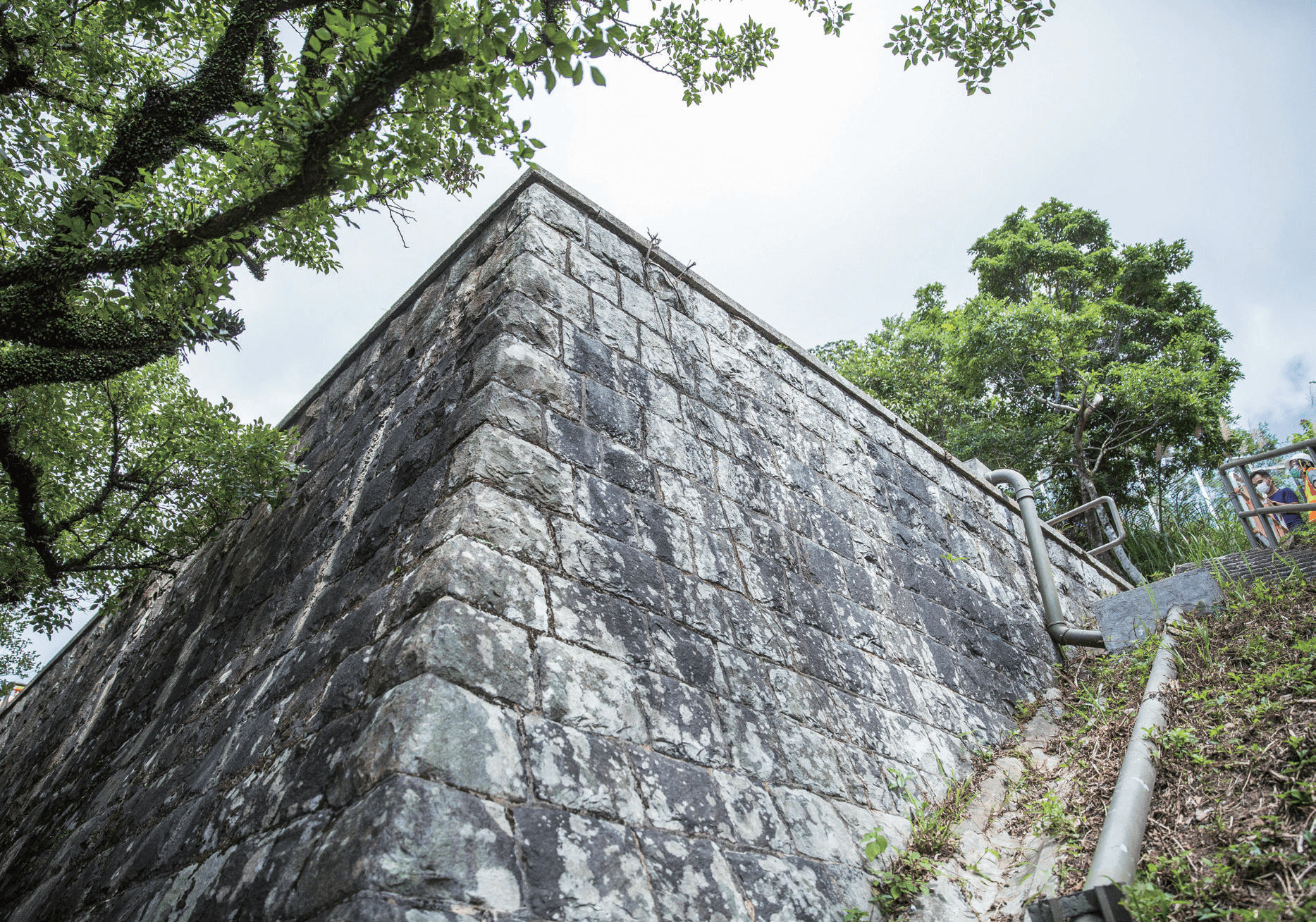
The Mount Gough Fresh Water Service Reservoir completed in 1903 was the second service reservoir built for the Peak area. Its original design received fresh water coming from the Tai Tam Reservoir. Raw water was conveyed through the Tai Tam Tunnel and Bowen Aqueduct to the Bowen Road Filter Beds. From there, the Bowen Road Pumping Station pumped water to this service reservoir for storage. It has a top water level of approximately +462mHKPD and a capacity of about 961.5 m³. Following the demolition of the Bowen Road Filter Beds and Pumping Station, the Mount Gough Fresh Water Service Reservoir is now supplied by either the Tai Po or the Sha Tin Water Treatment Works. Fresh water is pumped to this service reservoir from various pumping stations through a cross-harbour mains.
Architecturally, the southern wall of the Mount Gough Fresh Water Service Reservoir is backfilled to the top, while most of the exposed northern wall is paved with masonry. This gives the service reservoir’s façade a magnificent-looking appearance.