


Hong Kong has extensive experience in utilising its steep hilly terrain to develop rock caverns for use by various public facilities. In December 2017, the HKSAR Government issued policy guidelines on cavern development to increase land supply and formulated a territory-wide Cavern Master Plan. The plan identifies 48 strategic cavern areas with potential for development and provides planning and technical information for government departments and the private sectors to reference and encourage rock cavern development to optimise land use. The WSD has been proactive in relocating and accommodating waterworks facilities in caverns. This includes fresh and salt water service reservoirs and water treatment works with the goal to release more land for housing or other beneficial uses.
Hong Kong’s geology predominantly comprises hard granite, which makes it highly suitable for cavern development. This is especially the case on the urban fringes, where it is easily accessible, benefiting both construction and future users. Some countries, such as Canada, Finland, Japan, Korea, Norway, Singapore, Sweden and the United States, along with cities in the mainland, have developed sophisticated techniques for constructing caverns that serve a wide range of purposes, ranging from sewage treatment works and waste transfer stations to popular community and recreational facilities. In Hong Kong, a number of government facilities have been built in caverns since the mid-1990s, including the Island West Transfer Station, the Stanley Sewage Treatment Works and the Kau Shat Wan Explosives Depot.
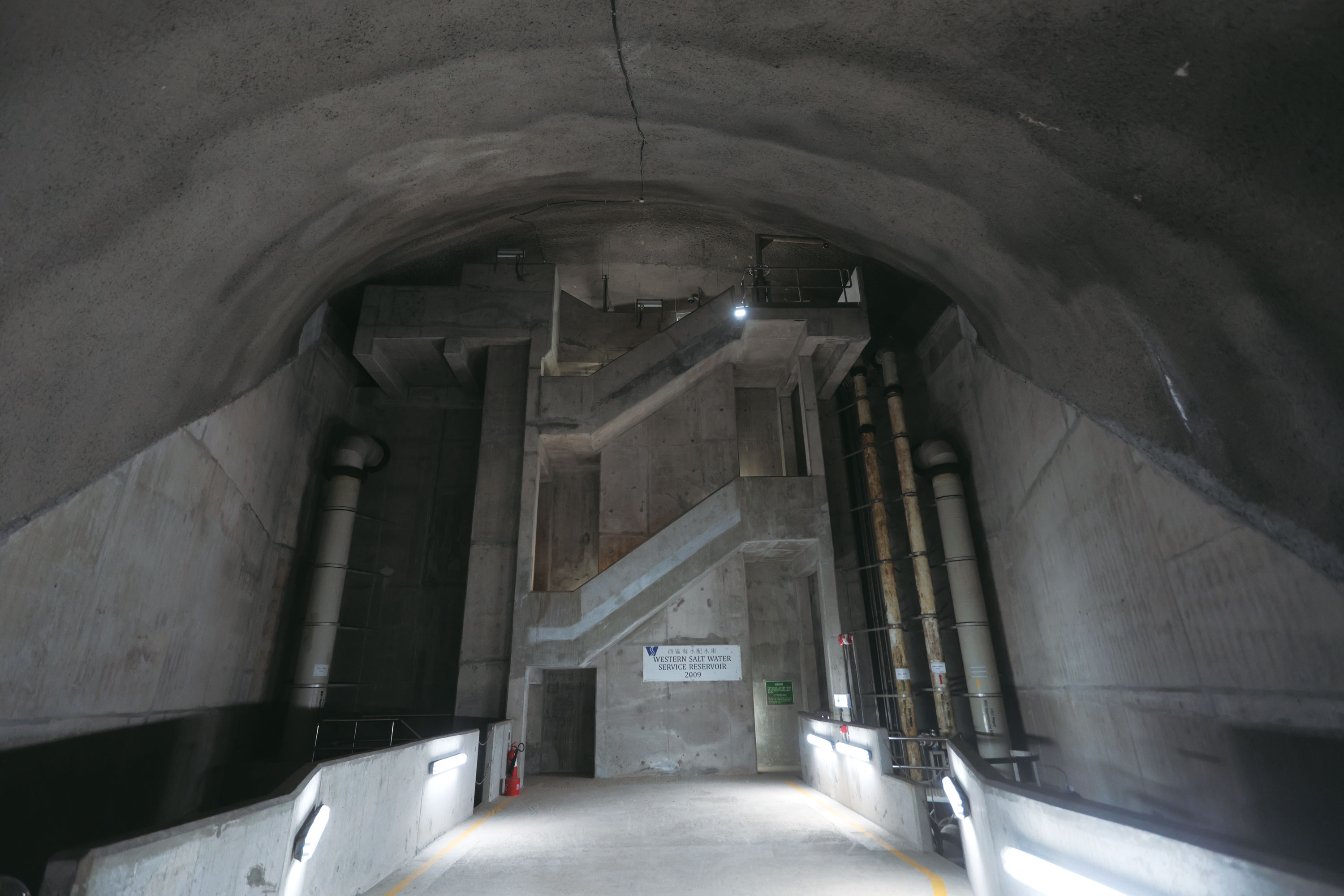
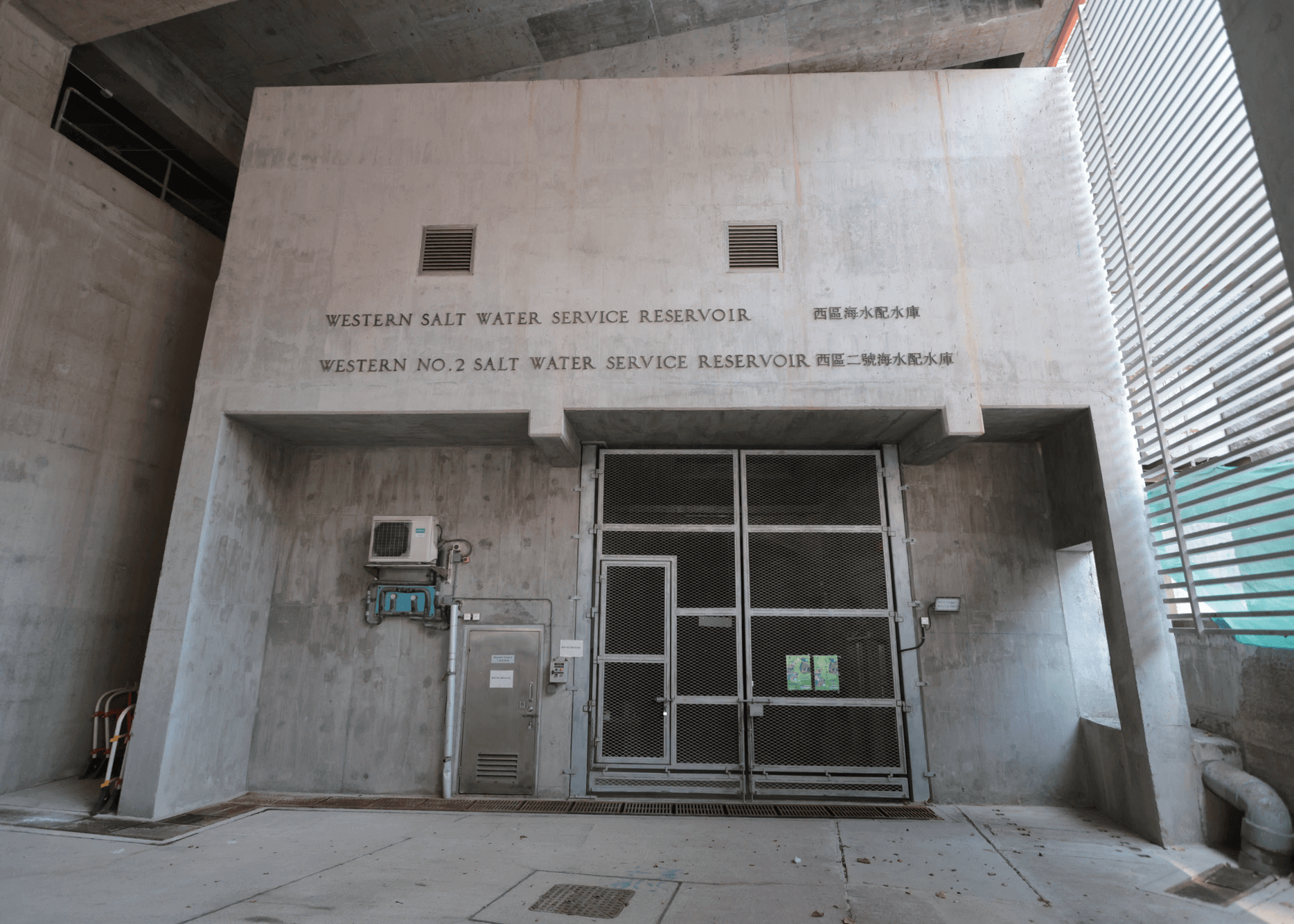
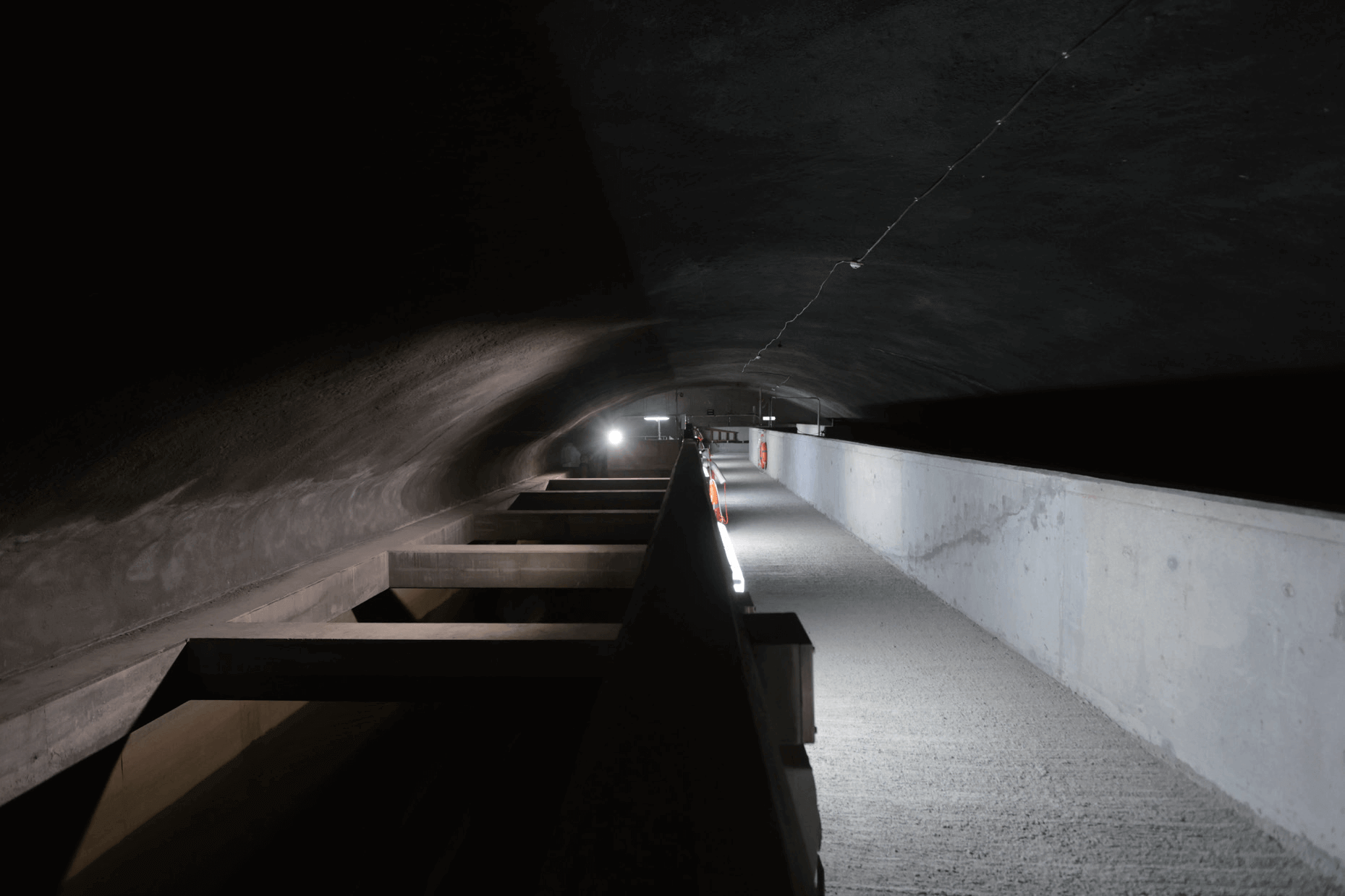
The Western Salt Water Service Reservoir and Western No. 2 Salt Water Service Reservoir completed in 2009 are the first two WSD service reservoirs built in caverns. As part of the development of The University of Hong Kong’s Centennial Campus, the WSD commissioned the university to relocate two nearby salt water service reservoirs into caverns, and convert the original salt water service reservoirs into fresh water service reservoirs. This was done to vacate ground-level space for the construction of a new academic building.
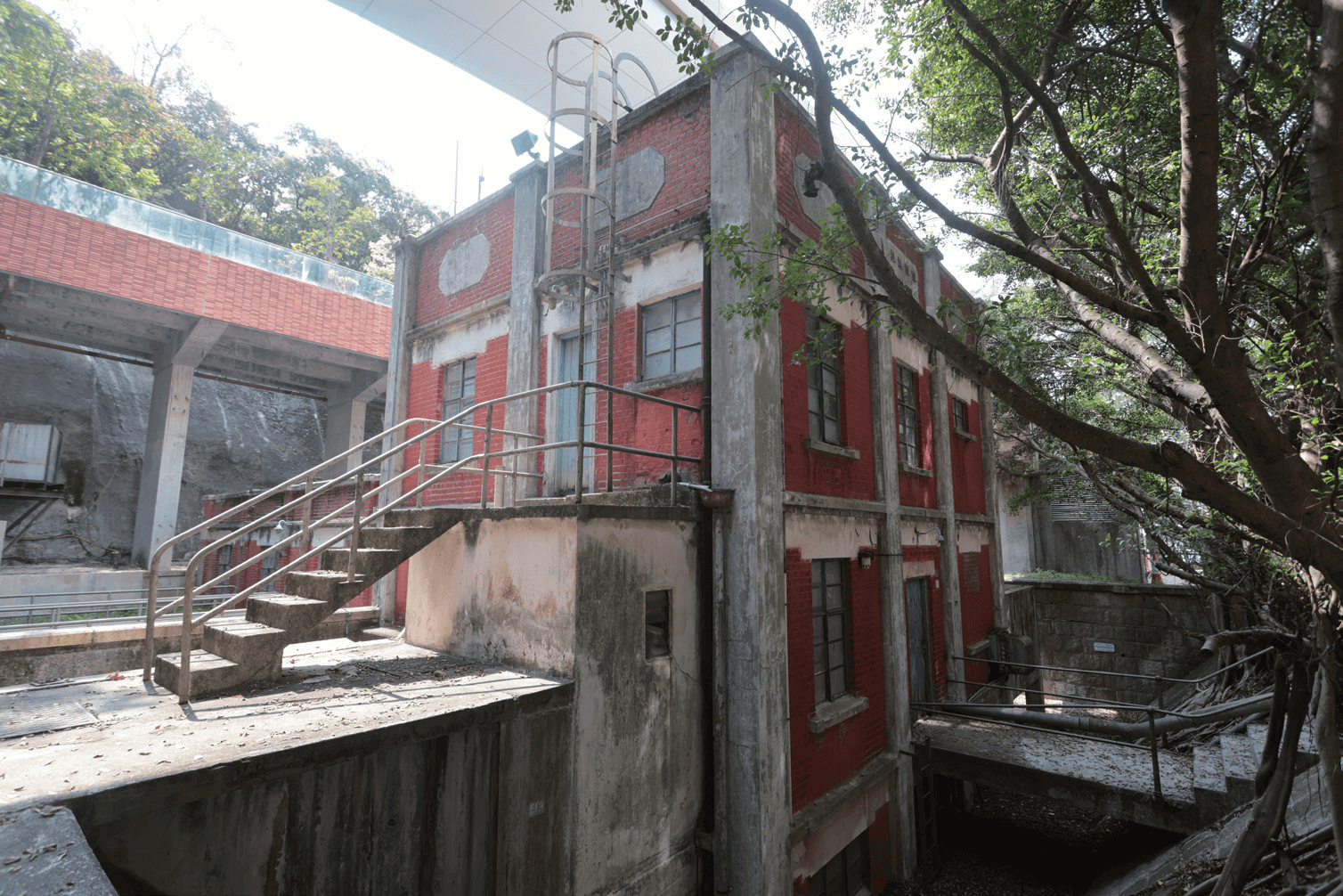
Situated at Lung Fu Shan near The University of Hong Kong, the cavern is the first of its kind in Hong Kong to be bored into a tunnel, 100 metres in length. It houses two salt water service reservoirs of the same size, with the span of the cavern for each service reservoir reduced. This approach helped to lower the difficulty of construction and its cost. The project was executed through drilling and excavation instead of blasting, avoiding extensive slope cutting and tree felling, thus ensuring minimal environmental impact. The three historic buildings at the former Elliot Pumping Station and Filters, the Senior Staff Quarters, Workmen' Quarters and Treatment Works Building, have all been preserved.
The cavern has a mechanical ventilation system that extracts air inside the cavern through air chutes at the bottom of the tunnel passageway, allowing fresh air to flow through the cavern inlet. Air detectors are installed to maintain safe air levels in conjunction with the ventilation system. The ventilation system can either be controlled manually, automatically or by remote control. The ventilation system will automatically activate if the air quality inside the cavern falls below the set standards.
A heat detector is also installed to sound an alarm when the temperature inside the cavern reaches 57°C. A closed-circuit television system is also in place to ensure the safety of staff working inside the cavern, allowing other staff to observe the cavern from the entrance.
As it is Hong Kong’s first cavern water service reservoir, it has become a popular tourist attraction. In 2013, the Hong Kong Institution of Engineers named it as one of the "Hong Kong People Engineering Wonders in the 21st Century".
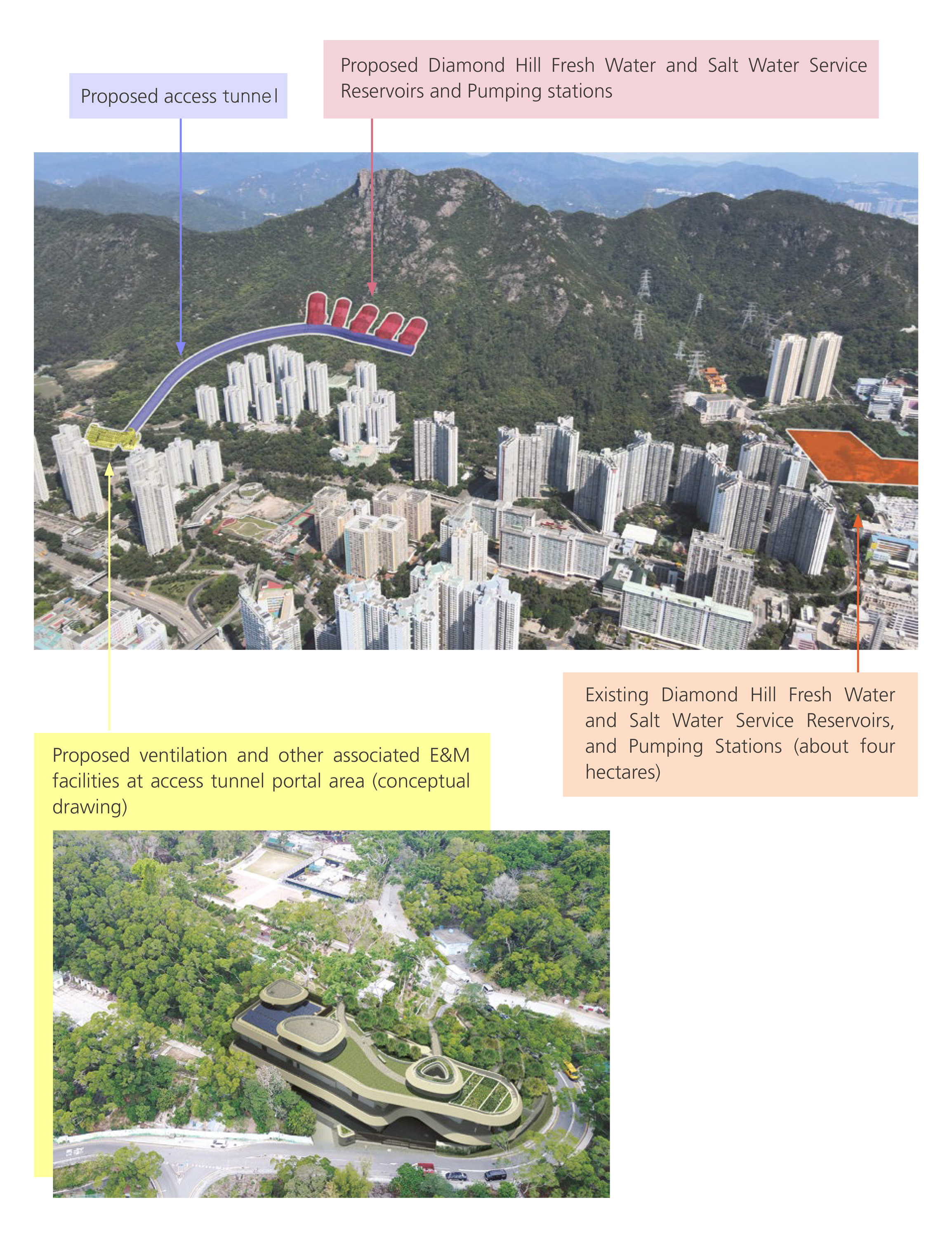
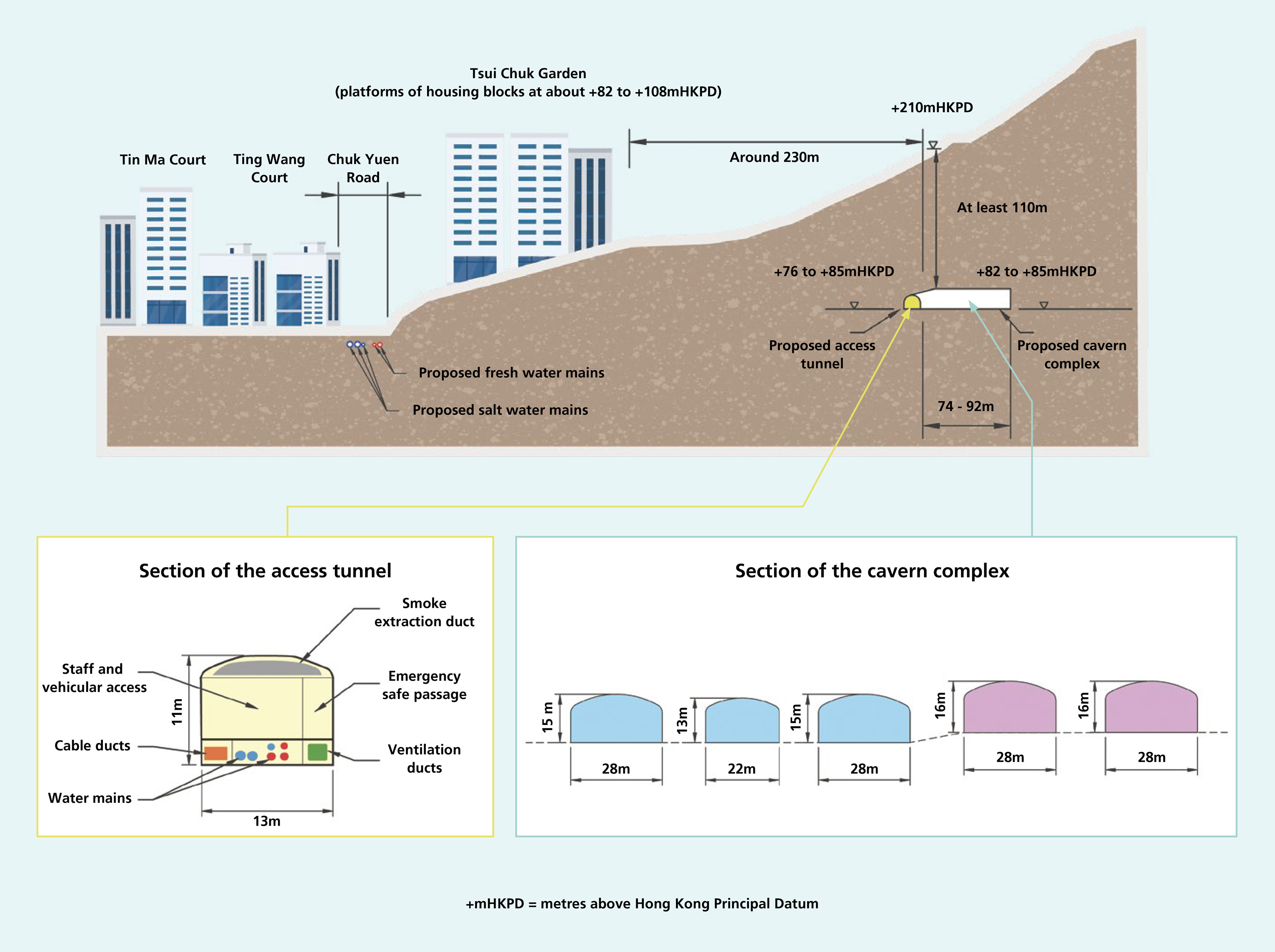
In recent years, the WSD has been actively pursuing a number of projects to relocate waterworks facilities to caverns. The Diamond Hill Fresh Water and Salt Water Service Reservoirs at Shatin Pass Road, Wong Tai Sin, will be relocated to a cavern complex inside the body of the mountain at the south of Lion Rock. This will release about four hectares of land at the original site by 2027 for housing development, government, institution or community use.
Other relocation projects being explored include the relocation of the Tsuen Wan No. 2 Fresh Water Service Reservoir near Cheung Shan Estate to the Smuggler’s Ridge cavern area in north-east Kwai Chung. After completion of the relocation project in 2029, together with the adjacent slopes, over six hectares of land will be released for public housing development.