



Waterworks facilities must be maintained on a daily basis to ensure they remain in the best operating condition. However, unpredictable natural disasters can cause disruption and even damage to facilities. The WSD frontline staff have experienced maintenance challenges after several natural disasters.
Super Typhoon Mangkhut became a significant collective memory for Hong Kong people in 2018. Resembling a scene from a disaster movie, the typhoon’s aftermath was devastating, with fallen trees throughout the city, sunken roads, and traffic at a standstill. More accustomed to stability and security, the typhoon was a shocking experience for residents. The eye of the storm passed Hong Kong at midnight on 16 September 2018, more than ten hours before major and devastating destruction took place around the city. The waterworks facilities in Tuen Mun and Cheung Chau were affected and, due to a power failure, the Lok On Pai Salt Water Pumping Station was at risk of flooding. Additionally, a large tree had collapsed and ruptured a water pipe, putting the Cheung Chau Fresh Water Service Reservoir at hilltop on the island in danger of emptying and causing a large waterspout to burst during the rainstorm. Despite harsh weather conditions and overcoming many difficulties, the WSD staff from both districts were able to reach these sites for emergency repairs.
That night after Typhoon Signal No.10 was hoisted, Assistant Electrical Inspector CHAN Fat-lung received a call from his supervisor informing him that Lok On Pai Salt Water Pumping Station in Tuen Mun had stopped operation. CHAN Fat-lung, who has been working with the WSD for more than 30 years, recalled this event: “The suspension of the pumping station would affect the supply of sea water to hundreds of thousands of people in Tuen Mun and Yuen Long causing great inconvenience.” After the cancellation of typhoon signal No. 10, CHAN and his colleagues promptly began assessing the situation, hoping to quickly resolve the issue. Starting from his home in Ma On Shan, he drove to Tuen Mun to pick up Senior Technical Officer PANG Chi-keung. The storm made the usual one-hour drive difficult, causing the car to drift. Fallen trees made the trip dangerous and many sections of Tuen Mun Highway were blocked, which forced him to turn back Sham Tseng and head to Lok On Pai from Castle Peak Road. Upon arrival with three hours taken, they still had to overcome some difficulties to access the pumping station.
Their inspection eventually showed that the pumping station had stopped working because of damage to the distribution substation, resulting in a suspension of the electricity supply. To restart the control system, including the electrical protection and distributed control systems, a number of tests needed to be performed. After the system was restored back to normal, the pumping station experienced another problem with the water flow. Emergency staff continued with the urgent repairs and worked round the clock to restore the sea water supply as quickly as possible while typhoon signal No. 8 was still hoisted.
Meanwhile in Cheung Chau, Artisan YIP Kei-ching and Workman II LEE Wai-sum were battling the typhoon’s elements. The island’s hilltop service reservoir supplies water to Cheung Chau households through a large 450 mm diameter water pipe built along the hill. However, during the typhoon, an uprooted tree tore into the pipe, causing it to burst into a water column that could be seen from as far as the seashore. YIP said he was most concerned about the water in the service reservoir being completely depleted. LEE Wai-sum, a junior officer at the time, joined his supervisor, YIP Kei-ching, and two other colleagues for heading to there to close the valves. The usual hiking trail was impassable due to landslides. Having grown up in Cheung Chau, YIP knew the island terrain well. He led the team along a trail. Due to the strong wind, and pacing along the wet and muddy path, LEE, who was ahead of the team, accidentally fell with half his body falling into the mud. Fortunately, the team was able to help him and together they continued to climb hundreds of steps to reach the service reservoir and with great determination complete their mission.
Throughout the night during the typhoon, the WSD teams in both districts successfully prevented any further water supply incidents. Relieved after the storm had passed, the teams each enjoyed a hearty breakfast in the morning. However, despite taking great pride in their emergency response there was still much work to be done. Looking back, they were glad to have overcome the difficulties caused by the typhoon and avoided causing further inconvenience to the public.
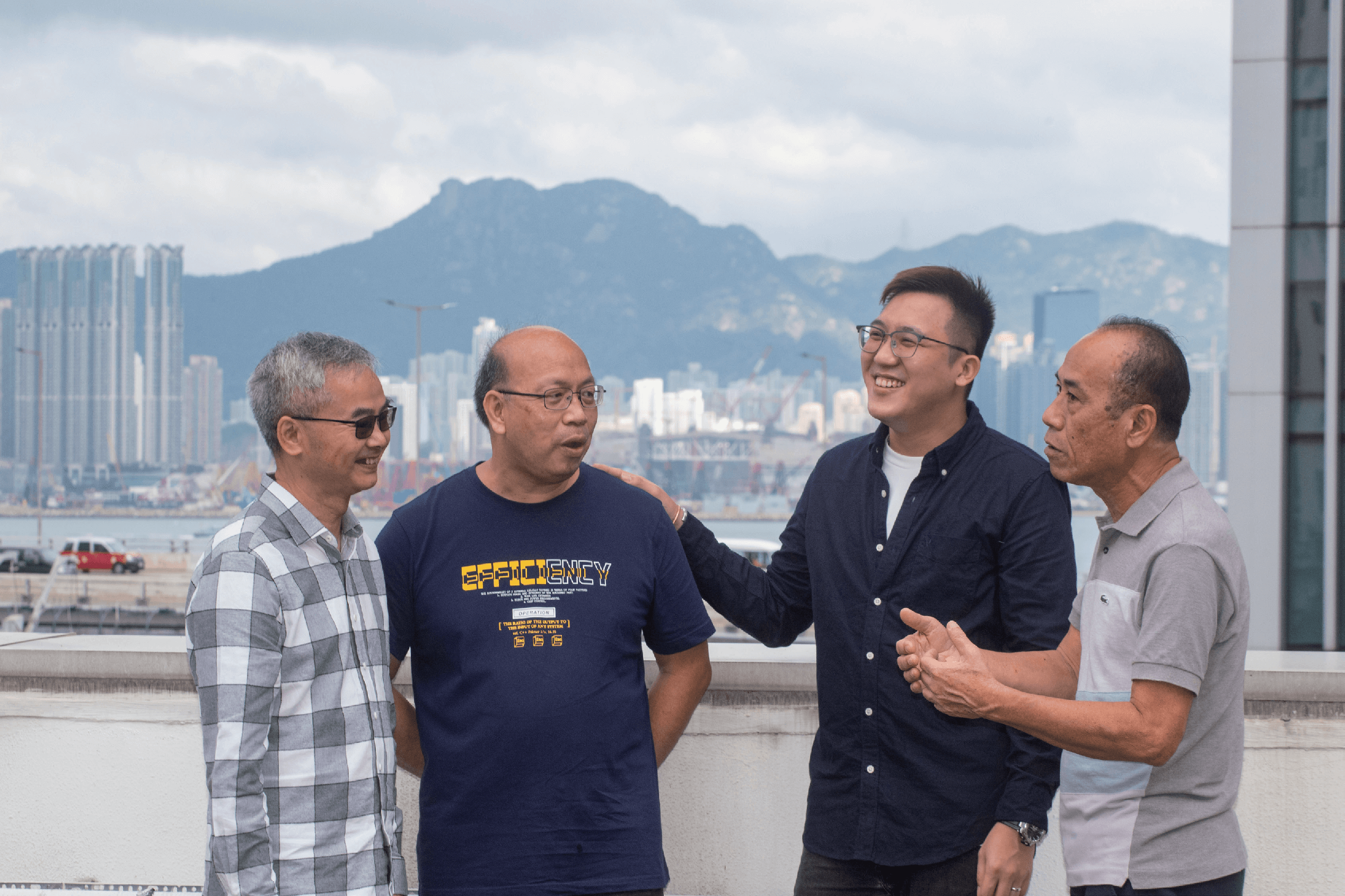
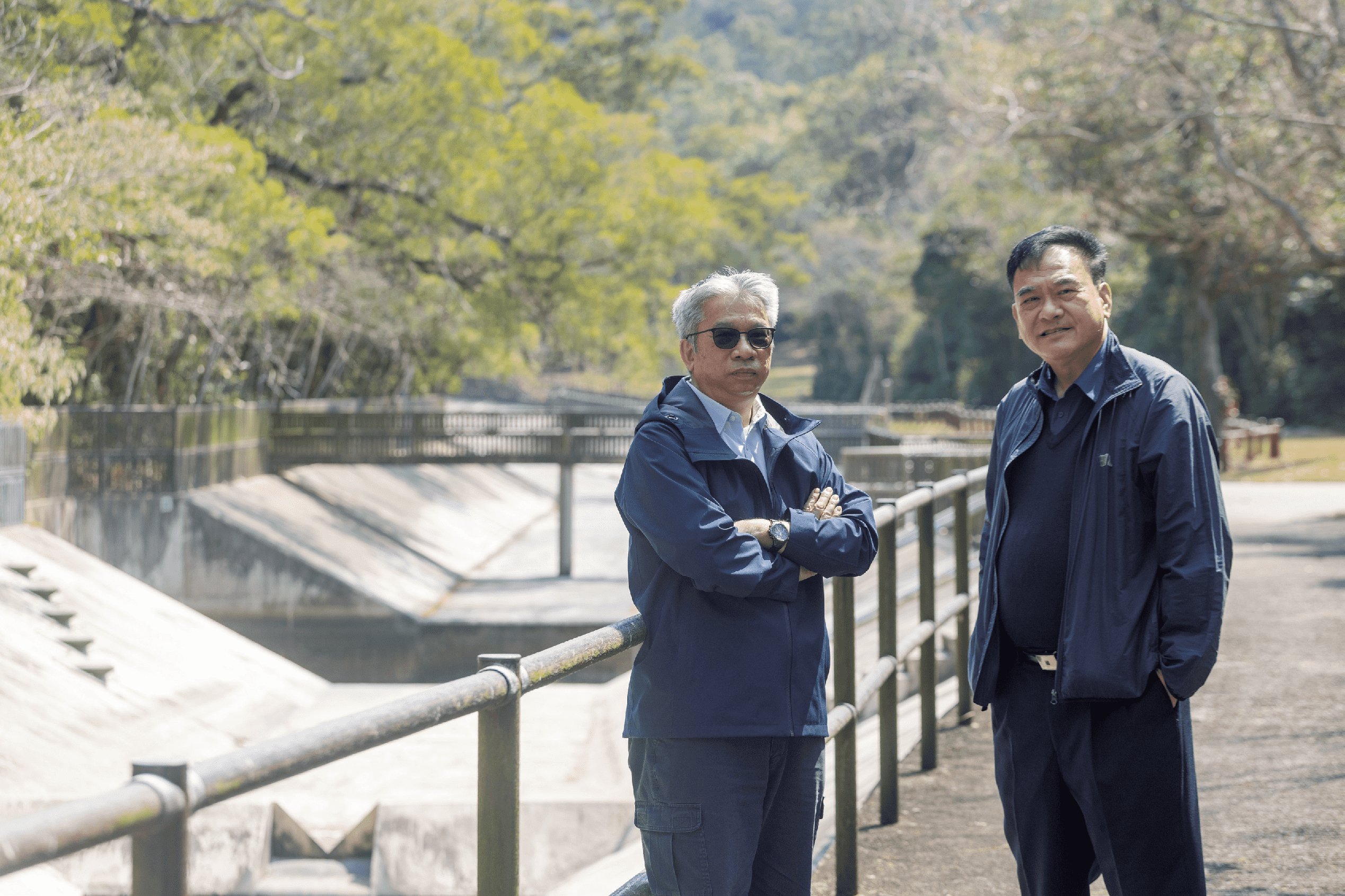
The Hong Kong Observatory recorded the highest hourly rainfall ever in Hong Kong at that time - 145.5 mm of rain between 8a.m. and 9a.m. - on 7 June 2008. The total rainfall for the day was over 300 mm, causing flooding in many areas of Hong Kong. A landslide caused road subsidence on Keung Shan Road near Tai O, disrupting the area’s only road access and causing severe damage to a number of water mains. TSE Wan-lung and Ir TANG Hon-yin, who previously held the positions of Chief Technical Officer and Senior Engineer respectively before their retirement and were involved in the emergency repairs at Tai O during this once-in-a-century emergency. “It’s all about the professional judgement of our colleagues as well as the cooperation of the entire team,” said TSE and TANG.
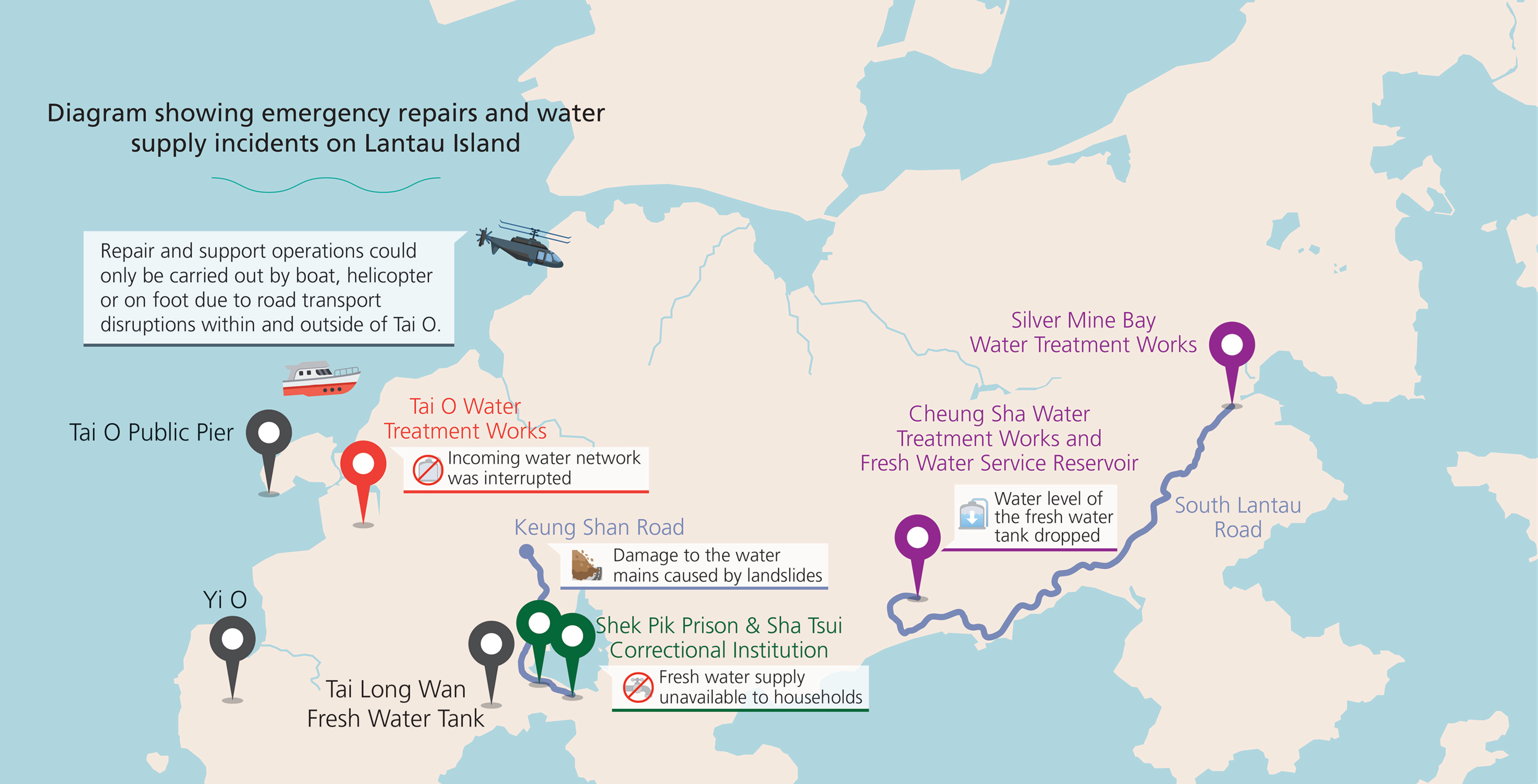
During the heavy rain, the water supply to Tai O Water Treatment Works was suddenly interrupted. Ir TANG explained that the plant primarily receives raw water from Yi O catchment and Shek Pik Reservoir through a long water supply network. The treated water will then be distributed to the nearby areas. The lack of incoming raw water to the treatment works suggested an issue with the raw water network or other waterworks facilities. However, the cause could not be located. Ir MA Lee-tak, the then-Director of Water Supplies, went to the scene on the night of the incident to understand the situation. By that time, TSE and frontline staff had already done a full day of inspections. "Our colleagues checked along the two raw water supply networks and identified the damaged locations and its severity, and carried out emergency repairs. Once the repairs were completed, they notified their colleagues at the treatment works to reopen the valve for an operational check. If water supply did not resume to the water treatment works, it meant there was further undetected damage to the supply network. “Our colleagues had to continue checking along the water supply network and make further repairs," said TSE. At that time, communication in Tai O was disrupted and smartphones were not widely available, the entire team had no option but to use an older push-button mobile phone to make long-distance calls to the water treatment works via a mainland network. Furthermore, the team had to walk between the water treatment works and the reservoir for almost two hours to manually confirm whether their repairs were successful.
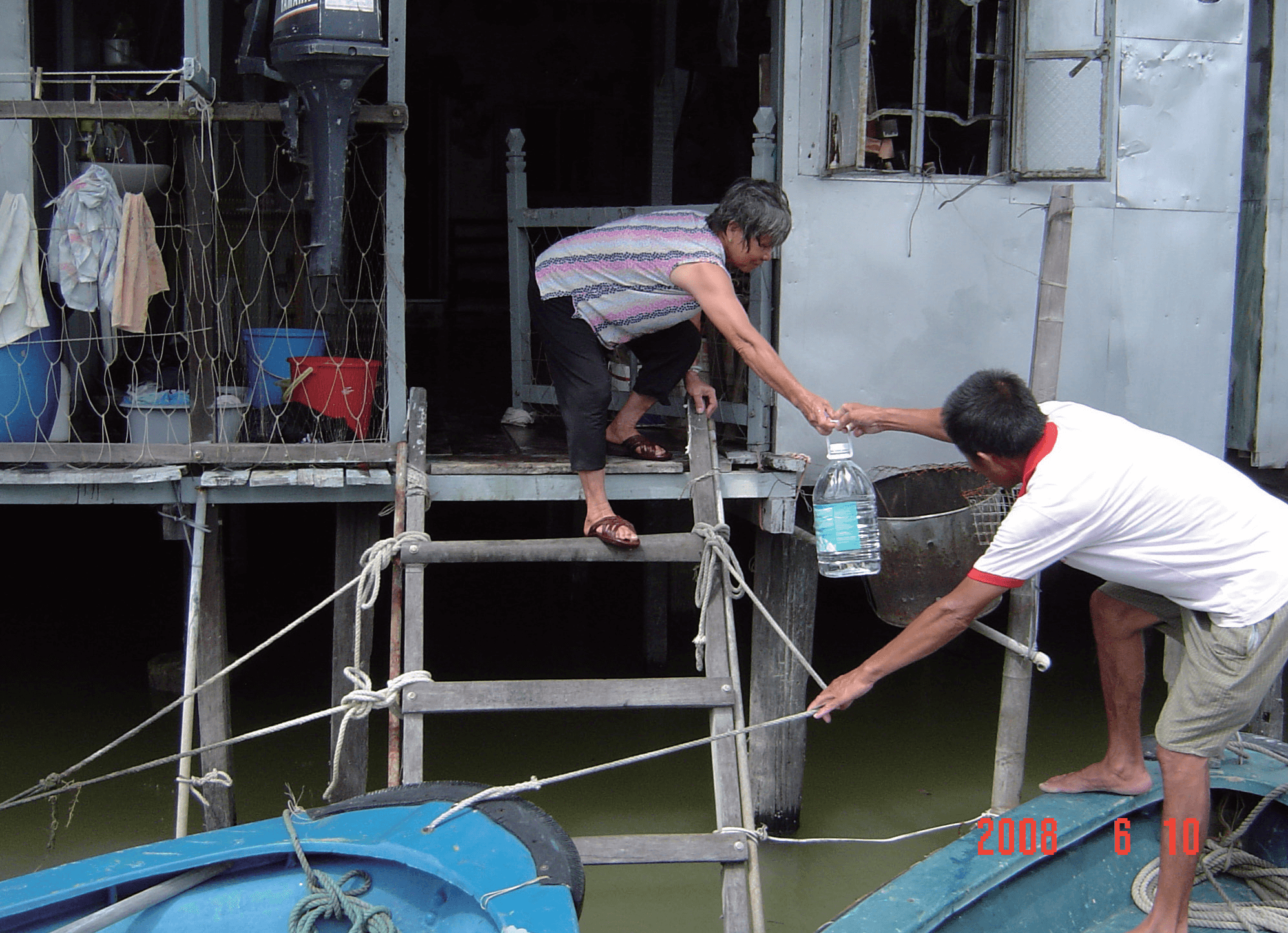
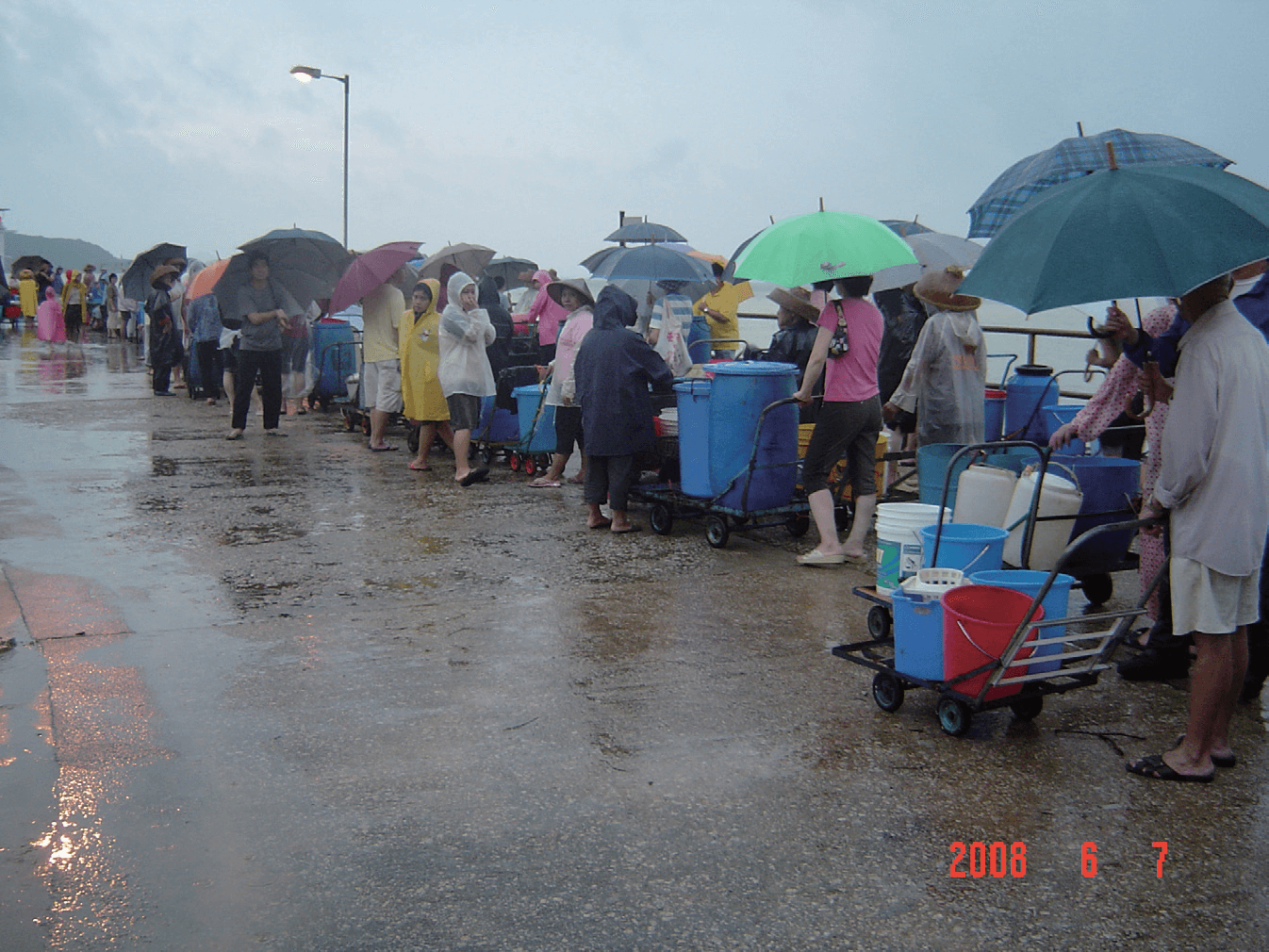
In the meantime, water supply to Tai O was halted and the WSD needed to provide an emergency temporary water supply for over 6,000 residents. Due to the complete closure of Keung Shan Road, water wagons could not be arranged by a land route. Water, using large water tanks, could only be delivered by boat to Tai O Public Pier using the sea route for residents living along the shoreline. Additionally, the WSD also arranged a contractor to deliver bottled water to residents in affected areas by using dinghies. Since the telephone communication network was down, Ir TANG Hon-yin and his colleagues had to trek up mountains, braving heavy rain to inspect the situation. “The heavy rain and landslides made the streams muddy. Some residents were evacuated due to the lack of water and food supplies, while others, such as the frail and elderly were unable to go down the mountain. We saw the Government Flying Service (GFS) dropping food and bottled water to hill residents and wondered if we could use helicopters to lift water tanks up the mountain,” said Ir TANG. They were able to make the necessary arrangements after contacting the GFS, setting a precedent for helicopter-assisted water tank delivery in Hong Kong.
While the water mains to Tai O Water Treatment Works were still under repair, there was another emergency unfolding at the Cheung Sha Water Treatment Works on the southern side of Lantau Island. Incoming water was mixed with sludge from the heavy rain, making it difficult for the water treatment works to process the influx. As a result, the water level of the fresh water tank in the service reservoir dropped sharply. TSE arrived quickly at the scene by speedboat and dispatched his colleagues from the Cheung Sha Water Treatment Works to inspect pipes for a possible burst mains. "We discovered that firemen were using the fire hoses connected to street fire hydrants to wash away the mud on the streets, causing a significant drop in water levels at the service reservoir. We had to ask the firemen to halt washing". To ensure an adequate water supply, the WSD also urgently requested the Food and Environmental Hygiene Department to deploy their six recently purchased water wagons. For 24 hours a day, they transported treated water from Silver Mine Bay Water Treatment Works, running along the South Lantau Road to keep filling-up the Cheung Sha Fresh Water Service Reservoir. Meanwhile, KWOK Yau-ding, the Chief Waterworks Chemist before his retirement, was tasked with overseeing the cleaning of the water treatment plant and storage facilities at the Cheung Sha Water Treatment Works. He worked with his team for four consecutive days and nights to prepare for the resumption of the water supply.
The water supply to Shek Pik Prison and Sha Tsui Correctional Institution1, both located on the south-western side of Lantau Island, was also disrupted after the heavy rain. Shek Pik Prison’s water supply comes directly from the Shek Pik Reservoir and is then treated by the Correctional Services Department’s own facilities. However, due to the prolonged rainstorm, the water in the reservoir became extremely discoloured and the WSD had to arrange temporary water supply to the prison. TSE explains: "Water treated at Cheung Sha Water Treatment Works was pumped along South Lantau Road and Shui Hau Pump House to the Tai Long Wan Fresh Water Tank. Our emergency staff installed a temporary pipe system and laid a one-kilometre-long plastic pipe along Shek Pik Reservoir Road connected to a temporary tank placed in front of Shek Pik Prison."
The emergency team spent four days and nights identifying the location of water mains damage near the Tai O Water Treatment Works. Simultaneously, they repaired six sections of the water mains, restoring the incoming water supply to the Tai O Water Treatment Works, and enabling the plant to gradually resume water treatment. However, some of the distribution mains connecting to Tai O households were clogged by mud. The only approach to clean these pipes and inside service components was by flushing with treated fresh water. According to TSE, frontline staff had to dismantle and flush the water meters of each of the approximately 600 affected households before the water supply was resumed to prevent sand and mud reaching households and clogging water meters. The WSD had to mobilise staff from the Regional Office of Hong Kong and Islands, and Kowloon to assist after their own work was complete. Bringing to Tai O their own tools, light food and drinking water and as land transportation had not resumed, some took a boat from Tung Chung Public Pier, while others took land transportation to Keung Shan Road, then walked to the scene. Over 200 staff were mobilised and managed to finish the pipe flushing and replacement of water meters overnight. The water supply resumed at noon on the following day. In total, the emergency repair operations by the WSD and its contractor was for five days and four nights – whilst all personnel were grateful that the work was completed in a timely manner.
- Prior to 2009, it was called the Sha Tsui Detention Centre