


As mentioned in the article “Waterworks Mechanical and Electrical Maintenance 'Base Camp’” in this chapter, disassembled components will be sent to the M&E Workshop for maintenance and repair. Components that cannot be disassembled will be classified as civil engineering works for maintenance. Of these types of maintenance works, the public may most be familiar with the replacement and rehabilitation of water mains. The WSD will replace or rehabilitate high-risk water mains after assessing the level of the asset management risks. However, careful planning and preparation are necessary before any maintenance is undertaken as many water mains are located in public areas. This involves coordinating with government departments and stakeholders to plan temporary traffic arrangements and apply for excavation permits.
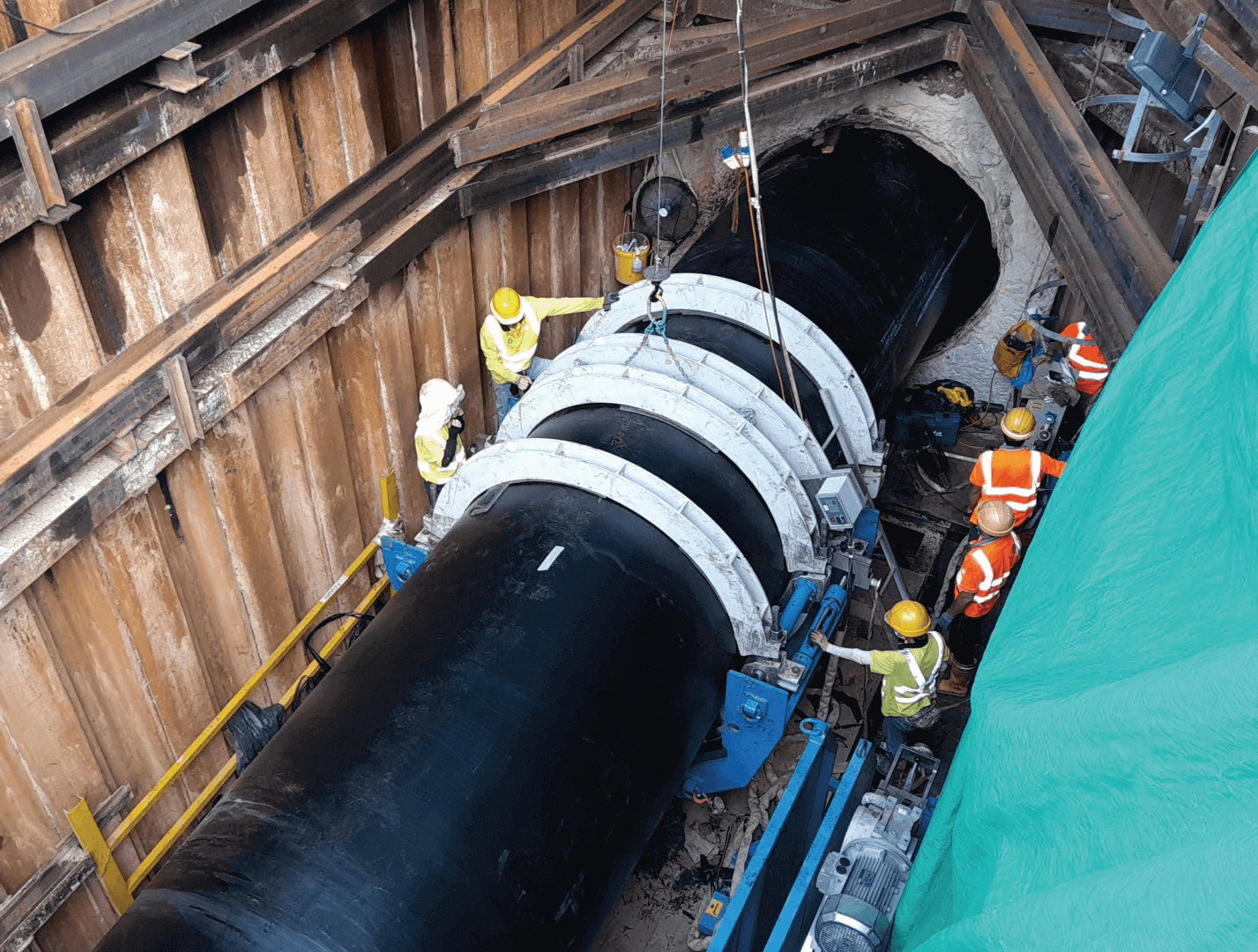
Recently to minimise disruption during maintenance works, the WSD uses an engineering technique to rehabilitate existing water mains instead of replacing them. This involves inserting a re-shaped polyethylene pipe into the existing water mains through a valve chamber or shaft; the insertion would then be reverted to its original size to form a lining close to the existing pipe. This method reduces extensive road excavations and has less impact on road traffic.
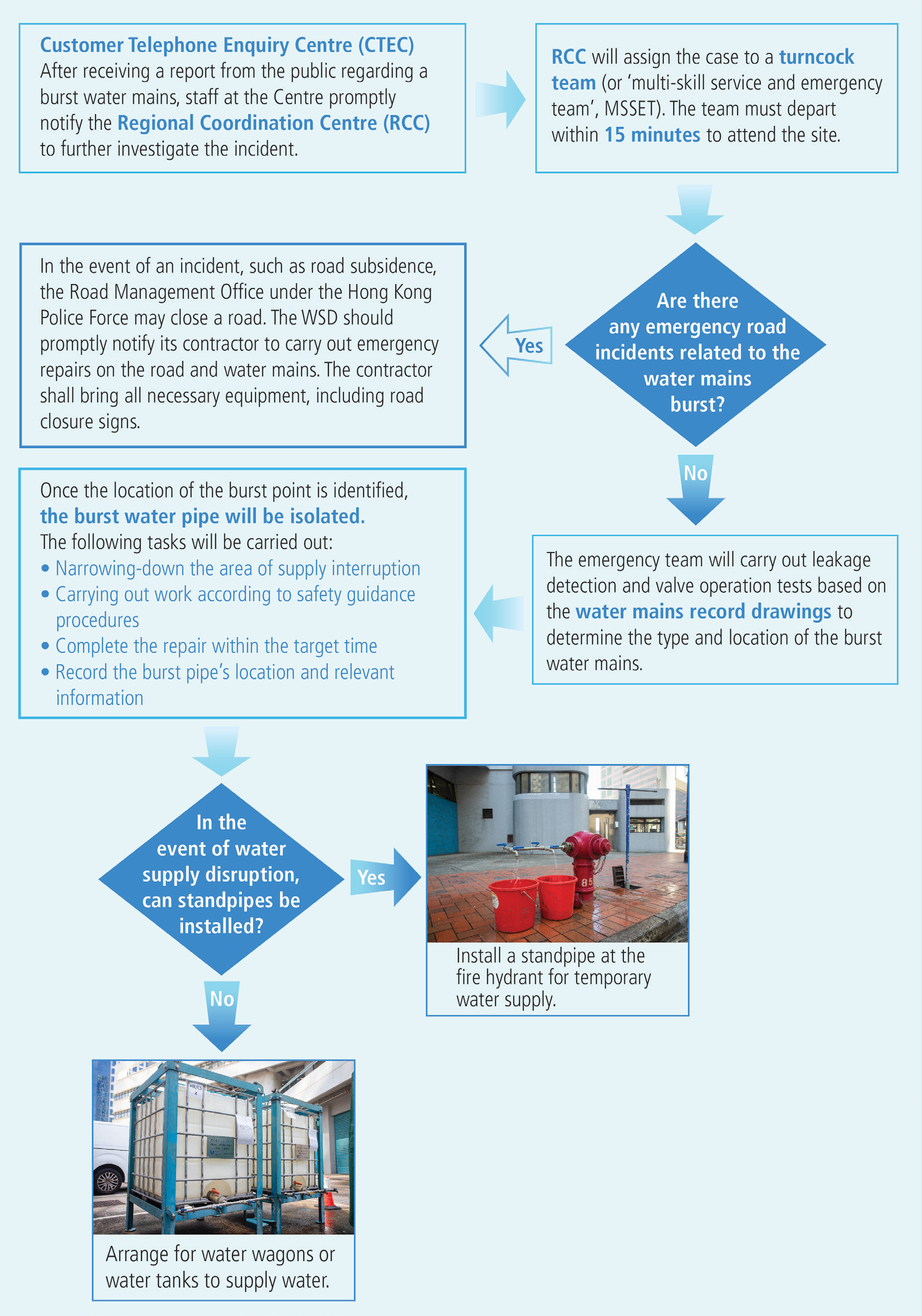
In any emergency situation, the WSD’s Supply and Distribution Branch will deploy a turncock team, as needed. To ensure prompt resumption of water supply, a duty turncock team is always on-call, and can depart within 15 minutes of notification to attend the site. Handling of an emergency incident is a race against time. The following is an overview of the workflow of the emergency teams, taking a water mains burst as an example.
The Workflow of the Turncock Team
In general, the WSD will first assess and provide temporary emergency water supply to the affected consumers by water wagons, water tanks or standpipes in the following situations:
- Problems with the water supply that affect essential facilities, such as hospitals and airports
- Problems with the water supply that have a serious impact on residents, e.g. the incident takes place during meal preparation hours
- Water supply is not expected to be quickly resumed
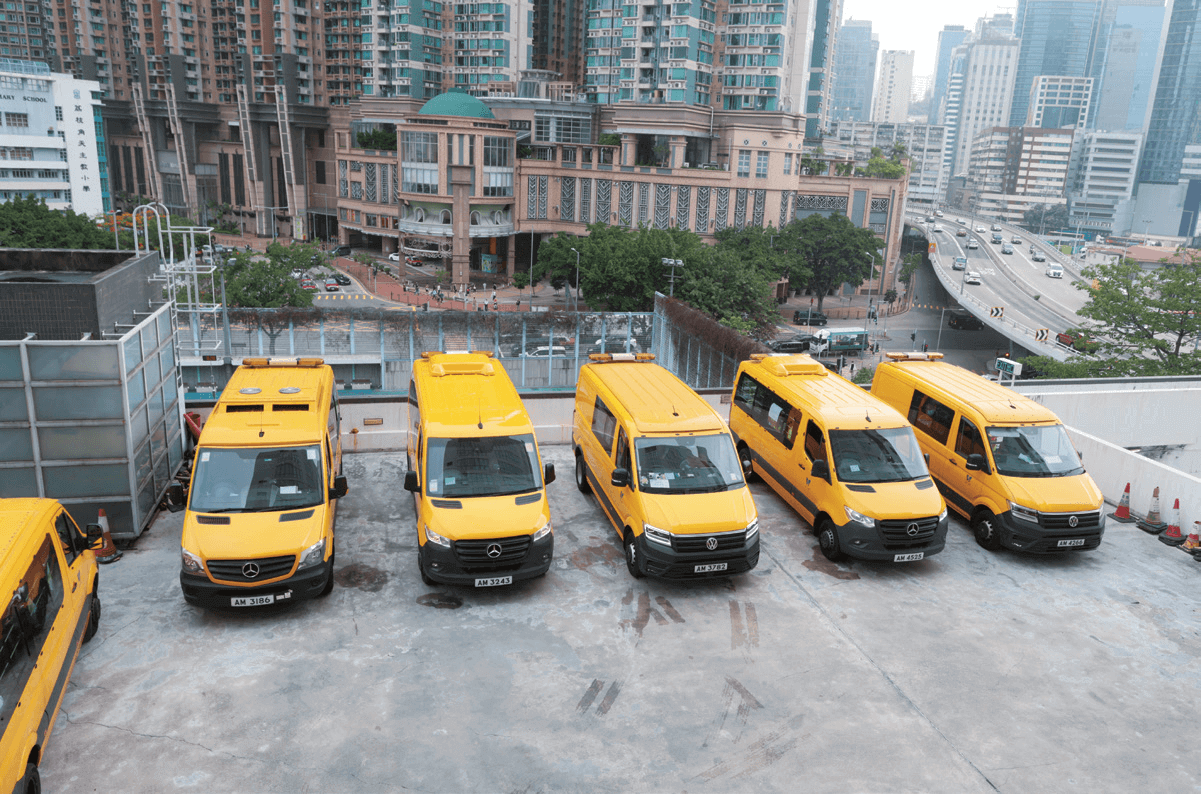
Alongside the turncock team are the WSD’s signature utility vehicles, including water wagons and maintenance vehicles.
- Provision of emergency temporary fresh water supply within three hours in 90% of cases, after the isolation of a burst mains
- Resume water supply within seven hours in 70% of cases after repair of burst fresh water mains
- The WSD achieved the above service targets in 2021/22
A WSD Water Wagon
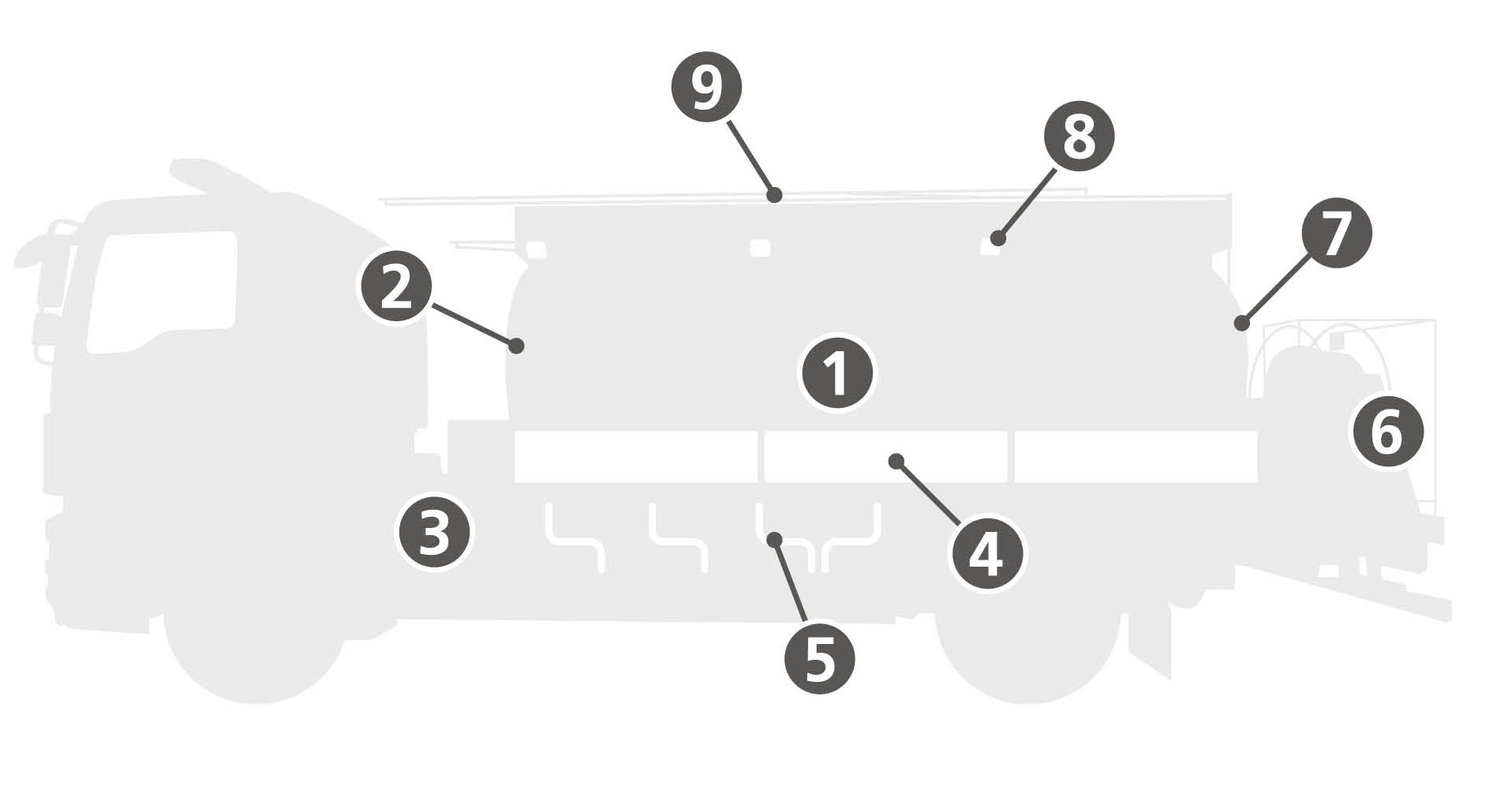
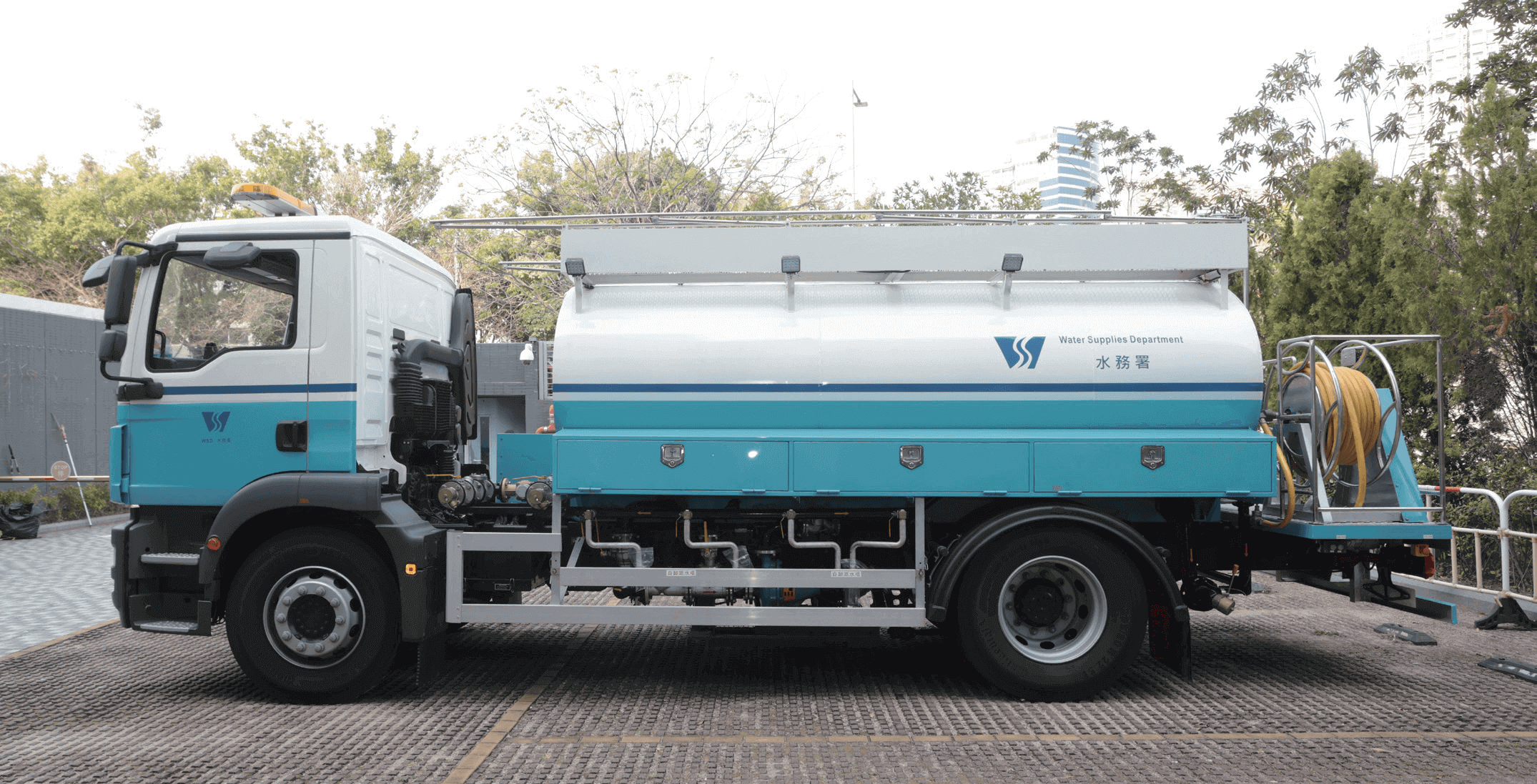
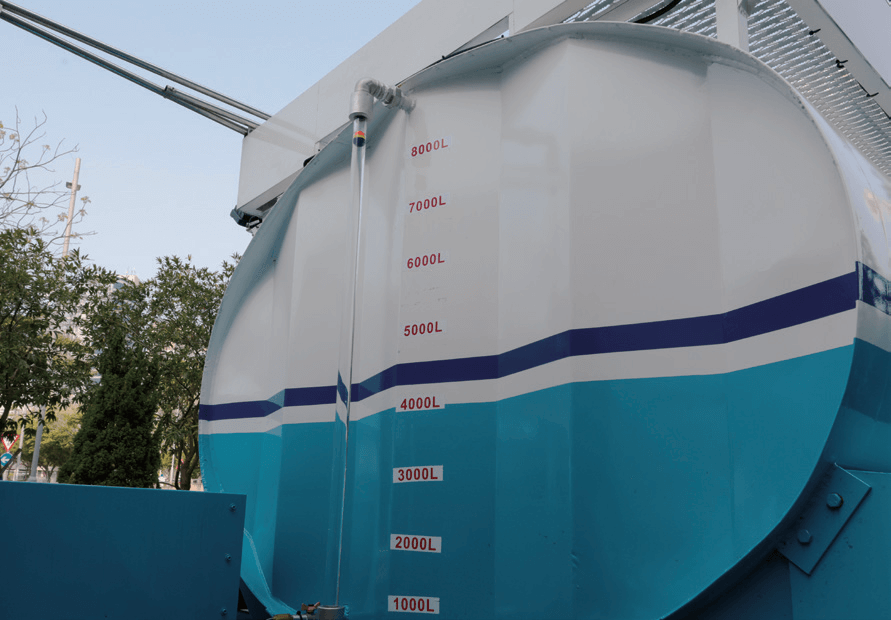
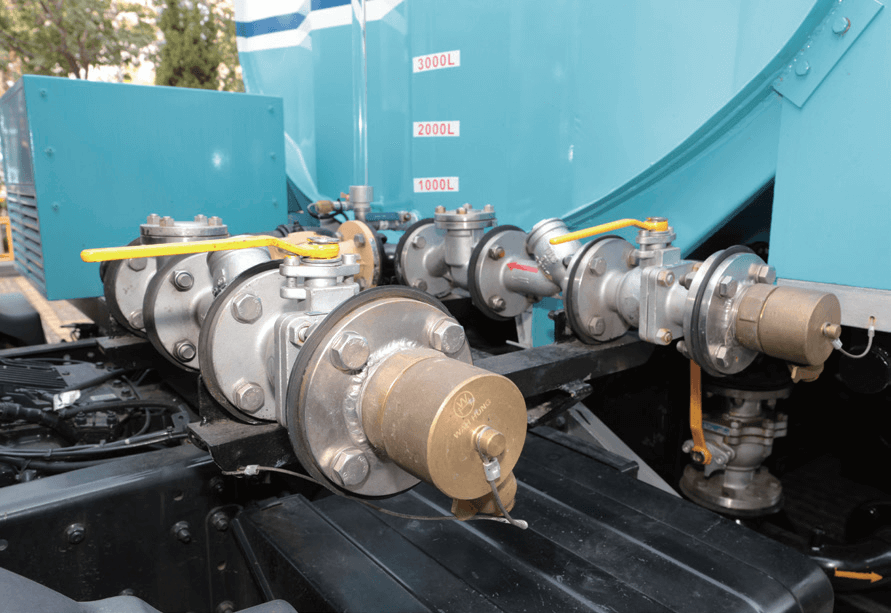
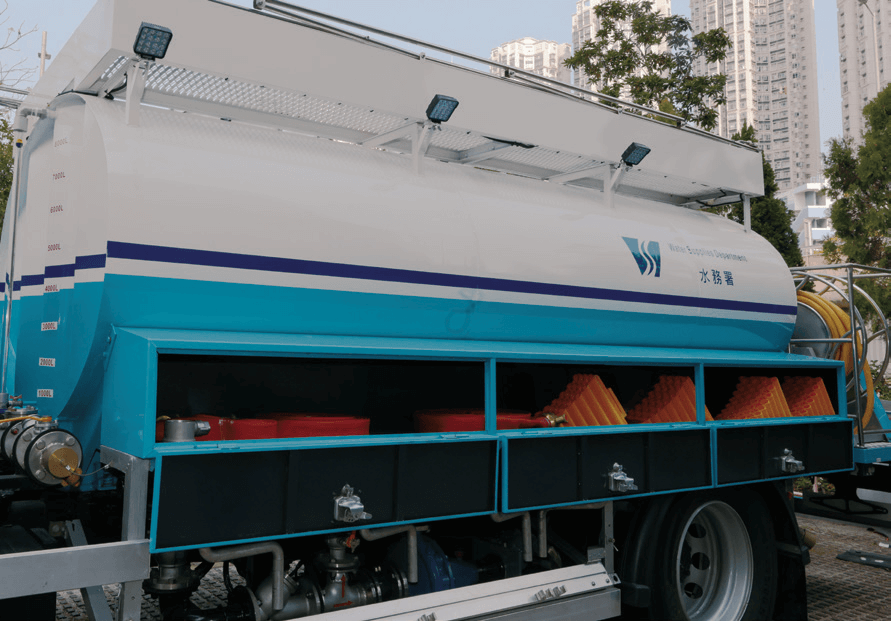
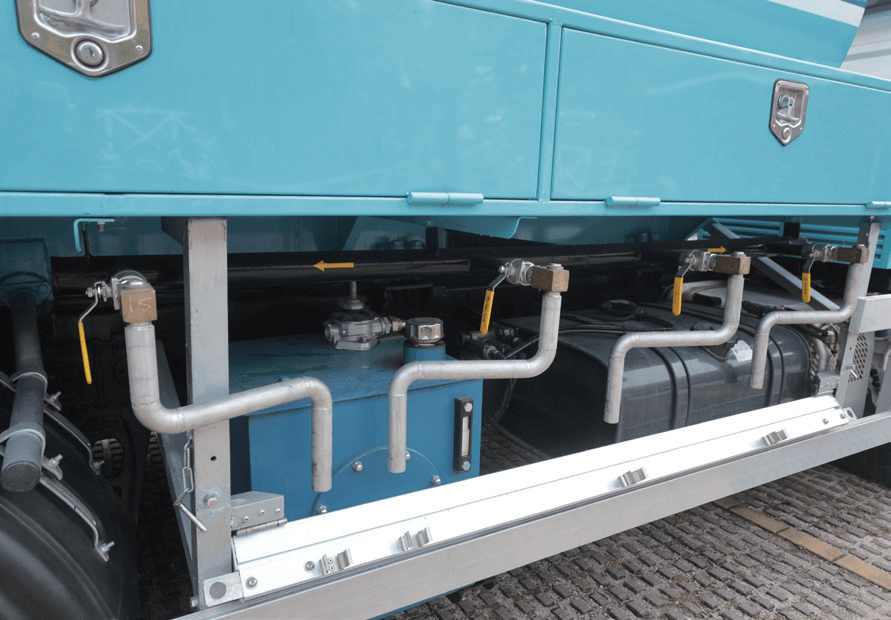
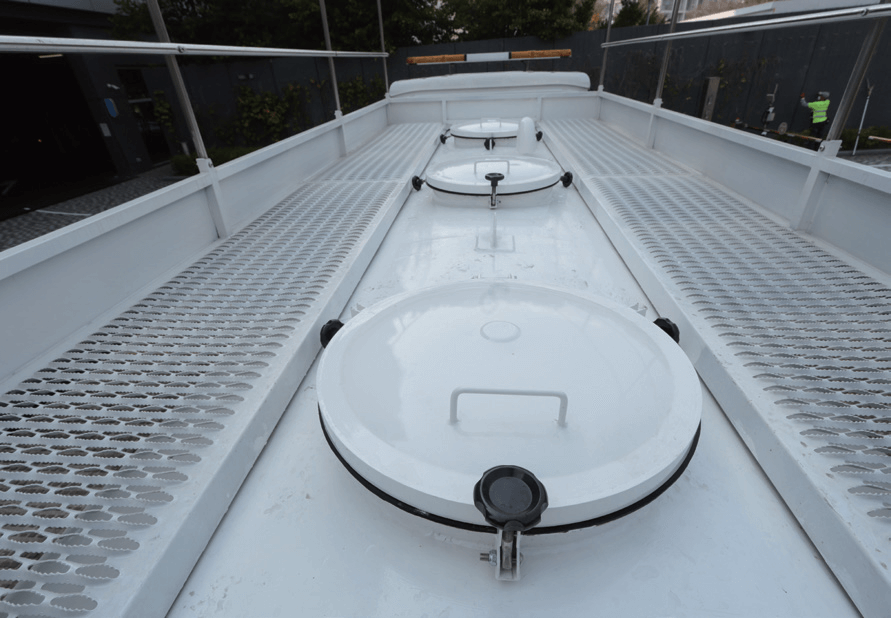
If there are other fresh water mains in the vicinity of the affected area, the WSD will install a standpipe at fire hydrant to provide water supply in the shortest possible time. Otherwise, water wagons will be deployed to provide temporary fresh water supply.
While temporary water supply is arranged for the affected residents, RCC will inform its contractor to carry out repair work as soon as possible. If the works area involves roads under the purview of the Highways Department, the WSD will immediately apply for an Emergency Excavation Permit and supervise the contractor to carry-out the repair works. Work progress will be monitored and the time for resuming water supply will be regularly reviewed. After the work is completed, the WSD will inspect and confirm its completion. Then, the emergency team will restore valves that were previously in operation. They will also ensure that any trapped air is released from the empty pipes through fire hydrants or washout manholes before resuming water supply. Finally, the CTEC and RCC will be informed for coordination.
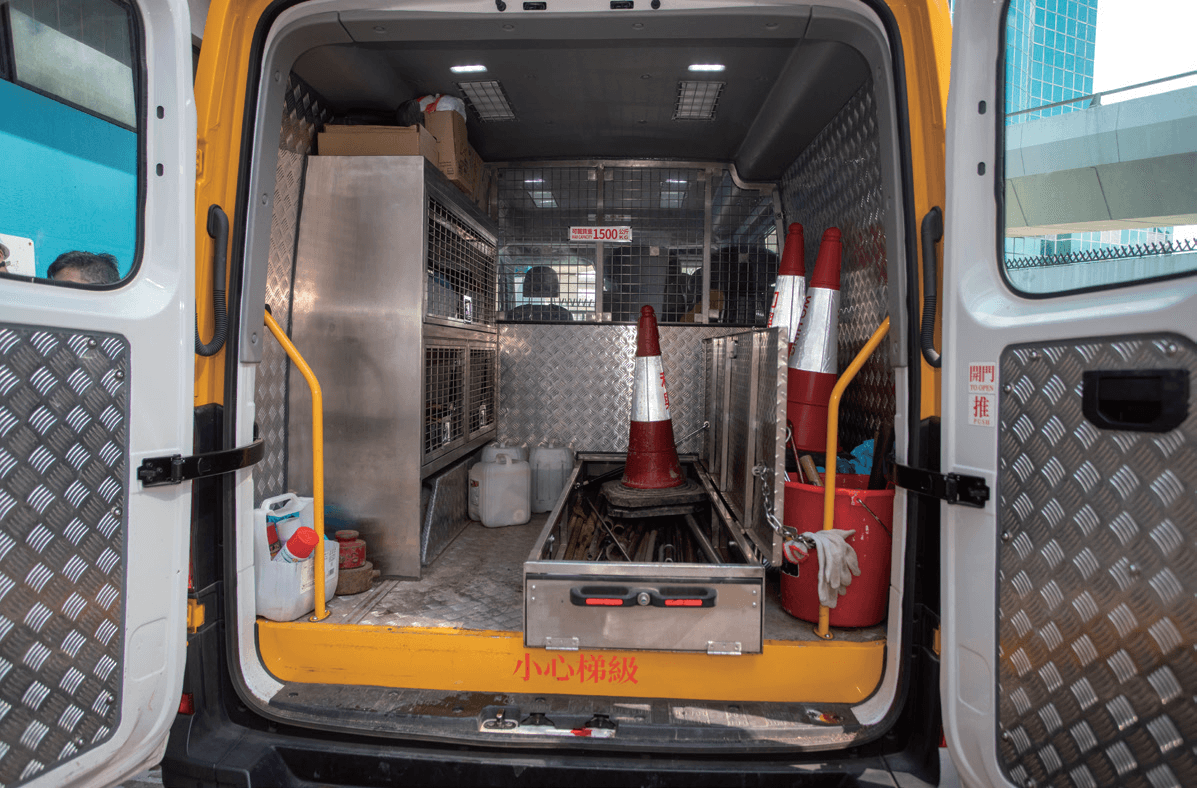
WSD Maintenance Vehicles’ Equipment
The WSD will deploy their maintenance vehicles whenever a water mains burst is reported. These vehicles are brightly coloured and equipped with various equipment, such as standpipes, valve assemblies and traffic cones used during the inspection and maintenance of emergency burst pipe incidents. This fleet also transports maintenance personnel to the scene of an incident.
In addition to water mains bursts, the WSD will also handle water main leaks, yellowish or abnormal smelling in fresh water, abnormal water pressure, water supply interruptions and even extreme weather events or accidents, and will arrange emergency water supplies if necessary.