



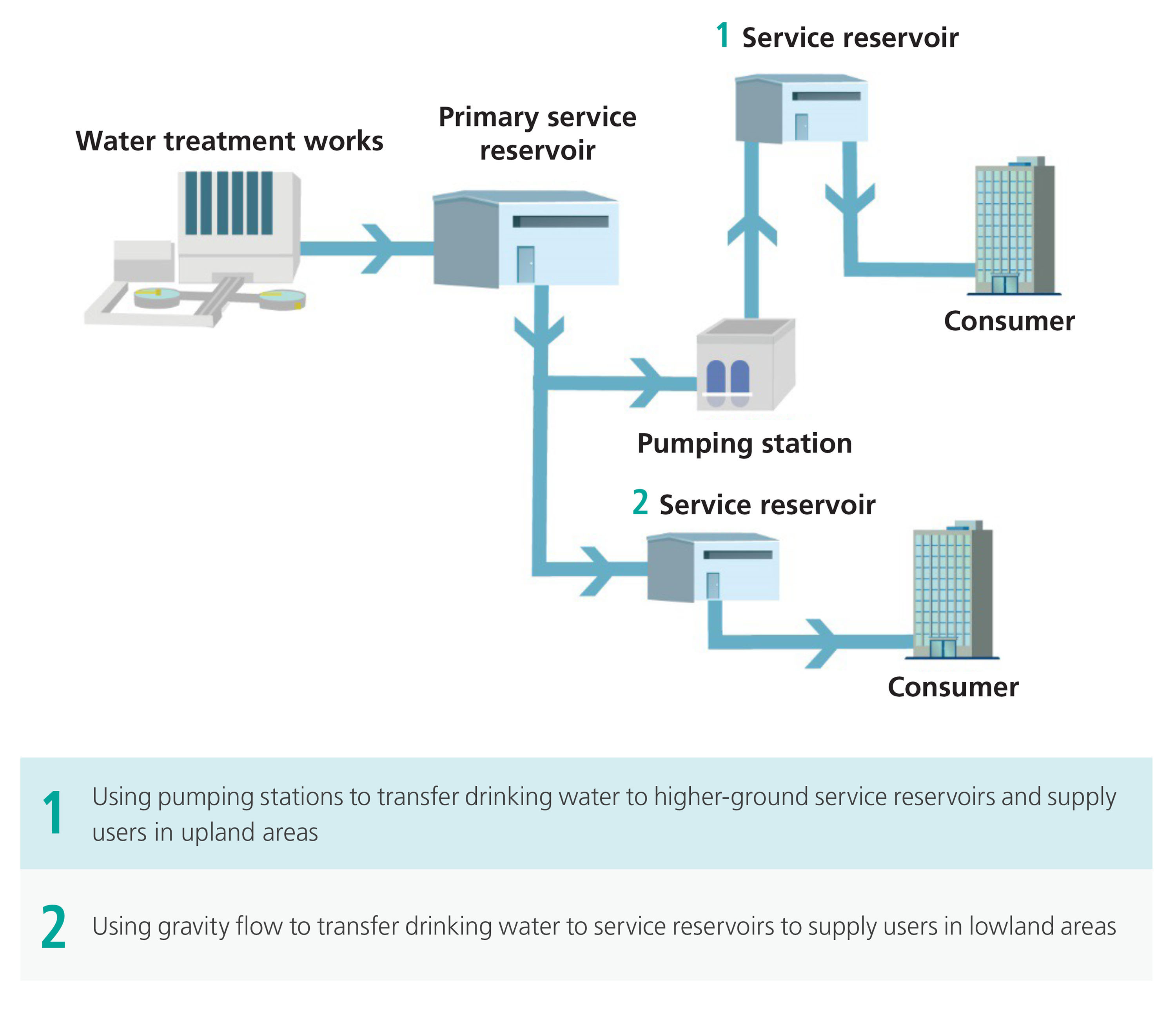
A water distribution system is the link between a water treatment works and its consumers. Comprising a network of pipes, service reservoirs, pumping stations, valves, etc. Hong Kong's drinking water distribution network resembles the blood vessels of the human body, with pumping stations serving as the heart to facilitate the flow of water when needed. A service reservoir serves as a temporary storage area for treated water. Currently, there are 179 fresh water service reservoirs in Hong Kong, comprising 15 primary and 164 secondary fresh water service reservoirs. Drinking water, which is temporarily stored, is then distributed to consumers through fresh water mains, totalling a length of around 6,700 km.
Schematic Diagram of Hong Kong’s Drinking Water Distribution System
Water Pressure at the Heart of Water Distribution
The growth of Hong Kong's drinking water supply network reflects the city's urbanisation, starting with Hong Kong Island, expanding to Kowloon, and finally reaching the New Territories. Hong Kong has rugged terrain with limited flat areas. In addition to land reclamation, the upward expansion of development areas has necessitated building service reservoirs at higher elevations. Consequently, Hong Kong has established a drinking water distribution system with an unusually high average water pressure, a rarity around the globe.
Before reviewing the development of the water distribution network in Hong Kong, it is necessary to understand the fundamental concept underlying any water supply system: Water Pressure.
Water pressure is the force that drives the flow of water, achieved through the gravitational potential energy of incoming water or by pumping. The water distribution system therefore applies both methods to create water pressure.
Gravity flow relies on the difference in height between the water supply facility and the water supply zone, causing water to move downwards under the force of gravity and pressure as so generated. The greater the difference in height, the higher the pressure. In Hong Kong, most urban areas are situated on hills. If water were to flow solely based on gravity, the pressure variation would be too substantial to accommodate users at different elevations. Consumers located at higher elevations may face insufficient water pressure, while areas situated at lower levels may experience high water pressure that could damage pipes, causing them to burst or leak and affect their durability.
Water pumps are powered by a dynamic machine that applies pressure to water. As this pressure rises above the force of gravity, it allows water to flow upwards from a low level to a higher level. In the past, most pumping stations used fixed-speed pumps with only two on/off settings. When retained water in a service reservoir starts to decrease, the pump will reactivate and water is pumped to a service reservoir for replenishment.
Use of Gravitational Flow in Water Distribution
Whenever possible, optimisation the use of gravity is the main principle for drinking water distribution in Hong Kong. If this is not applicable, pumping stations are used to convey water to its destination. As a result, the primary service reservoir is usually situated at a higher elevation feeding service reservoirs at varying other heights, aligned with the corresponding fresh water supply zones. This will more effectively regulate water pressure, reduce energy consumption and act as a buffer for fresh water storage when required.
The Early Development of Hong Kong’s Drinking Water Distribution Network
In the past, developed urban areas tended to be situated either on the waterfront or at the foot of hills, with steeper hills behind them. Consequently, water distribution was based on constructing water storage facilities on the highland outskirts of these development zones. By utilising gravity, drinking water could then be distributed to customers through the water supply network of different localities.
The Pok Fu Lam Reservoir was completed in 1863. To address the needs of water supply and firefighting, the government established water supply points throughout the city and the water supply network was then developed. Water collected from the Pok Fu Lam Reservoir was redirected by gravity to Tanks No. 1 and No. 2 located near Bonham Road. From there, the water was transmitted through water pipes to 30 standpipes and 125 fire hydrants in the city. The Pok Fu Lam Reservoir primarily served Sai Ying Pun, Sheung Wan and Central as well as Wan Chai. As the city of Victoria’s population grew, it became obvious that the number of standpipes was inadequate. Consequently, fire hydrants also stood-in as public standpipes.
Residents were able to obtain water from standpipes at no cost, or they could submit an application for the supply of tap water. In 1860, the government introduced the Water Supply Ordinance, which stipulated that rates paid by leaseholders would be the main source of funding for the continuing development of water services. As this was a public service cost, it was tied to a property’s rental value rather than the volume of water utilised. Rates for the type of housing and its location varied. In the early years, there was a dual system of free and paid water supply on Hong Kong Island. At one point, water supply to paying consumers was disrupted by free water flowing from standpipes.
It was not until the Tai Tam water supply system was built that a relatively complete design was developed for the city. This design incorporated a treatment process as well as a service reservoir for storing treated water. The Albany Fresh Water Service Reservoir (completed in 1888-89), located halfway up the hill in Central, was built in conjunction with the Albany Filter Beds. Situated at approximately 121 metres above Hong Kong Principal Datum (mHKPD), this facility was high enough to provide water pressure for 90% of the homes in the city of Victoria. However, due to the limitations of gravity from the reservoir at that time, the water distribution network did not cover The Peak area and its residents had to rely on wells as their main source of water.
Fun FactDistrict Planning of Water Distribution
Later to enhance water distribution, the Public Works Department, following the advice from Sir Osbert CHADWICK, Consulting Engineer to the Crown Agents, erected pumping stations at Garden Road, Arbuthnot Road, and Bonham Road. These facilities alleviated the limitations of gravity and made it possible to supply fresh water to residential areas from Caine Road to The Peak1. However, the water supply to The Peak was unreliable and disrupted whenever the pumping station at Bonham Road was not working or required maintenance. To address this issue, Francis Alfred COOPER, the then-Director of Public Works, suggested to construct a covered service reservoir to store a 10-day supply of water for the whole area. The resulting Peak Fresh Water Service Reservoir, located at the elevation of 533 mHKPD, serves as the highest service reservoir on Hong Kong Island. It is one of five remaining reservoirs that have been in operation for over a century.
CHADWICK proposed dividing the city of Victoria2 into three water supply zones based on ground elevation - upper, middle and lower - to reduce the height distance and relieve water pressure in the lower water supply zone. This zoning of water distribution according to height also laid the foundation for the water distribution model for the whole of Hong Kong.
The Implementation of a “User-pays” Principle
As the urban development of Kowloon was started later, the government was able to establish a centralised water supply system and introduce a charging policy at the earliest planning stages. A modern water supply network began to take shape and regulations on water charging using water meters were passed two years after the first water supply system in Kowloon was completed in 1895. With the introduction of water meters and a consumption-based charging system, water wastage in Kowloon was reduced. For supplies on Hong Kong Island, the ordinance was amended in 1902 to authorise the installation of water meters throughout the territory. Initially, the purpose was to minimise water wastage. However, due to strong resistance to charging, the government opted for a rider main system instead, requiring owners and residents to install a separate water mains with a regulator valve to be switched-off from the distribution mains. This came at the expense of the owners and residents, and owners paid a quarterly water service levy as a fixed charge. The rider mains system operated until 1932, when it fell into disrepair and owners were reluctant to pay for its repair. The government then amended the ordinance to abolish the system and implement a meters and charges system. Since then, the "user-pays" principle has been in effect for Hong Kong’s water supply services.
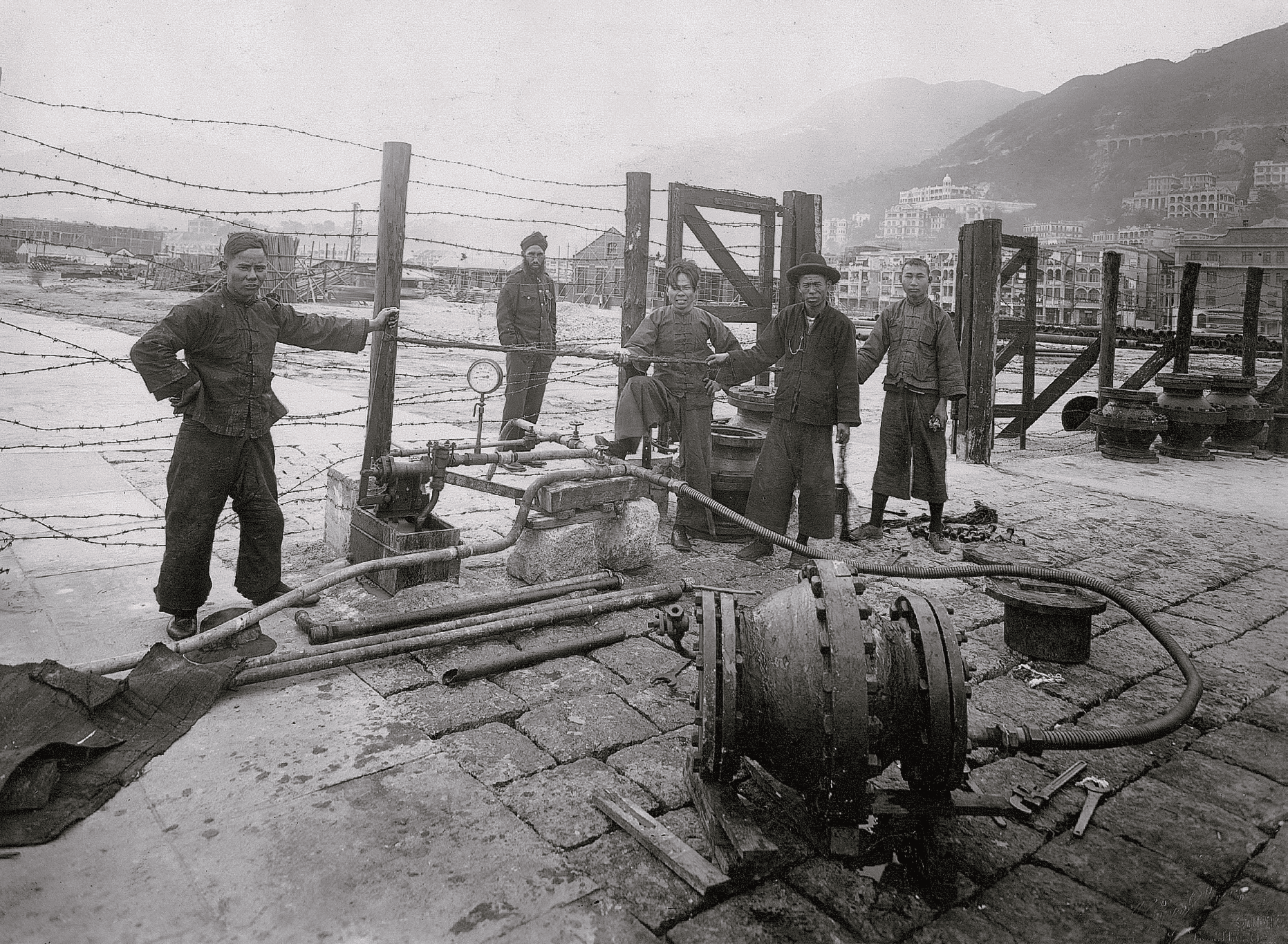
Development and Improvement of the City’s Drinking Water Distribution Network
As Hong Kong progressed, the drinking water distribution network expanded further, spanning hills and crossing Victoria Harbour. Hong Kong has over 260 outlying islands, and many are inhabited. The first cross-harbour pipeline was laid in 1930 to supply water from the Kowloon Reception Reservoir to the densely populated Hong Kong Island. Today, the cross-harbour water mains connecting Kowloon and Lantau Island account for 90% of Hong Kong Island’s water supply.
The drinking water supply system in Hong Kong currently covers 99.9% of the population and as new development areas open, the drinking water distribution network also expands. When the New Works Branch of the Water Supplies Department (WSD) carries out mainlaying projects in new development areas, it essentially extends the existing water distribution network. Consequently, it is vital to assess various factors, including: the water supply reservoir and treatment works from which the water is sourced, the existing treatment capacity of the water treatment works and the estimated water consumption for fire-fighting. Prior to commencement of any project, the WSD staff undertakes thorough studies and intricate designs, involving scrutinising water mains alignments, investigating land conditions and conducting impact assessments on the traffic, drainage and environment.
In developed regions, the water distribution system is optimised to accommodate different conditions, such as small villages or housing developments, where some buildings are situated at higher elevations and can no longer be supplied by gravity flow from the original service reservoirs. Additionally, some remote villages, which formerly relied on mountain waters, must now seek drinking water supply from the government as rivers have dried-up. The WSD will expand the current distribution network based on situational assessments.
Zoned Layout of Distribution Network
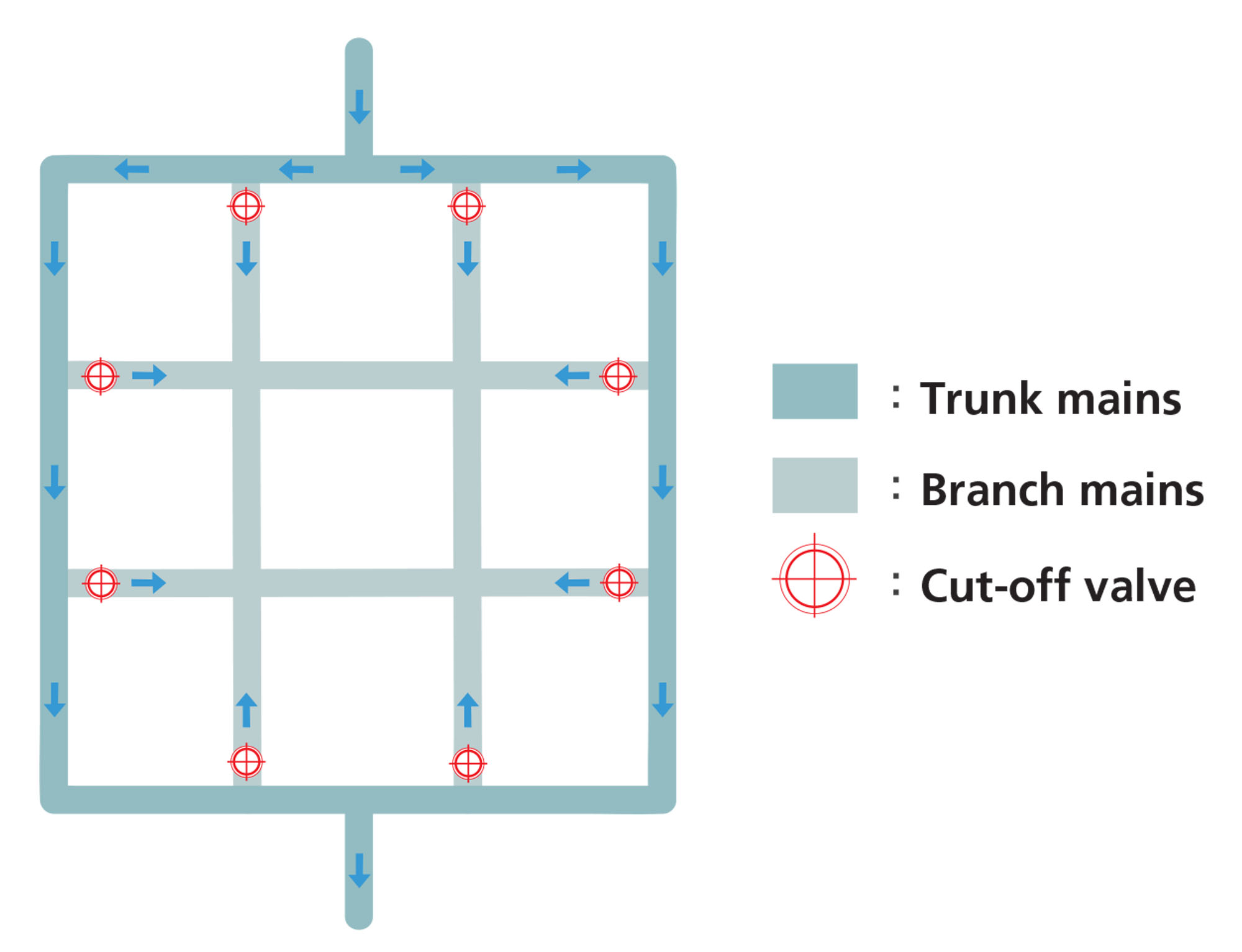
The drinking water supply network in Hong Kong is typically segmented into various water supply zones, based on factors such as population density and topography. These zones can function either independently or be interconnected. In each district, the distribution system's structure generally falls into three categories: the dead-end system, grid-line system and ring system. The choice among these options will depend on the specific situation. The first two distribution networks can be found in previously developed areas, whereas the ring-type system is utilised in Hong Kong. In this case, trunk mains form a ring around the water supply zone, while other branch mains are cross-connected and interconnected with the trunk mains to ensure reliability. This arrangement allows for maximum water supply to each block and is best suited for cities with well-planned streets.
Illustration of the Ring System
Seawater Distribution System for Seawater
Hong Kong was the first place in the world to make wide use of seawater for flushing, and has long since developed two completely separate fresh water and seawater supply systems, each with its own pumping stations, service reservoirs and distribution mains. These features have contributed to the complicated water distribution network in Hong Kong.
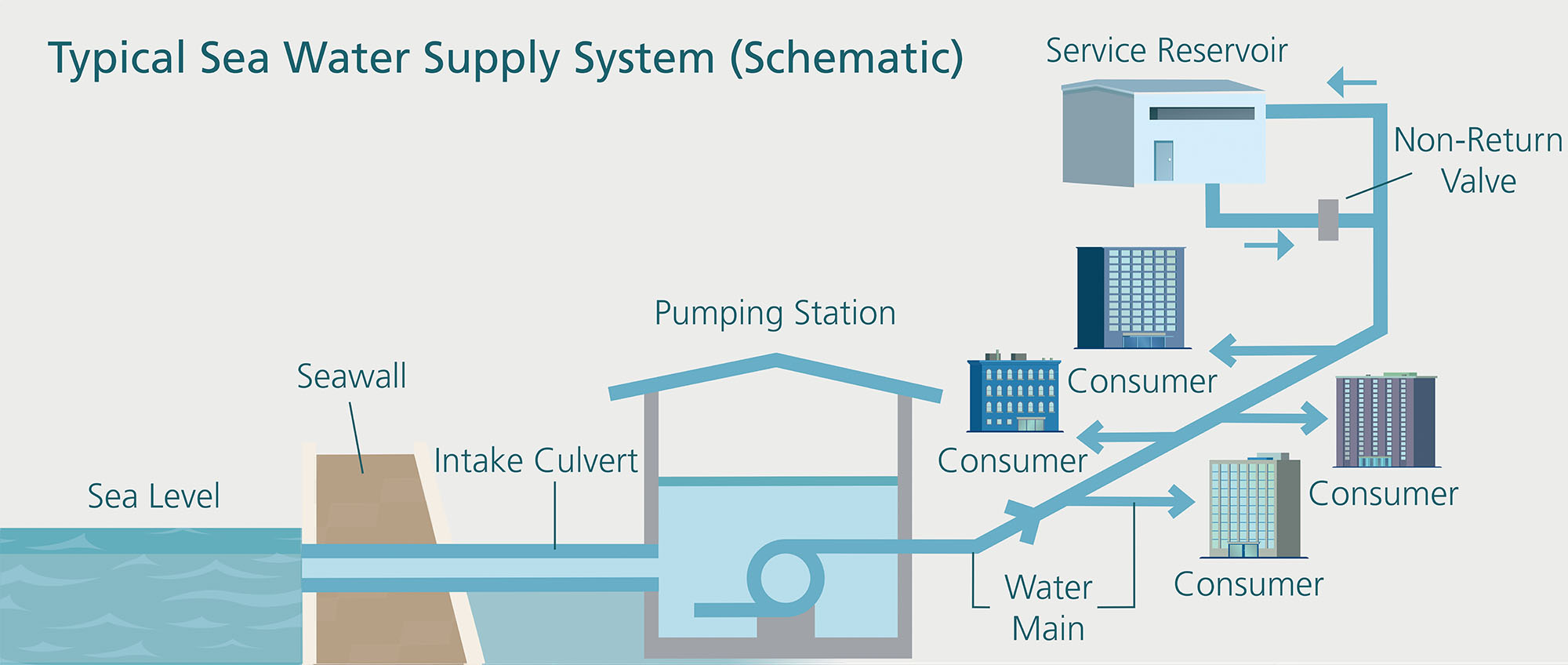
The water supply system in Hong Kong optimises the principle of gravity. However, to enable direct pumping of seawater into the flushing water distribution network, seawater pumping stations are typically positioned at or in close proximity to seawalls to transfer seawater from a lower to a higher level.
The seawater first enters the intake culvert to screen-out sizable particles by strainers and is then disinfected with sodium hypochlorite. The flushing water quality after treatment must meet the WSD's requirements on colour, turbidity, odour, etc. The residual chlorine from the sodium hypochlorite also prevents the growth of marine organisms, microorganisms and bacteria in the flushing water supply system.
The treated seawater will flow into the pumping station and be transferred under pressure to the seawater service reservoir for temporary storage. During the process, the seawater will be transferred directly from the pumping station to users en route before the surplus water is sent to the service reservoir at a higher location for storage. This design helps to buffer demand during peak periods. At present, there are 55 service reservoirs and over 1,600 km of water mains in Hong Kong's seawater distribution system.
The City’s 21st Century Water Pressure Management Programme
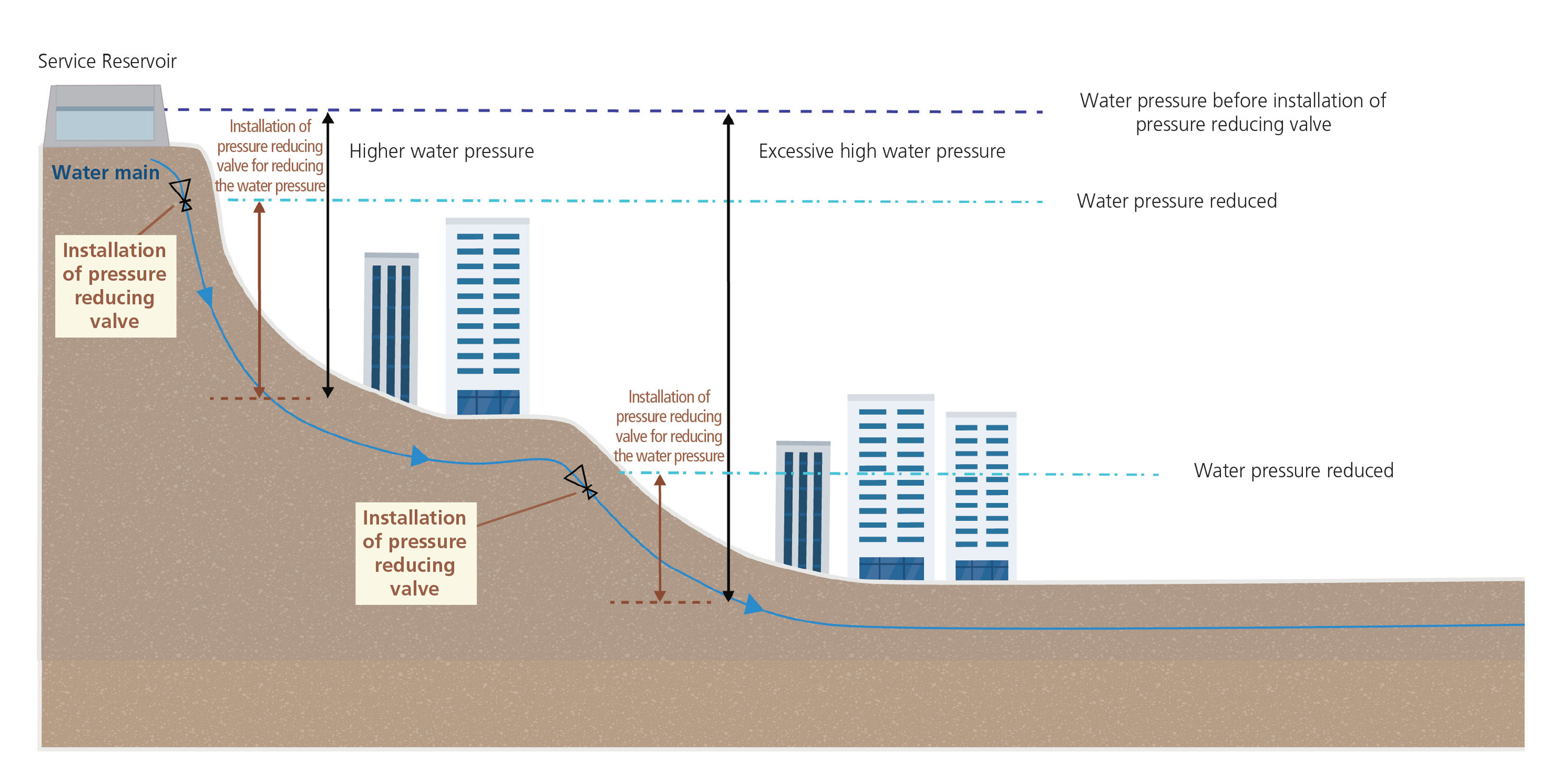
Currently, the daily total water consumption (fresh water and seawater) in Hong Kong averages around 3.7 million cubic metres. This vast amount of water is delivered through a distribution network of over 8,000 km of fresh water and seawater mains underneath the city. Water supply distribution and its pressure stabilisation are not easy due to Hong Kong’s uneven terrain and the large variation in water pressure. In many low-lying areas, the water pressure within the network is excessively high, hence increasing the probability of network leakage. In Hong Kong, the average pressure of fresh water supply typically ranges from 60 to 80 metre head. During its early years, Hong Kong experienced inadequate water yields, which led to a lack of priority in regulating water pressure. It was only towards the end of the previous century that pressure management emerged as a primary consideration in the administration of water supply networks.
Since 1997, the WSD has been implementing a pressure management programme in selected areas. This has involved the planning and design of pressure management studies and the associated construction and installation works. Pressure management is the operation of dividing water supply areas with high pressure into distinct pressure management zones. It lowers the excessive pressure to a suitable level by implementation of pressure monitoring and using control equipment. With advances in technology, pressure reducing valves have significantly improved in performance. The WSD has extensively incorporated them in water pressure management systems to minimise the possibility of water main bursts, to extend the life of water mains, and mitigate water loss. For a comprehensive understanding of network management, kindly refer to "Smart Technology Management of Water Mains and Water Leakage" in this chapter.
Application of Variable Speed Water Pumping
In accordance with the government’s smart city blueprint, the WSD is devoted to examining the use of energy-efficient and productive water supply systems in new development areas.
Variable speed pumping is a technology that has been applied to seawater distribution systems in recent years. Unlike conventional fixed speed pumping, variable speed pumping can adjust pump speed according to the water demand. When the water demand increases, the pump speed will increases. On the other hand, the pumps slow down when demand decreases. Studies have shown that variable speed pumping can save up to 5-10% of energy compared to fixed speed pumping.
Diagram of water pressure management
Better Use of Service Reservoir Rooftop Land
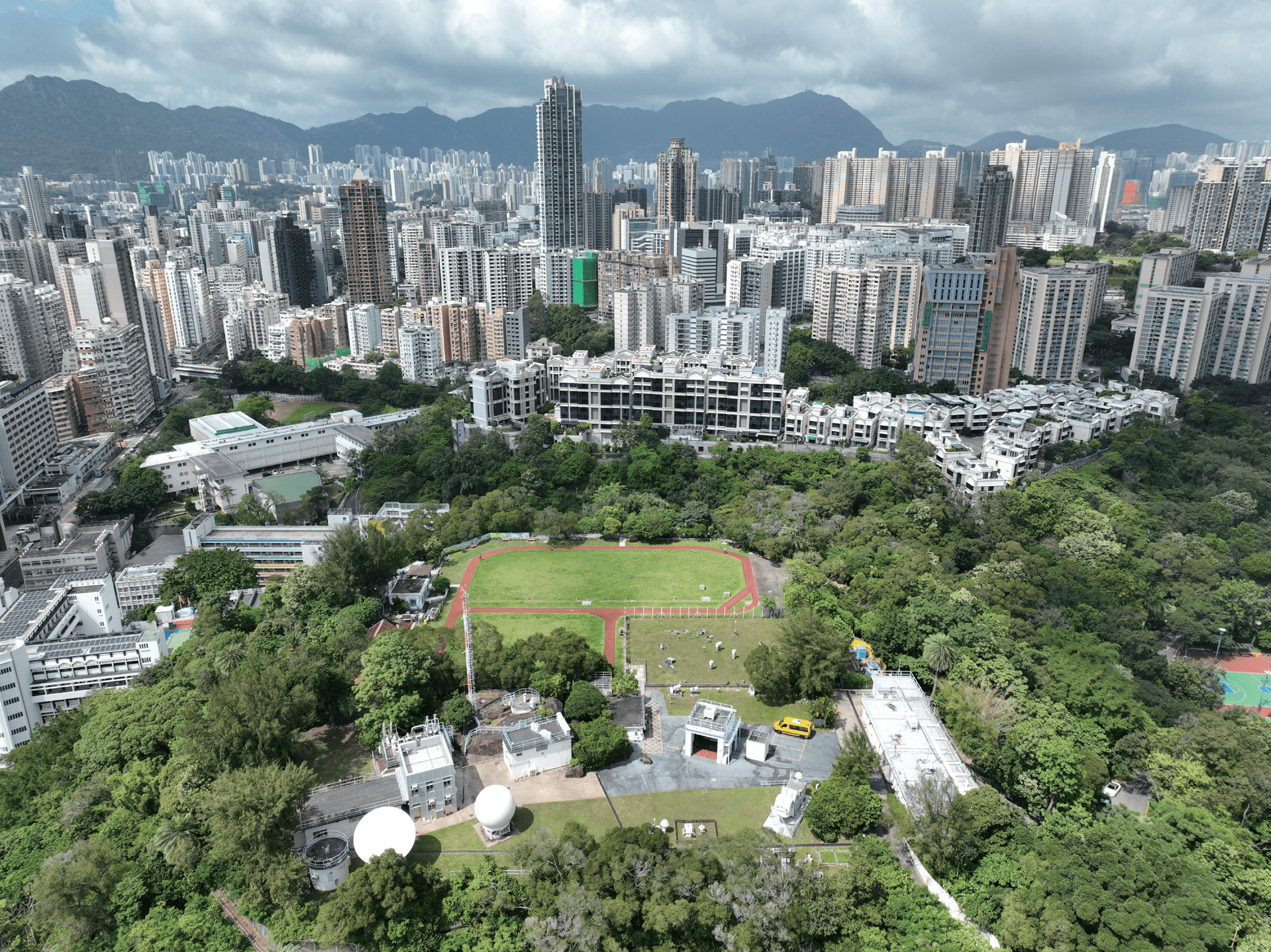
To optimise the use of land resources, the WSD has been opening the open-air rooftop spaces of its service reservoirs for recreational use since the 1960s. As of July 2023, as many as 55 sites above fresh water and salt water service reservoirs have been allocated for use by various government entities and private organisations for use as sports venues, leisure areas, parks, playgrounds and training grounds.
In view of the shortage of land, the government has been actively exploring rock cavern development to release existing land for housing development. The Western Salt Water Service Reservoir on Hong Kong Island West is the first water service reservoir of the WSD built in a rock cavern. The project involved the reprovisioning of the original service reservoir in a rock cavern to free-up space for the development of the Centennial Campus of the University of Hong Kong. The Diamond Hill Fresh Water and Salt Water Service Reservoirs, currently undergoing construction, are expected to be operational in 2026. (For more information, please refer to the article "Waterworks in Underground Caverns" in this chapter.)

- Francis A. Cooper. (1896). Report on the Water Supply of the City of Victoria and Hillside District, Hong Kong, Sessional Papers for the Year 1896. Hong Kong: 251.
- The city of Victoria refers to what is now Western, Sheung Wan, Central and Wan Chai on Hong Kong Island. It was the first area to be developed in Hong Kong and has been the seat of government and its business and financial centre.