




Living near water is natural for humans; and access to a new water source must be found whenever relocation of living place. Similarly, as humans increasingly lived in urban areas, water distribution systems developed in line with the expansion of cities.
The history of water distribution network date back to the Bronze Age, around the mid-3000s B.C., with one famous example being Mohenjo-daro in the present-day province of Sindh, Pakistan. It was an important ancient Indian civilization and city, famous for its sophisticated urban infrastructure and planning. With a population of around 40,000, the city had a well-developed water distribution and drainage system, including a network of more than 700 freshwater wells distributed throughout its neighbourhoods. In addition to supplying water for domestic needs, the water supply was sufficient to support utilities that consume heavy amounts of water, such as public bathhouses.
The basic principles of water distribution have remained unchanged since ancient times. But, its application in different cities has resulted in various designs that consider particular factors, such as topography, hydrology, and geological conditions. Key examples include: Roman aqueducts supported by multiple arches across valleys or plains; and, the qanat in the dry Xinjiang region, where water is diverted by culverts from the snowmelt of mountains into wells.
Ancient hydraulic engineering was founded on experience, however, as ancient civilizations declined, so did engineering knowledge, causing a regression for primitive water supplies built during the Middle Ages. As such, water was mainly collected at central water points by human labour, such as by traders, slaves or users themselves. Progressing into the Renaissance, scientists began to discover the natural laws and principles of hydrology through observation and experimentation. As a result, waterworks engineering design became more precise and accurate over time.
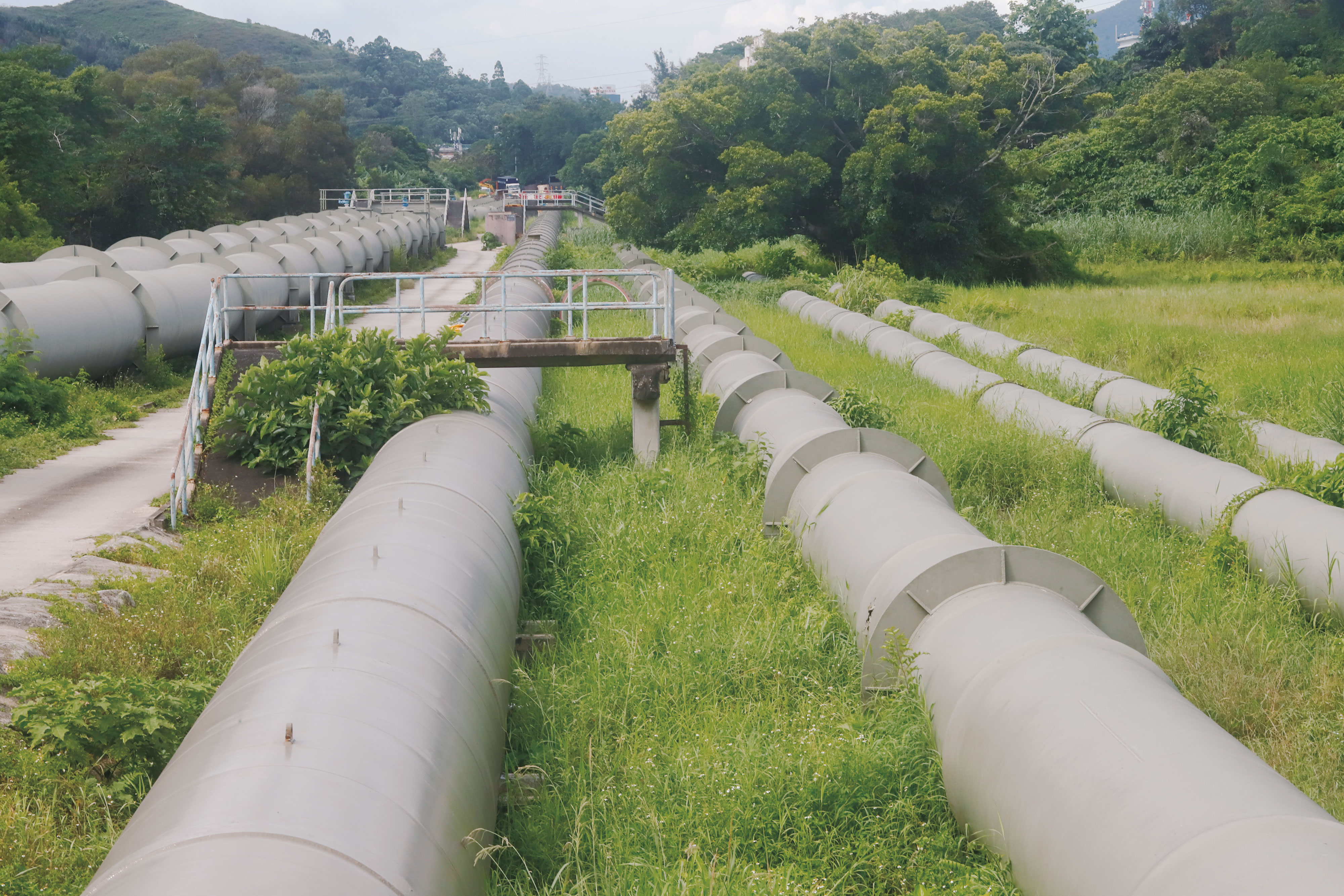
Hong Kong’s water distribution network began in the second half of the 19th century. Due to its rugged topography, a lack of flat land for development, and the subsequent development of both sides of Hong Kong harbour, the city’s water distribution network was developed in a distinct manner. Riding on the advantage of gravity flow, the network is designed to overcome constraints presented by the different heights of the urban land development areas, and the separation of Hong Kong and Kowloon by the harbour. Consequently, the water distribution network straddles across mountains and sea, making the construction of all water network infrastructure complicated.
The preceding chapter explains the fundamental principles and methodologies employed in water treatment in Hong Kong, along with the progress and advancements that have occurred over time. This chapter will concentrate on the water distribution system, that is, the method of distributing treated water. With urban development, the water distribution system in Hong Kong has significantly expanded and is a complex undertaking. The Government of the Hong Kong Special Administrative Region has been progressing towards smart city and sustainable water use policies in recent years. For a dense city looking towards the future, ensuring a leak-free water pipeline network has also become a challenge.
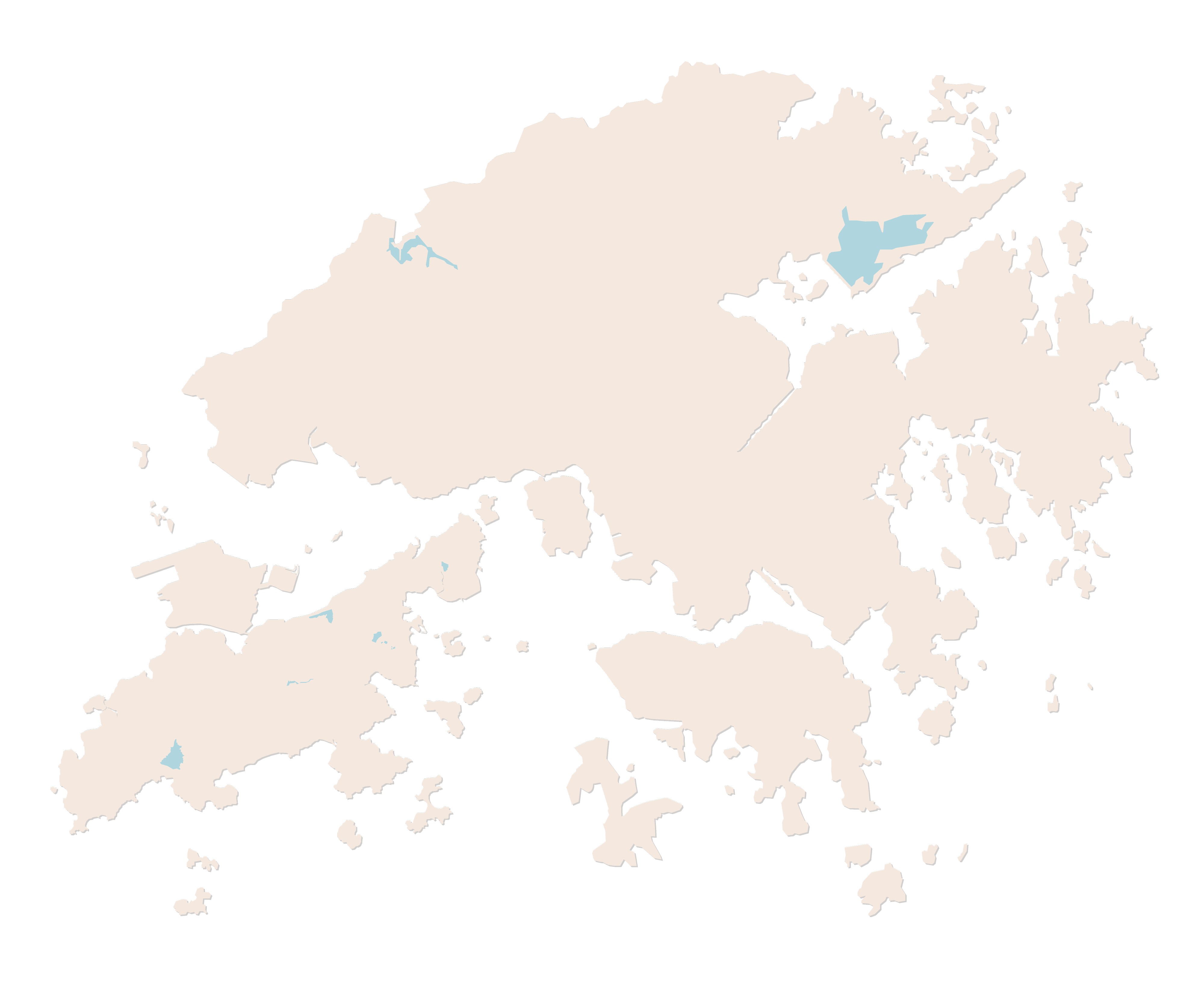
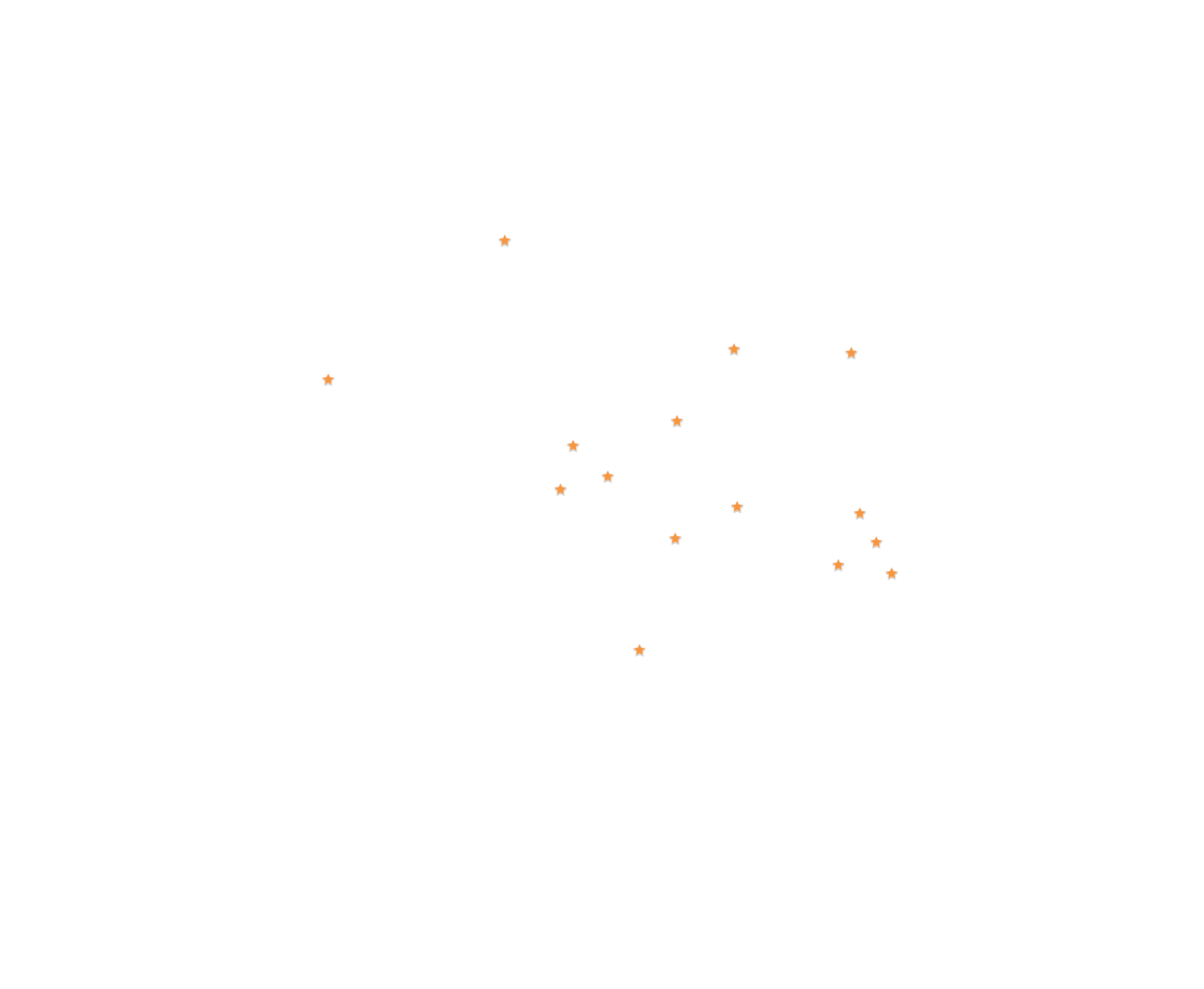
Distribution Map of Service Reservoirs in Hong Kong
 Freshwater primary service reservoir (15 nos.)
 Freshwater service reservoir (164 nos.)
 Salt water service reservoir (55 nos.)