



The WSD is one of the few government departments that deals directly with its customers and the range of provided services reflects the breadth of its customers’ different needs. Apart from ensuring consumers receive quality service, the WSD also enforce the Waterworks Ordinance and the Waterworks Regulations.
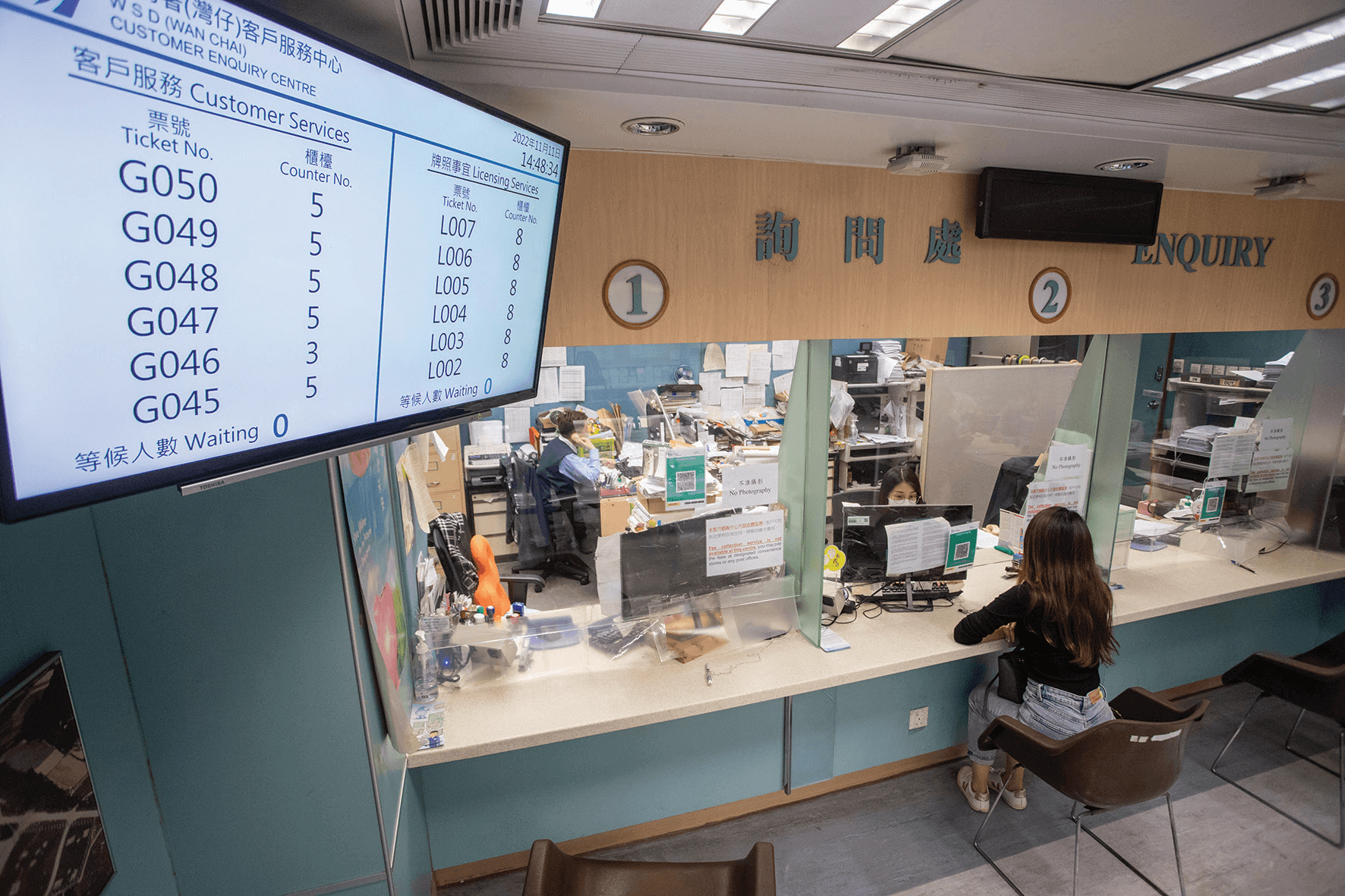
The WSD has five Customer Enquiry Centres (CECs) throughout Hong Kong to handle enquiries and applications for change of consumership, meter testing and fishing licences for walk-in consumers. On top of that, the CEC in Tai Kok Tsui is responsible for selling water tickets for shipping purpose.
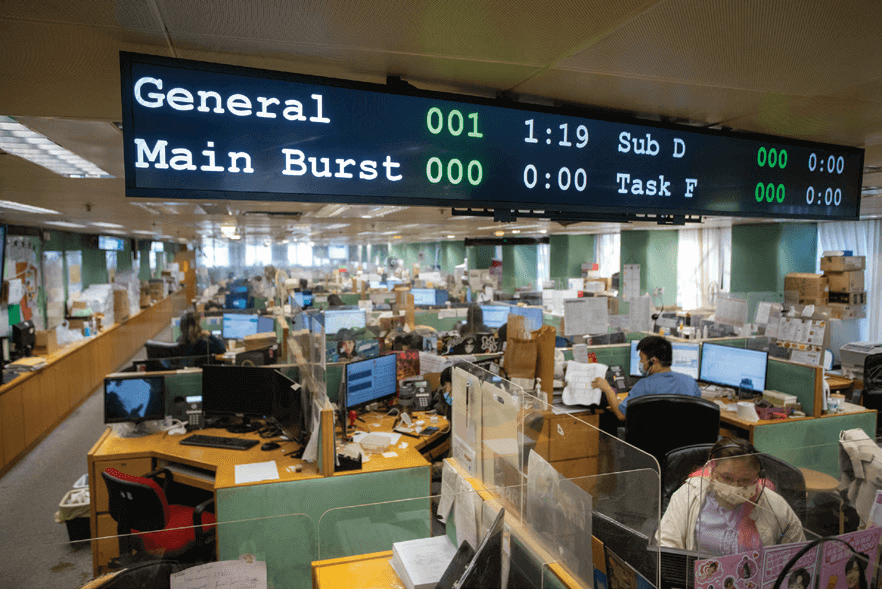
In 1999, the WSD established a Customer Telephone Enquiry Centre (CTEC) to provide a "one-stop" service to handle enquiries and complaints about mains bursts, leakages, supply interruptions and billing. Information technology was used in the early years to divert public enquiries to the relevant sections of the WSD, later a dedicated 24-hour customer service hotline was introduced.
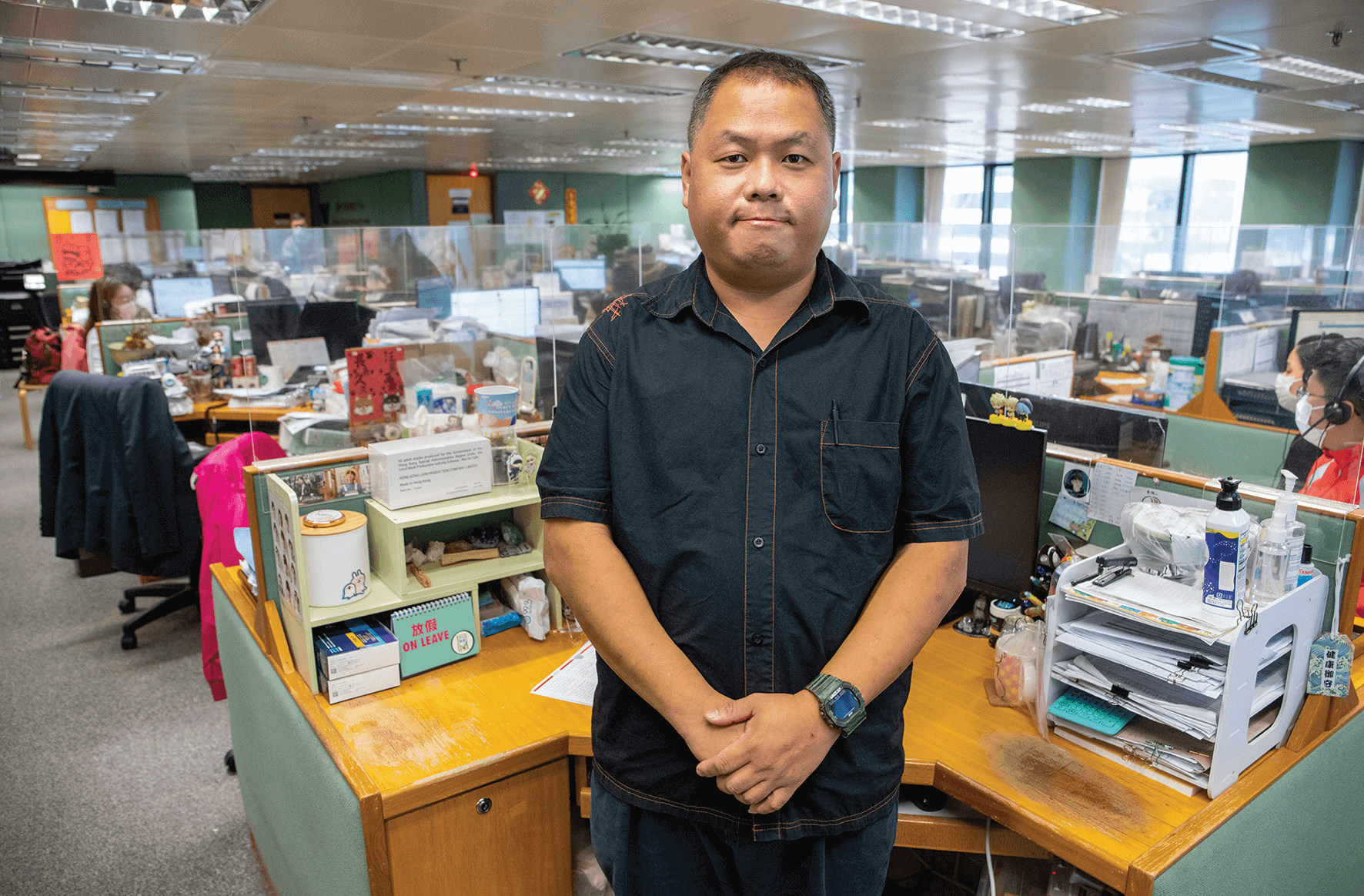
According to KWOK Hing-wing, the Assistant Call Centre Manager of the WSD, their service staff are the first contact point for any matter relating to water usage. "People may call us for any matters such as water coming out of a manhole and water seeping from house ceiling. It is important to patiently understand the situation from callers, so we can responsibly provide assistance,” says KWOK.
During Typhoon Mangkhut in 2018, the WSD received many reports from the public about water supply interruptions. The operation of pump sets had been affected due to power outages in many areas of Hong Kong: "We received more than 3,000 calls from the public that day, and our colleagues worked non-stop for more than 40 hours. We had to understand the situation from each caller, while at the same time liaising with colleagues in various regional offices to provide temporary emergency water supply or other repair work,” explained KWOK. For similar large-scale incidents, the WSD will work with other government departments to activate the Emergency Monitoring and Support Centre to coordinate all arrangements. “For example, during Typhoon Mangkhut, the District Officer of the Southern District expressed concern about the overflow of the Tai Tam Reservoir would flood nearby downstream villages. We subsequently contacted our frontline staff to lower the reservoir’s water level to make room for rainwater storage,” said KWOK.
In 2022/23, the CTEC received a total of nearly 675,000 telephone hotline enquiries and service requests. As an officer providing customer service, KWOK says he contacts customers every day and strives to understand their needs and difficulties in order to give quick and appropriate assistance. "I remember a case that happened on the first day of the Easter holidays when a customer complained about no water supply to his home. After investigation, we found that the previous tenant had moved out, but the current tenant had not yet applied to take-up the existing water account. Usually, once the payment deadline had passed, the water meter would be removed and the water supply cut-off. After discussion with the customer, we found that his family had special needs and it would have been very disruptive to have the water supply suspended for several days over the holiday. As the customer promised to come to the CEC immediately after the holiday to set-up the new water account, we addressed his special needs by arrangement of re-fixing the water meter. Later, we received a commendation from the customer.”
Currently, newly developed areas are well-planned with the necessary infrastructure built, including the construction of water supply and road networks. In the past however, a project developer was required to apply to the WSD for an extension of the water supply network to a new development area. Chief Waterworks Inspector of the Prosecution Unit, WONG Chi-lo, recalled that the water supply application for the Discovery Bay development area in 2000 was probably the largest project he had ever handled. Discovery Bay’s developer had been responsible for local water gathering and treatment since the area’s development and construction in the 1980s. However, the water level in their reservoir had subsequently declined due to population growth. Coupled with the completion of the new Hong Kong International Airport at Chek Lap Kok, Discovery Bay then applied to the WSD for water supply to all its residents by extending the water supply network through the Discovery Bay Tunnel at Cheung Tung Road.
The potable and fire services supply system in Discovery Bay were originally both privately managed, whilst currently they are regulated by the WSD as inside services and thus must comply with the WSD’s standards and requirements. The new water supply connection was seamlessly completed in December 2000, upon several years of forward planning. WONG recalled that it took six months to install 6,064 new water meters. In addition, the WSD had to supervise piping rehabilitation and leak control works. This was achieved in collaboration with various WSD teams. "The Inspection Team was responsible for preliminary inspections and vetting, as well as checking the compliance of plumbing materials, and water sampling. The Meter Reading Section was responsible for taking meter readings two days before the water supply was connected. Those readings served as an account’s baseline for future water charge calculations. The Customer Accounts Section assisted in opening accounts and issuing bills," said WONG. It is unusual to have such a large-scale water supply diversion, but fortunately everything went smoothly on the connection day.

In addition to providing water supply-related services, the WSD executes the Waterworks Ordinance and Waterworks Regulations, and carries out enforcement and prosecution actions. To enhance public awareness of the associated legislation, the Prosecution Unit has also enhanced education and publicity in recent years. For instance, Regulation 47 of the Waterworks Regulations was enacted in May 2021 to deter owners of subdivided units from overcharging tenants for water. The Prosecution Unit organised meetings with stakeholders, including estate agents and concerned groups of subdivided units, to publicise the details of the new regulation.
The Prosecution Unit also regularly conducts surprise inspections at target premises and makes prosecutions as appropriate. According to WONG, car parks are a black spot for the unlawful taking of water. People often take water from a fire service outlet for car washing. “In fact, the main reason for the unlawful taking of water is mostly for convenience. This problem indicates a need to install additional taps for cleansing in car parks. The WSD approves water supply applications for car parks on a case-by-case basis. The occurrence of unlawful taking of water at car parks has significantly improved in recent years.”