



Comparable to the territory-wide water distribution system, the inside service is similar in function by receiving water at a single intake point and distributing it to different individual outlets. However, the difference between the two is not only in scale, but also in the construction and maintenance responsibilities between public and private water supply systems. From this perspective, an acceptable inside service, including a water distribution system, must ensure three features:
- The fresh water in the system must be clean and hygienic;
- Water is delivered at a sufficient pressure to each consumer, and
- All system components are in good condition, and free from leaks or external contaminants from entering the system.
An acceptable inside service must therefore meet the above requirements from design to maintenance.
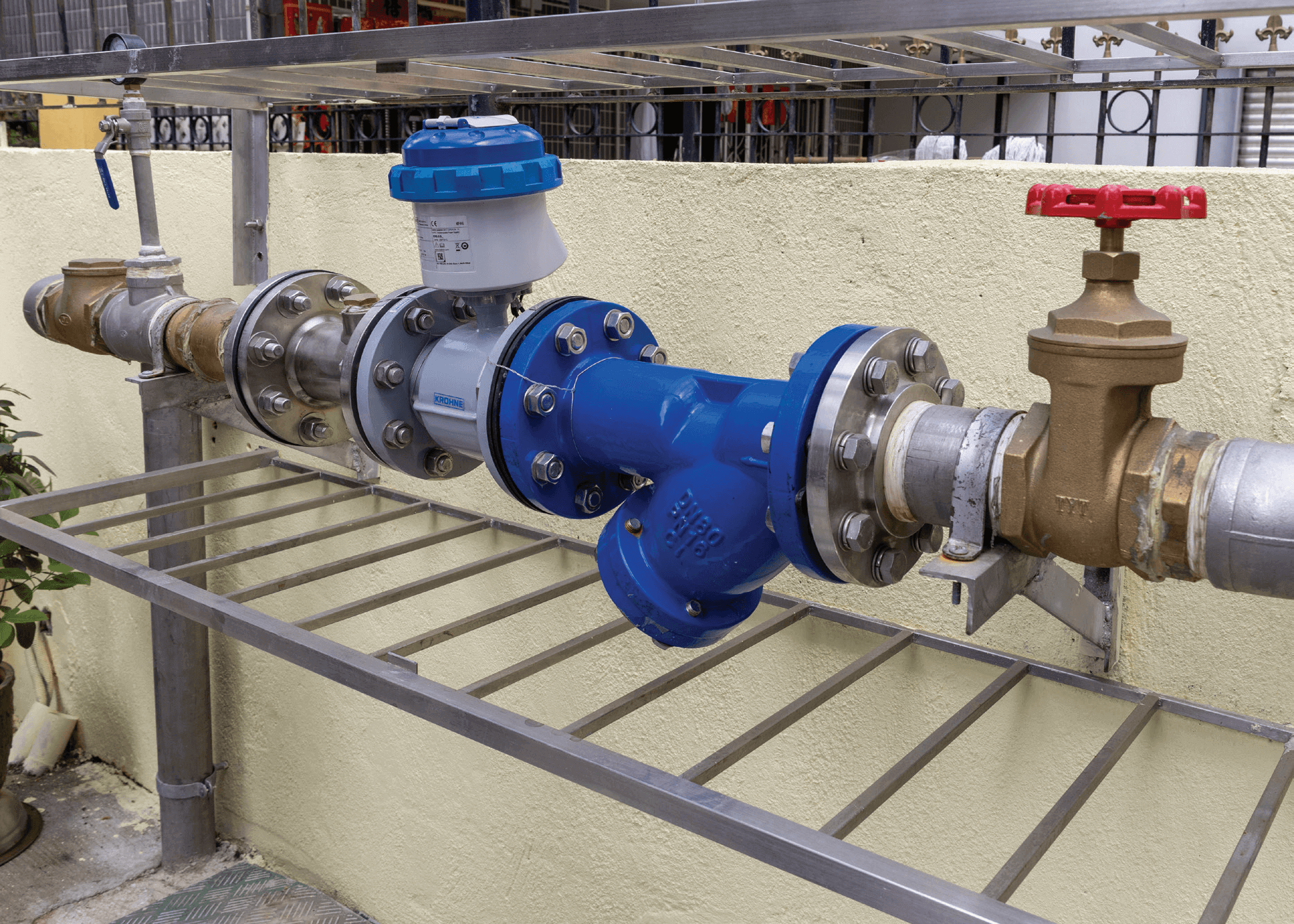
The history of inside service can be traced back to the very first introduction of tap water in Hong Kong. The water supply system at Tai Tam Reservoir was completed in 1888 and a water distribution network was gradually established throughout the city of Victoria. To discourage water wastage, the government implemented the "user pays" principle, which included the introduction of a tap water system and use of water meters to record consumption. It then became an owner’s responsibility to connect domestic water mains to the government water mains.
In 1890, the government enacted the Waterworks Ordinance (the Ordinance) to regulate for the first time the inside service conveying the supply of tap water. The Ordinance stipulates that an owner or occupier of any tenement who wishes to construct, alter or repair an inside service is required to make application to the Water Authority and pay relevant water charges. All the plumbing works involved to construct, or alter inside service must be carried out in accordance with the requirements of the Water Authority, and comply with the prescribed specifications on water pipe materials, quality and dimensions and any other aspects. All plumbing works must be inspected and tested by the Water Authority before the water supply is officially connected1.
The Ordinance has undergone a number of amendments with the development of the city's water supply system. In 1938, the Ordinance made it the responsibility of the consumer to "keep the inside services clean". If any part of an inside service is discovered to be dirty and contaminating the water in the mains as considered by the Water Authority, a notice will be issued to the consumer. They will be required to clean the system within three days or otherwise have the water supply disconnected. Other regulations also included:
- The first introduction of a licensed plumber system (see the article “Evolution of the Licensing System for Plumbers” in Chapter 5 for more details), which requires anyone who constructs, alters or repairs inside service for a household must hold certificates issued by specified bodies;
- Setting quality standards for all types of materials used in plumbing works. At that time it was specified that lead pipes or solder could not be used for inside services or fire services;
- To specify that the use of booster pumps shall not be permitted except where water cannot reach the roof level by gravity. In order to avoid direct pressurisation of the water mains, such buildings require a sump tank at a level where it can be supplied from the government mains by gravity, from which the fresh water can be pumped up to a roof tank.
The sale of separate units of flats beginning in the 1940s changed the ownership of a building from a single owner to multiple owners sharing the land. As a result, the responsibility for management and maintenance of the inside service has been shared between a registered agent and the registered consumers of a whole building or estate.
The water distribution network in Hong Kong is designed to allow water to flow by gravity as far as possible through a network of water mains for distribution to customers throughout the city. Therefore, water in the mains is always kept under pressure. To ensure adequate water supply pressure, the WSD has a performance pledge to maintain fresh water pressure of 15 to 30 metre head. However, buildings in Hong Kong are situated on terrain of varying heights, and in recent years, they have become increasingly taller. This represents a significant challenge for the inside service to provide adequate water pressure to consumers on both higher and lower floors, without damaging the water supply components.
Since the introduction of the water pump, water flow is no longer restricted in a mode from high to low ground. Also, with external pressure, water can flow in the opposite direction from low-lying to higher-level land. The pressure of water varies according to the height during these two types of conveyance:
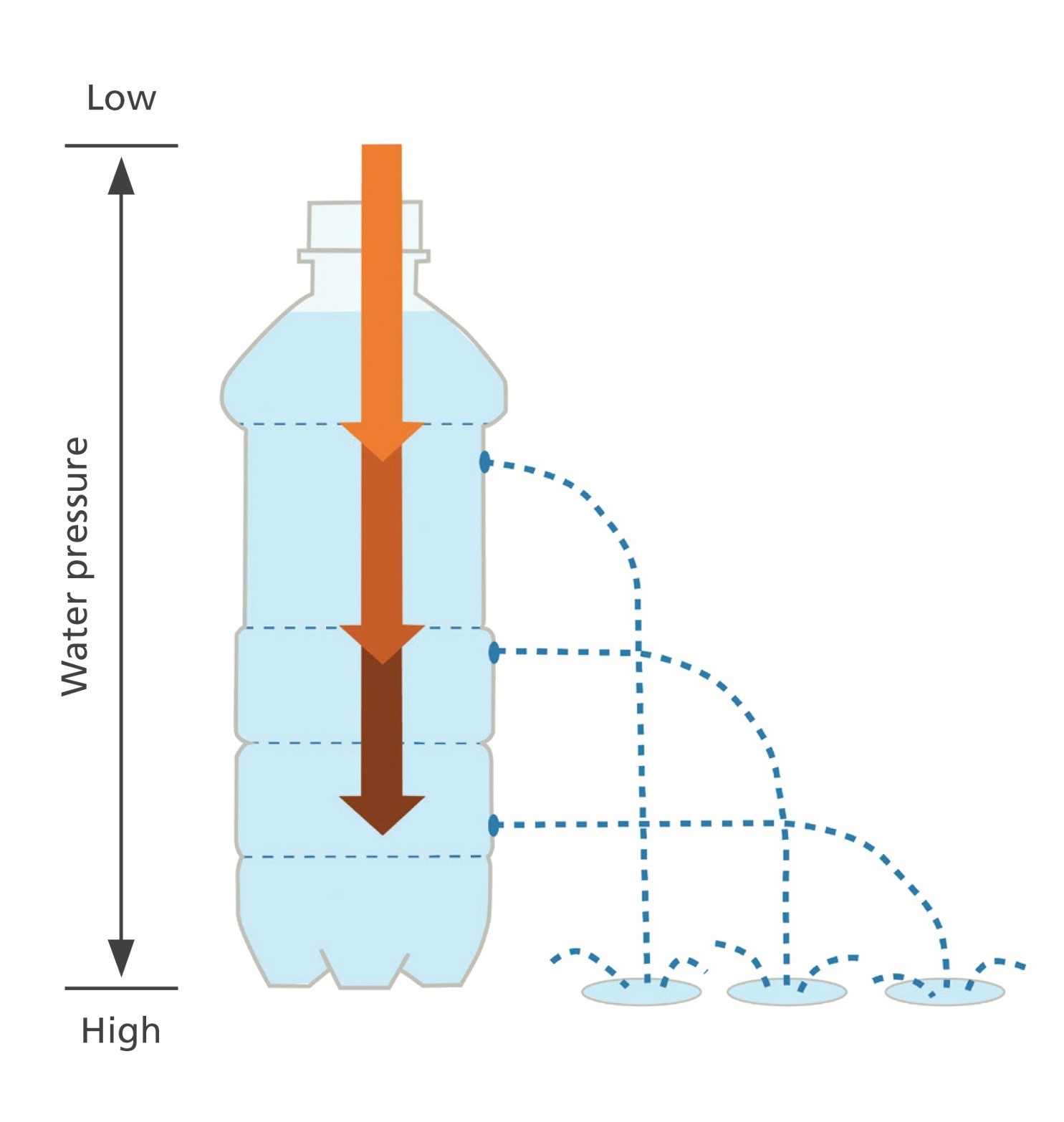
The water in the lower part of the bottle experiences greater pressure due to gravity. The water pressure can be determined by the distance from the water jet.
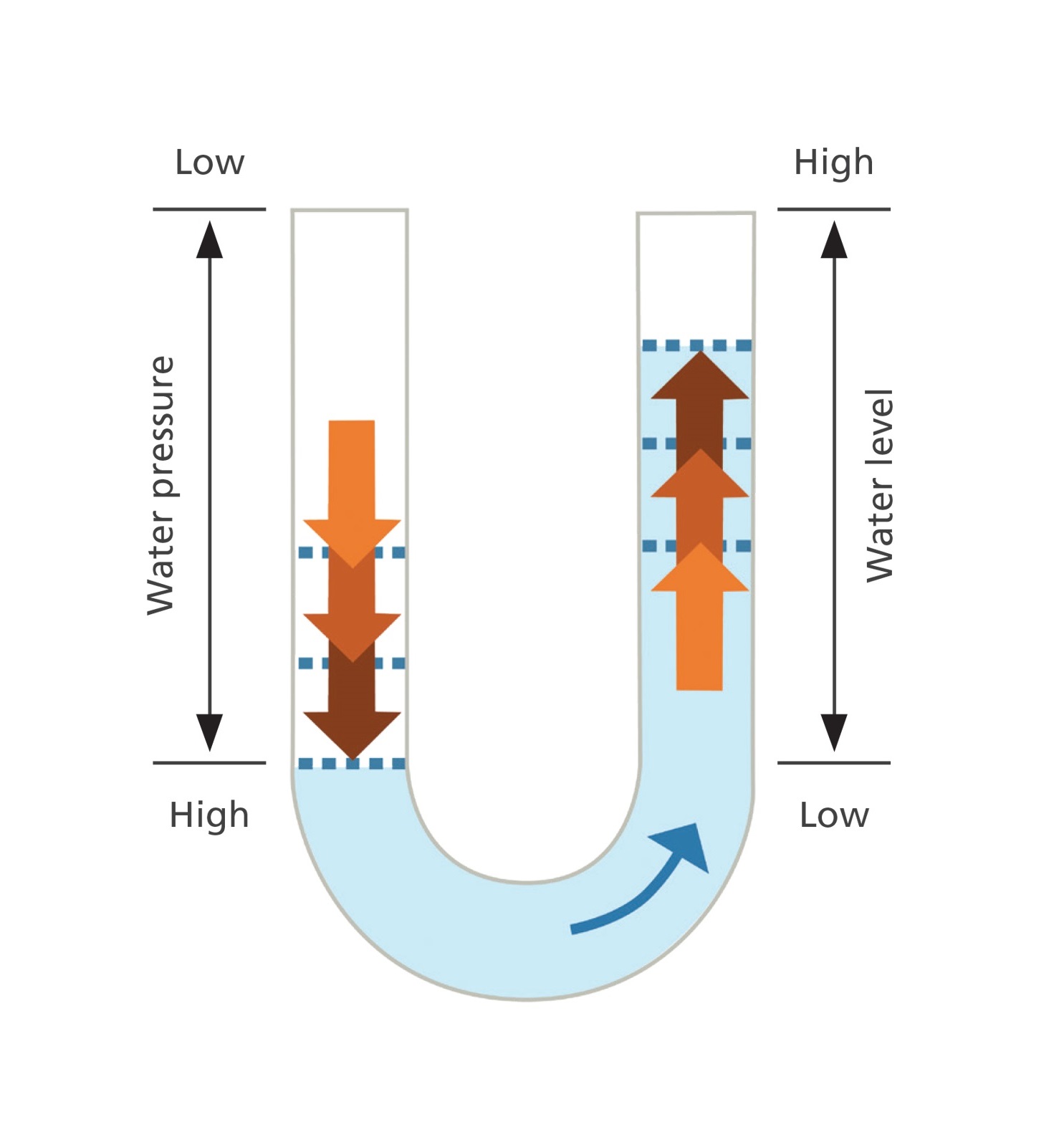
Water can flow uphill when subjected to pressure greater than gravity. Water can reach higher-level positions as the pressure increases. However, the water level rises less as the pressure increases due to the counteracting effects of gravity.
A water pressure of 15 to 30 metre head is a stated WSD’s performance pledge, and sufficient to deliver fresh water directly from the government mains to the building up to six to seven floors. This mode of using mains pressure to supply fresh water to the upper floors is known as the "direct supply system". It was commonly used in low-rise tenement buildings in the city’s early years. During periods of high water consumption, users at a building’s upper floors may experience low water pressure. This situation is famously captured in the quote from many movies of the 1950s and 1960s: "Those of you living downstairs, turn off the tap!"
In theory, increasing water pressure can transfer fresh water to higher floors to meet water pressure requirements. However, excessive water pressure increases the risk of damage and bursting of lower floor water pipes. Therefore, to deliver water to upper floors, a separate water supply system, known as the “indirect supply system”, is required.
The primary distinction between a direct and an indirect supply system is whether the water supply passes through a roof storage tank. As buildings increase in height, a combination of direct and indirect supply systems is generally employed. The diagrams below provide a brief explanation of how they function.
Using solely direct or indirect water supply systems in high-rise buildings can result in a significant difference in water pressure between users on upper and lower floors. Water pipes on lower floors are particularly prone to damage, leakage and burst due to excessive water pressure. Therefore, most buildings have adopted a combined supply system, where water is supplied directly to the lower floors, and the middle and upper floors are supplied with water from roof storage tanks.
Principle of the Inside Service
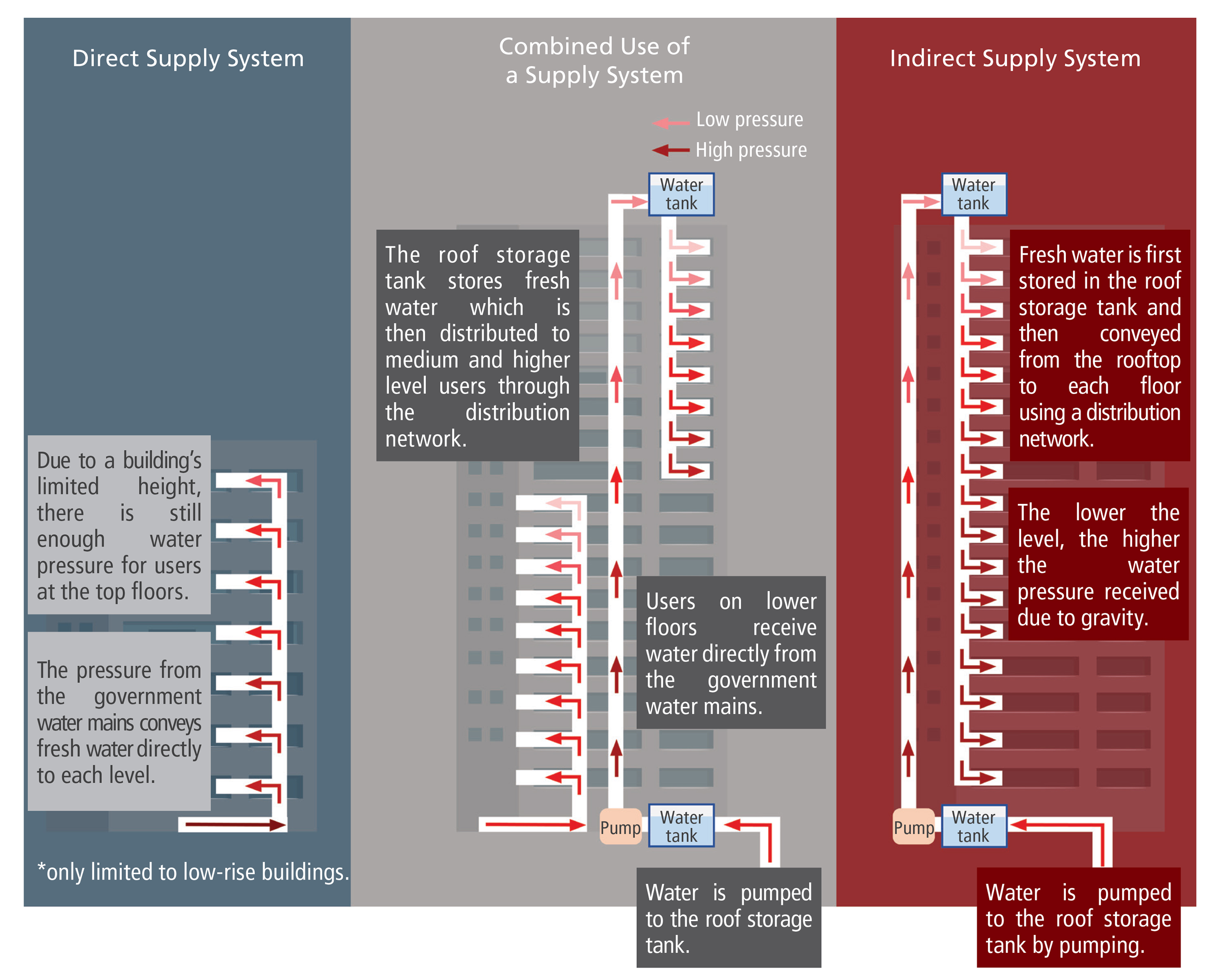
The inside service is divided into fresh water supply, flushing supply and fire service supply2 according to their purpose. Each has its own supply system, which includes an underground storage tank, a roof storage tank, a master water meter, a pump and pipes. However, for buildings completed before March 1987, the Water Authority and the Director of Fire Services may approve the use of the existing fresh water tanks for fire services, subject to structural and space limitations.
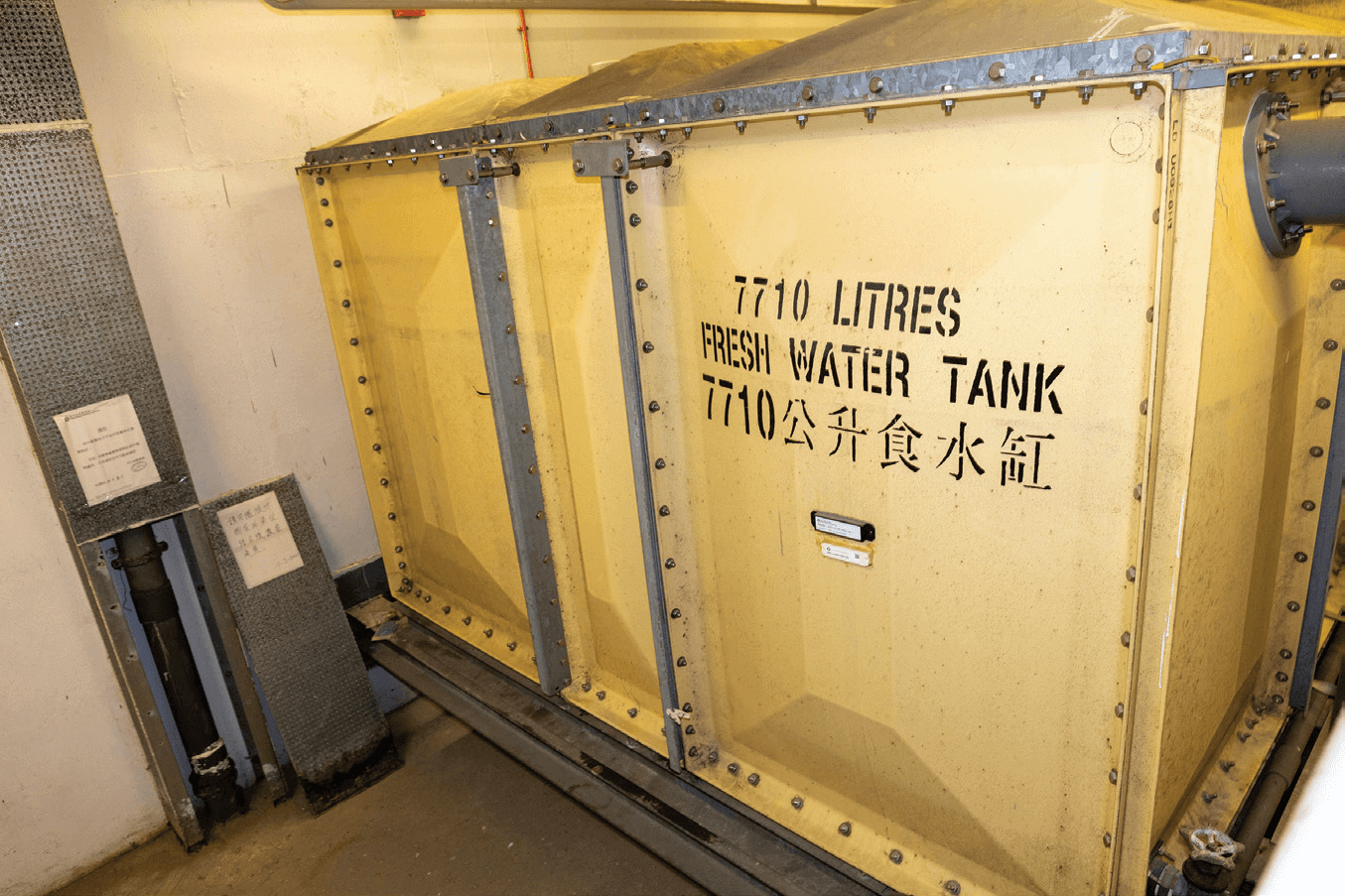
The indirect supply is provided with additional underground and rooftop storage tanks. The underground tank buffers the water pressure in the government water mains, and facilitates the pumping of fresh water to the rooftop. The rooftop tank is used for temporary storage of fresh water delivered to consumers.
To achieve a 24-hour uninterrupted water supply, it is crucial to accurately calculate the size of the storage tank. If a roof storage tank is too small, it would increase the building’s energy consumption by activating the water pump too often. If the tank is too large, it would increase the weight of the building. Additionally, the longer the water is stored, the greater the risk of deterioration in water quality. Therefore, the WSD has developed a formula for calculating the capacity of storage tanks. Consider a residential building as an example: the capacity of its rooftop fresh water tank is calculated based on the total number of households to be served. Assuming that the first 10 households each consume 135 litres and the remaining households each consume 90 litres, the calculated capacity ratio of the underground and roof storage tank should be 1:33.
While the WSD regularly monitors the quality of fresh water in the distribution network, it is the responsibility of the consumer to maintain the quality of fresh water once it enters the inside service. In addition to managing the water supply system properly, regular cleaning is also important, especially for water tanks where fresh water is stored. The WSD recommends cleaning water tanks at least once every three months, because stored water can accumulate dirt and impurities due to a long standing time.
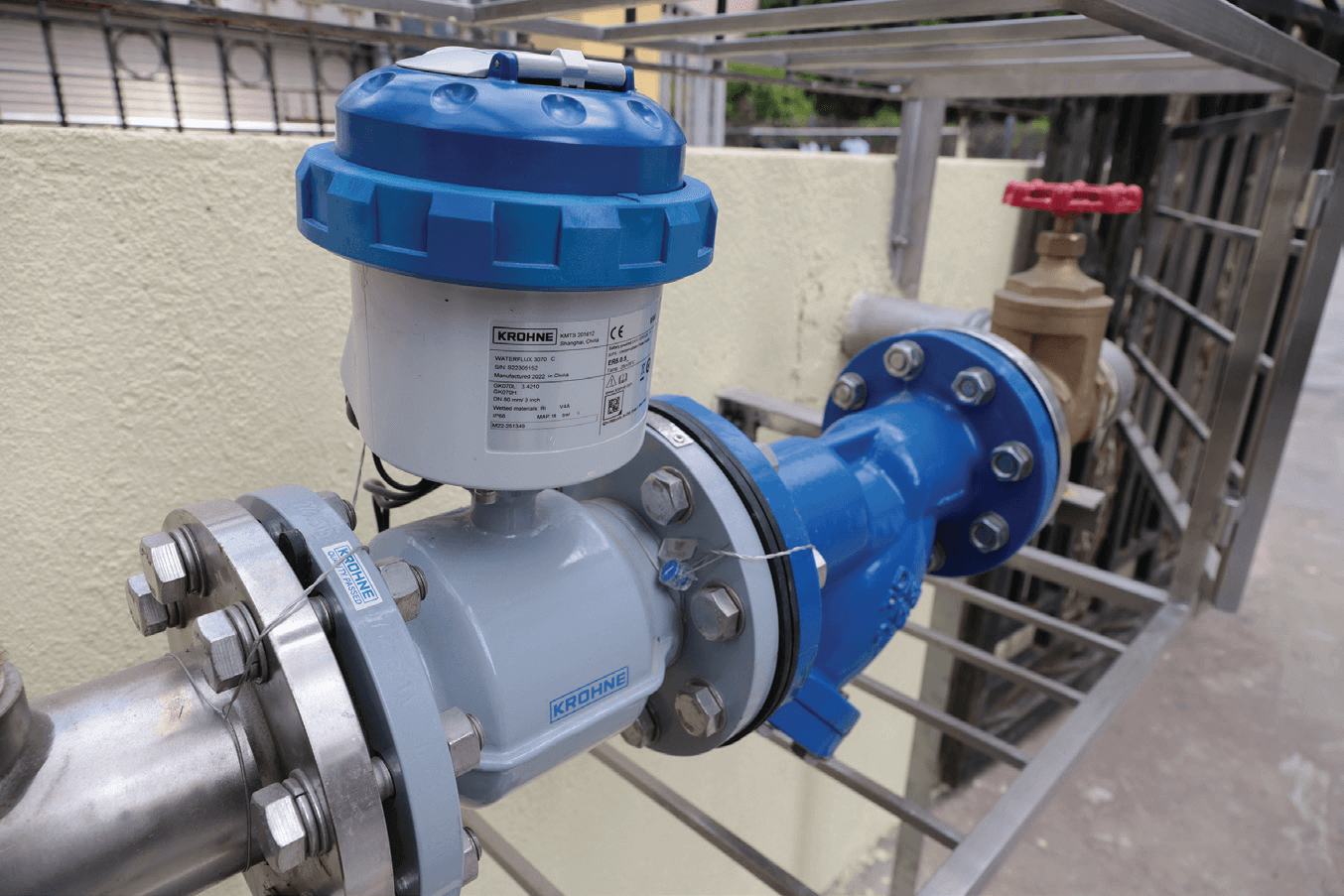
In Hong Kong, water meters were first introduced in 1897 to record the consumption of water used by each consumer during a recording period.
Recently, the WSD introduced smart water meters to improve the efficiency of collecting water consumption data from customers. A smart water meter uses technology that automatically records the water consumption of an entire building and of individual units. Consumers can check their water consumption using their mobile phones or computers. Any abnormalities in the system, such as leakages, can be detected early by checking recorded data and to arrange maintenance. This technology has reduced water wastage and eliminated the need for manual meter reading.
The master meter was introduced in response to the Water Authority's endorsement of the "Master Metering Policy" in late 2005. This policy requires that all new buildings include a master meter position in a plumbing layout design. The first stage of this policy applies to new housing estates with two or more blocks, while the second stage applies to large estates that are already occupied. The master meter room is typically situated within and near the boundary of the housing estate to measure the total amount of fresh water supplied to the development. The fresh water system located downstream of the master meter requires that all domestic units or water points must have individual water meters. The water consumption recorded by the master meter will be compared against the total water consumption logged by each individual consumer to detect leakage or unlawful taking of water from the inside service.
Providing the public with a basic understanding of their building's inside service will help maintain water safety in the long run and benefit consumers.
- Government Notification -- No.343. The Hong Kong Government Gazette. 16th August 1890 https://sunzi.lib.hku.hk/hkgro/view/g1890/656245.pdf
- Under the Fire Safety (Buildings) Ordinance implemented in 2007, the HKSAR Government requires the separate installation of fire service installations, such as water tanks, sprinkler systems, etc. in premises.
- (March 2018) 'Appendix A1: Checklist for vetting plumbing proposals', Handbook on Plumbing Installations in Buildings. Hong Kong: Water Supplies Department. 48. https://www.wsd.gov.hk/filemanager/en/content_1369/HBonPIB.pdf