





Since the city’s earliest days, the Hong Kong Government undertook the responsibility of developing the territory’s entire water supply services. A comprehensive water supply system was planned and began to take shape: beginning with the development of water sources, treatment and purification, the construction of distribution networks, and then the delivery of water to all parts of Hong Kong. The previous chapter introduced the development and principles of the city’s water distribution network. This chapter covers the final component of the city’s water supply system, known as the “inside service”. Although closer to the consumers, it is less noticeable to them.
Inside service refers to a building’s water system that starts and is supplied from the connection point to the mains located generally near to a lot boundary, where the water mains of a housing estate or building is connected to the Water Supplies Department (WSD) mains, and ends at the tap inside an individual consumer's premises. The inside service is divided into two sections: a communal service and a non-communal service. The communal parts of the inside and fire service, including pumps, tanks, communal water pipes as well as other ancillary utilities, are generally held and maintained by a registered agent1 (e.g. owners' corporation and property management representative). The non-communal parts of the inside service are solely for water supply to individual premises and refers to the pipes and taps in the flat connected to the communal pipes. It is the responsibility of individual consumers2 (e.g. an owner or occupant of the premises) to maintain and repair their part.
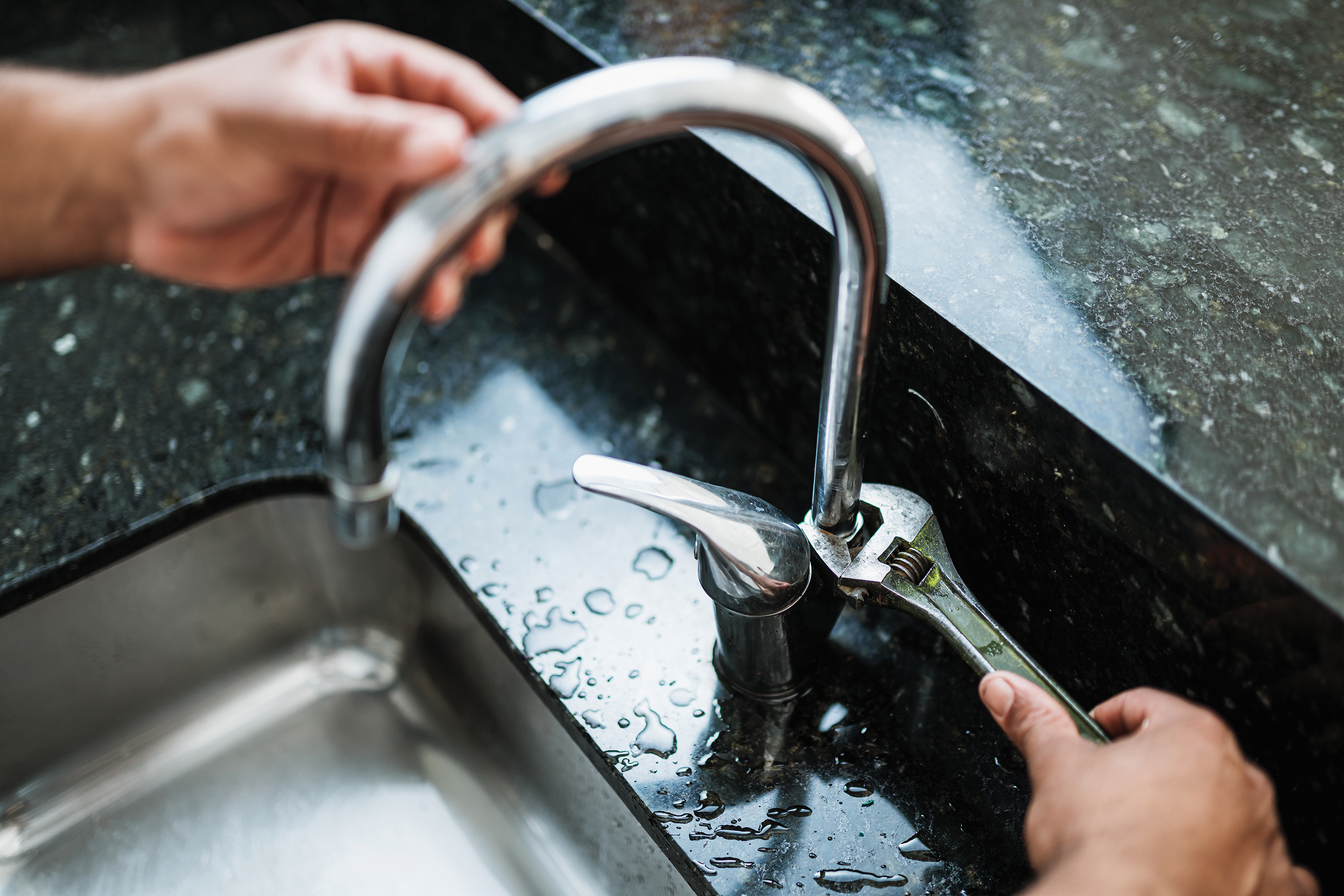
This chapter, Inside Service for Water Distribution, begins by assessing the legislation, providing an overview of the background and subsequent changes in the inside service. As a result, the licensed plumbing profession has evolved to be responsible for the plumbing works (including installation, maintenance, repair, etc.) to the inside service of buildings.
Over the years, buildings in Hong Kong have become increasingly taller, from an average height of 3.6 storeys in the early 20th century to 9.39 storeys in the 1960s. Nowadays, new buildings often are dozens of storeys in height. Consequently, the scale of plumbing works has expanded significantly. With the raising concern about water safety, the WSD has recently been collaborating with the industry to improve the professionalism of licensed plumbers.
As a public service provider, the WSD has a supervisory role. It also has a commitment for providing customer satisfaction, spearheaded by the introduction of a work performance pledge in 1993. The pledge’s 30 performance indicators serve as the basis for the WSD to annually review its performance and improve its service quality.
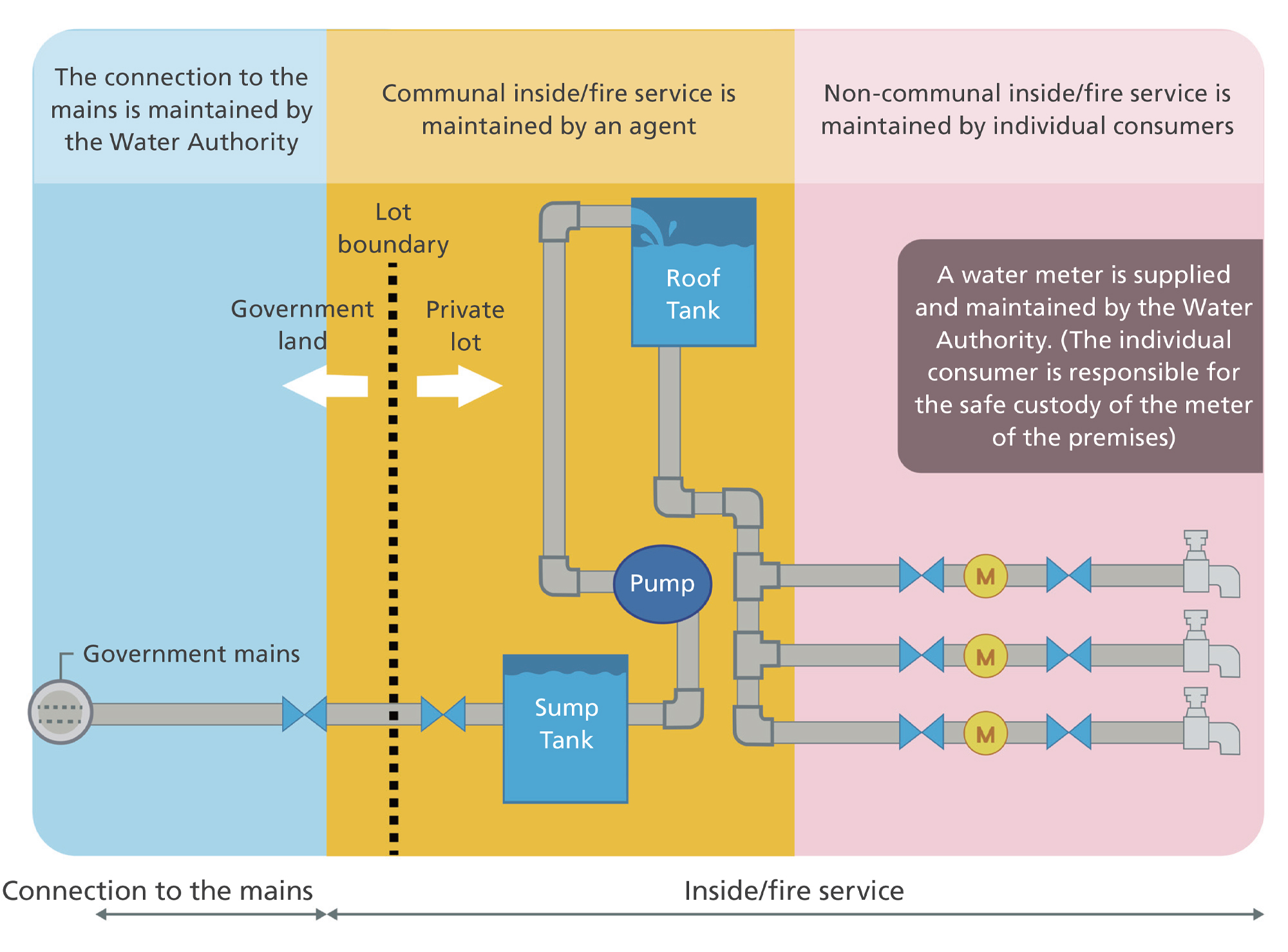
- Under Section 2 of the Waterworks Ordinance (the Ordinance), an agent is a person who is recognised as an agent for a public water supply system under Section 7 of the Ordinance.
- Under Section 2 of the Ordinance, a consumer is a person who is recognised as a consumer of a fire service water supply system or an inside service under Section 7 of the Ordinance.