



The Strategy 2019 proposes to expand the use of lower grade water for non-potable uses. In addition to seawater, which has been primarily used for flushing for decades, recycled water will also become a new source of non-potable water in the future. The WSD has promoted the adoption of grey water reuse and rainwater harvesting facilities under suitable new government works projects in recent years, and formulated the technical specifications on grey water reuse and rainwater harvesting in 2015. By the end of 2022, grey water reuse or rainwater harvesting systems had been installed in about 130 new government building projects. The WSD makes use of the assessment tools in the Building Environmental Assessment Method Plus for New Buildings Version 2.0 issued by the Hong Kong Green Building Council to encourage private buildings to adopt grey water reuse and rainwater harvesting systems. The awarding of bonus credits encourages private buildings to adopt these systems.
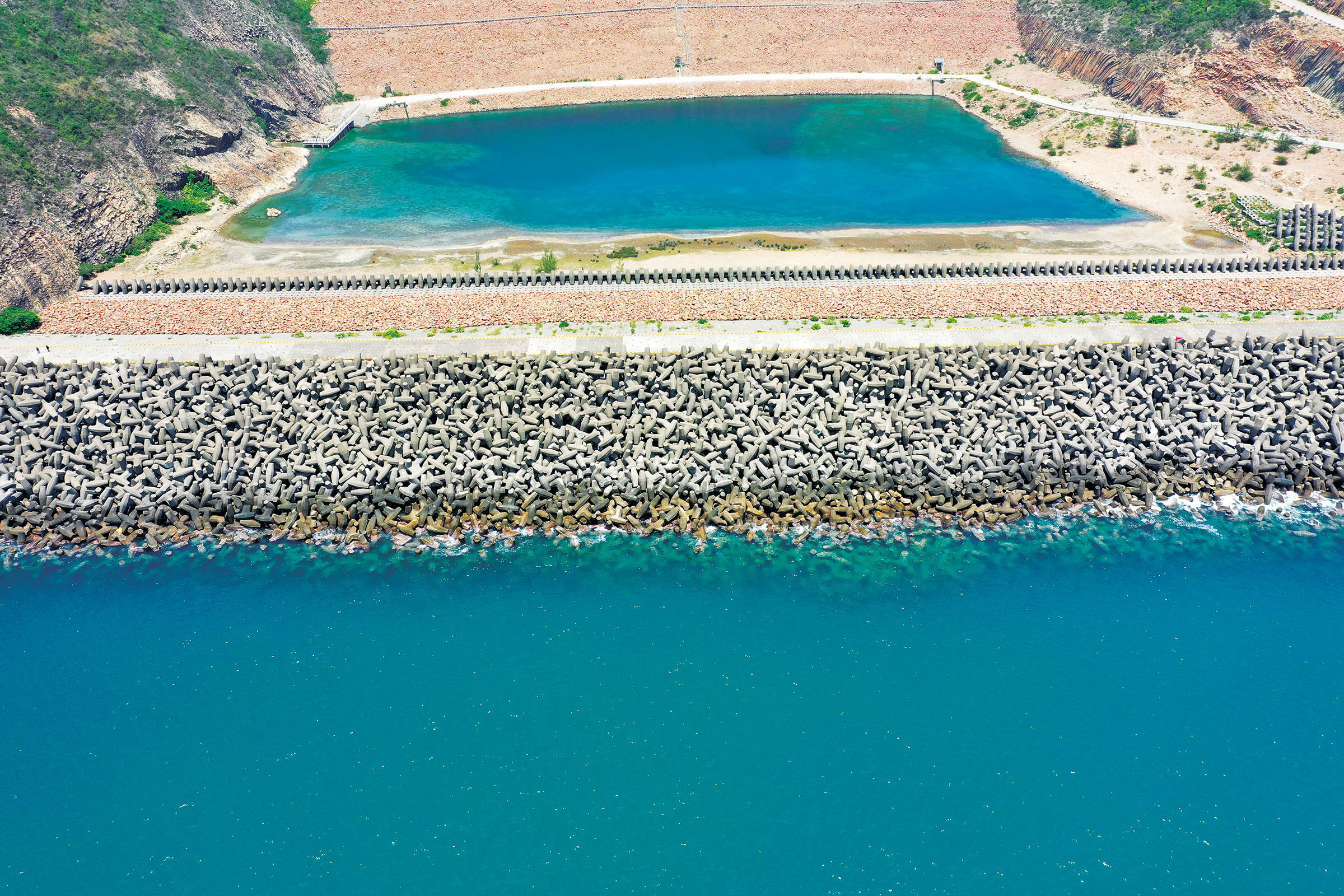
Anderson Road Quarry Site
Generally, sewage and grey water generated in buildings is conveyed to sewage treatment plants through an integrated pipeline system. In order to adopt a grey water recycling system, a dedicated collection pipe network should be installed in buildings for collecting raw grey water from baths, showers, wash basins and kitchen sinks etc., and conveyed to a grey water treatment plant. Consequently, this recycling system is more suitable for newly designed buildings in new development areas.
The first district-based grey water recycling system in Hong Kong is located in the Anderson Road Quarry (ARQ) site in Tai Sheung Tok, Sai Kung. This development site will provide about 12 hectares of residential land for housing development and will accommodate about 30,000 people. The ARQ site’s elevation at about 200 metres above Hong Kong Principal Datum and its distant location of over 3,500 metres from the seashore hindered the conventional supply of seawater for flushing. The provision of seawater for flushing in such a large-scale development site would consume a significant amount of energy and carbon emissions to pump seawater and the laying of uphill pipelines. Grey water recycling is a practical solution to overcome these site-specific constraints and adheres with the concept of a green and smart city development.
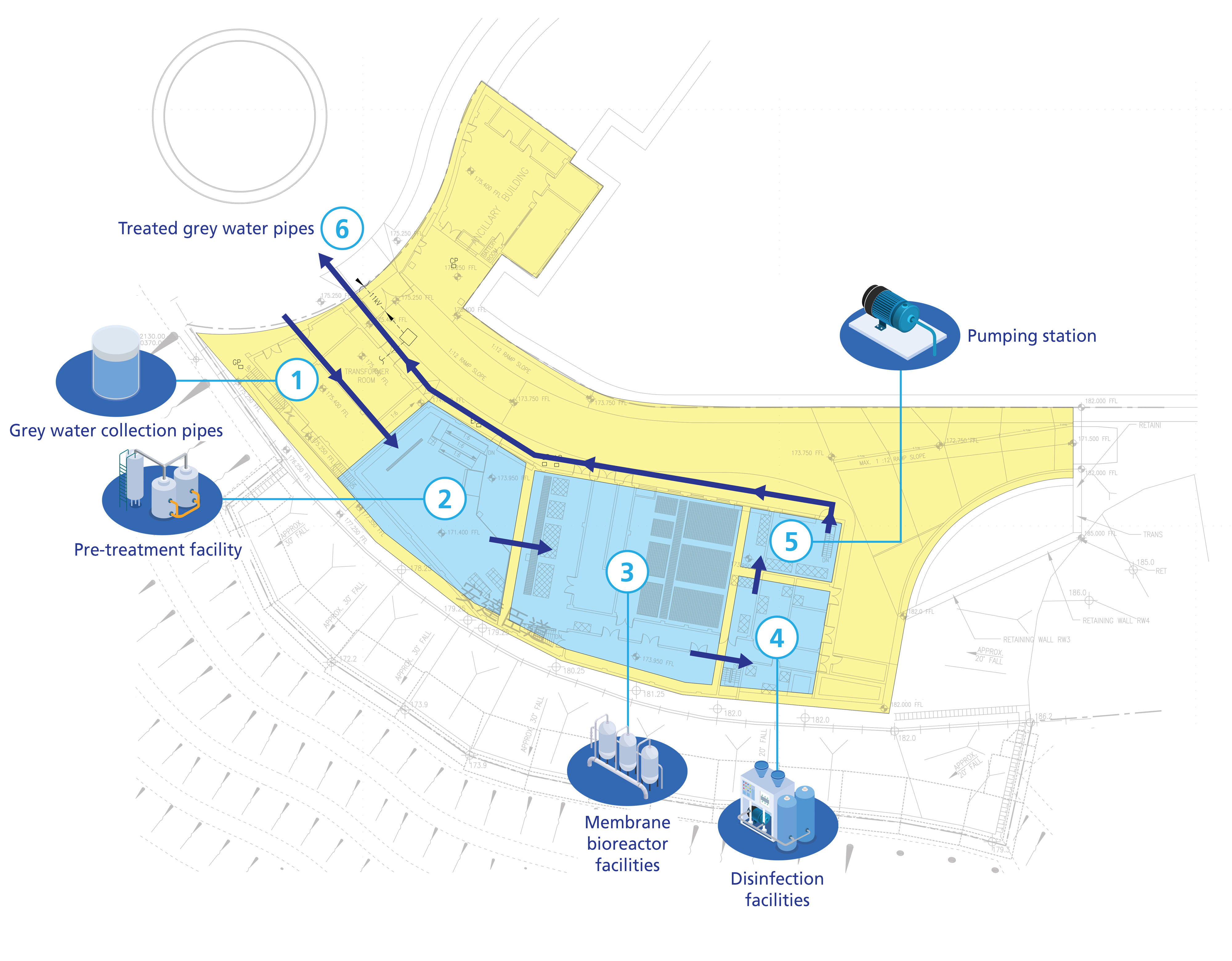
Like all resources, it is best to perform separation before recycling. Grey water and discharge from toilet bowls generated within the ARQ development area has to be treated separately. Thus, two separate systems for collecting grey water and soil are installed in individual buildings. The grey water will be conveyed to the nearby grey water treatment plant. The treated grey water will then be supplied for toilet flushing within the development area. As the capacity of the treatment plant has been designed to be 3,300 cubic metres (m³) per day, the flushing water is self-sufficient. Surplus treated grey water will be used for other non-potable purposes, such as landscape irrigation and street cleansing.
Construction of the grey water treatment plant at the ARQ site commenced in late 2020. The grey water recycling system is anticipated for commissioning in phases starting from 2024 to tie in with the continuing development of the ARQ and its population increase. As most of the treatment plant is built underground, its design merges with the surrounding environment and the community, and also serves as a natural noise barrier. It also features green architecture and landscaping, including a green façade, a rooftop green park for public enjoyment and solar panels.
The project is sustainable and cost effective, and fits in with the high density of Hong Kong's new development areas. The project was awarded the Institution of Civil Engineers (ICE) Award 2021 - Chris Binnie Award for Sustainable Water Management in recognition of WSD's excellent work in further improving the sustainable uses of water resources.
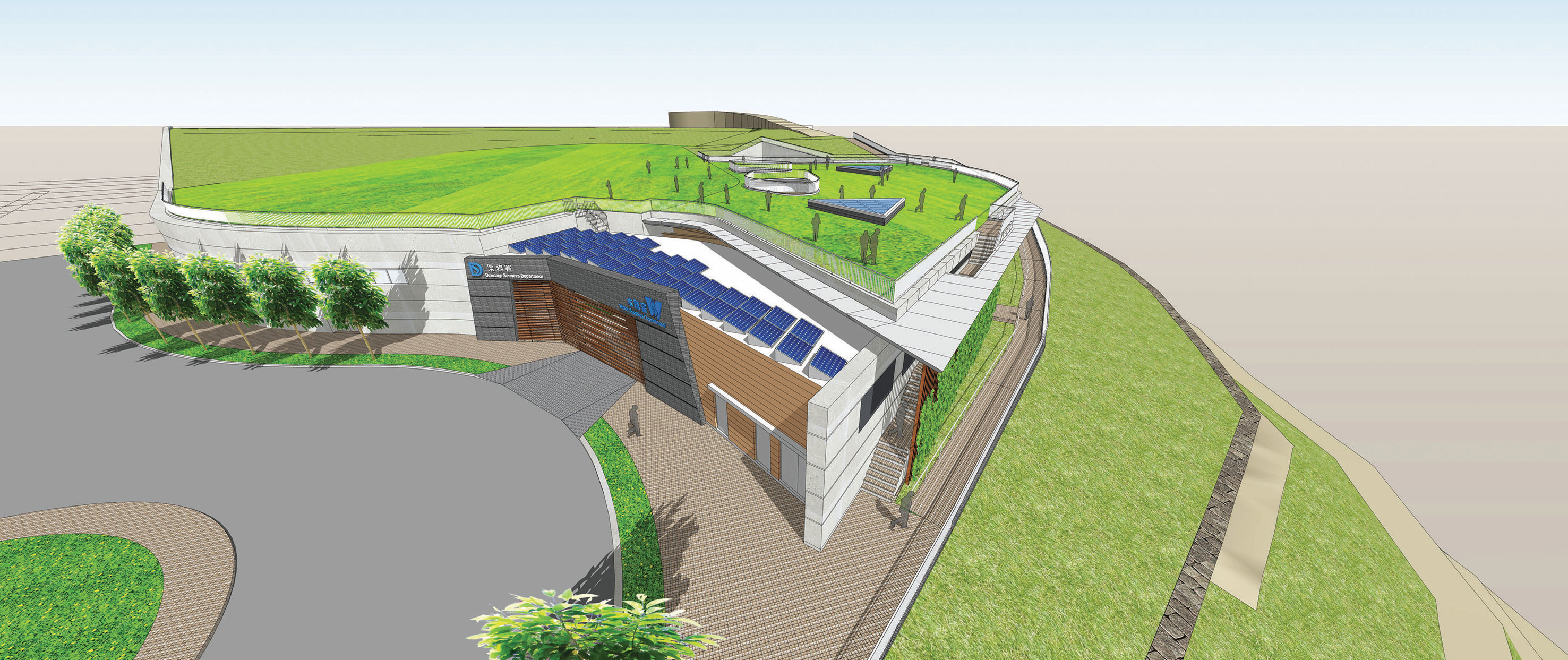
at the Anderson Road Quarry site
The HKSAR Government started a pilot reclaimed water scheme as early as 2006. It set up an inter-departmental working group led by the WSD with the participation of the Drainage Services Department (DSD) and the Environmental Protection Department (EPD). Ngong Ping Sewage Treatment Works was its initial pilot site to treat and recycle the district’s collected sewage for flushing. The HKSAR Government conducted a public consultation exercise in 2018 showing that public opinion on the supply of recycled water in Hong Kong was generally positive and supporting the use of recycled water for non-potable purposes. Consequently, the WSD is actively supplying reclaimed water in areas that currently rely on fresh water for flushing and in new development areas.
A significant increase in sewage flow is anticipated due to the population growth in the Kwu Tung North/Fanling North New Development Area. The DSD has commenced the reconstruction of the existing Shek Wu Hui Sewage Treatment Works in 2019 to increase the sewage treatment capacity from 93,000 m3 to 190,000 m3 per day and upgrade the sewage treatment level from a secondary to tertiary standard for conversion into a Shek Wu Hui Effluent Polishing Plant.
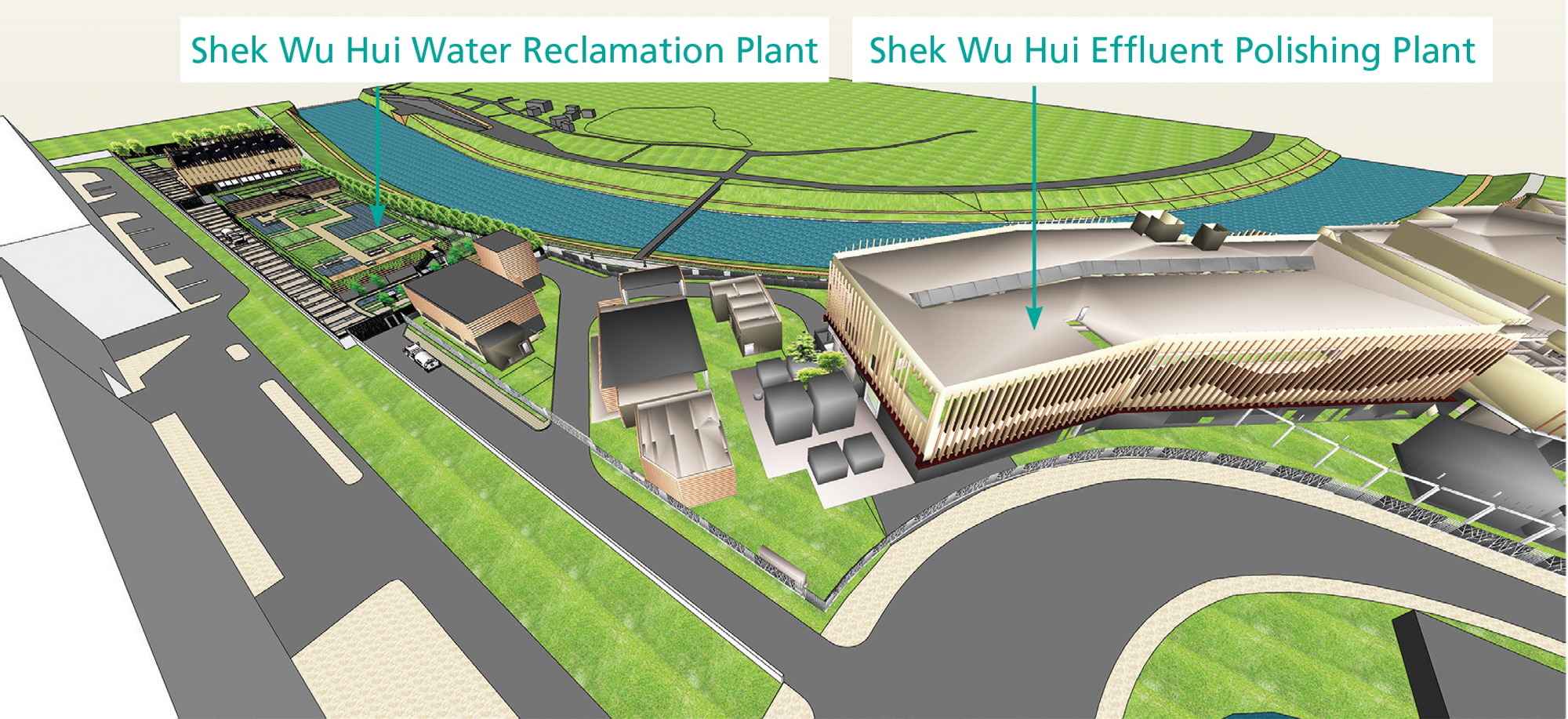
The WSD and the DSD have taken the opportunity of the reconstruction project and collaborated in promoting a large-scale reclaimed water project by constructing the Shek Wu Hui Water Reclamation Plant adjacent to the Shek Wu Hui Effluent Polishing Plant to produce reclaimed water at a lower cost. The treated sewage effluent, which has undergone tertiary treatment at the Shek Wu Hui Effluent Polishing Plant, will be sent to the Shek Wu Hui Water Reclamation Plant for processing. Sodium hypochlorite will be added to the treated sewage effluent to remove pathogenic bacteria. The treated water, i.e. reclaimed water, will still contain an appropriate amount of residual chlorine to ensure that it is free from bacterial contamination during its delivery to customers. As the reclaimed water is colourless and odourless, food colouring will be added as an additional precautionary measure before delivery to the service reservoir. Consumers will be able to distinguish reclaimed water from potable water with the naked eye.
Shek Wu Hui Water Reclamation Plant, with a daily production capacity of 73,000 m³ of reclaimed water, began construction in July 2021, and is expected to be completed in phases starting from the first quarter of 2024. Supply of reclaimed water will be made available in phases to the North East New Territories (including Sheung Shui, Fanling and Kwu Tung North/Fanling North New Development Areas) for non-potable uses such as toilet flushing. The whole project is expected to be completed by the end of 2026. This is the first time reclaimed water will be used for domestic flushing purposes on a large scale in Hong Kong.
In line with the new development approach of "Bringing Forward Infrastructure Construction" and "Increasing Development Capacity", the WSD is now planning the water supply infrastructure for major new developments. As mentioned above, the WSD is developing new water resources to meet Hong Kong's long-term sustainable development needs. A new desalination plant (see the article "Desalination as a Strategic Water Resource" in Chapter 2) is being planned. It is also considering the deployment of supply infrastructure for reclaimed water and grey water treatment in new development areas, while planning and constructing a number of major water infrastructure projects, including service reservoirs, pumping stations and trunk mains laying. These proposed waterworks facilities will increase the city’s water supply capacity and pave the way for future development.
Food Colouring is added to the treated effluent at the water reclamation plant to identify it for reuse. Guess which colour is added?
(Select one of the following colours you think is correct. Water Save Dave will tell you the correct answer.)
Reclaimed water can be used for the above three non-potable purposes.