


Reservoirs are the most important storage facilities for raw water. Reservoirs and water gathering grounds are both subject to regulation under Hong Kong’s Waterworks Ordinance and the Country Parks Ordinance. Managing reservoirs is crucial for managing water resources and serves as the primary protective safeguard for the quality of drinking water. It is therefore crucial to also allocate adequate resources to ensure proper maintenance of all water facility components.
Challenges to a Reservoir’s Ecological Environment
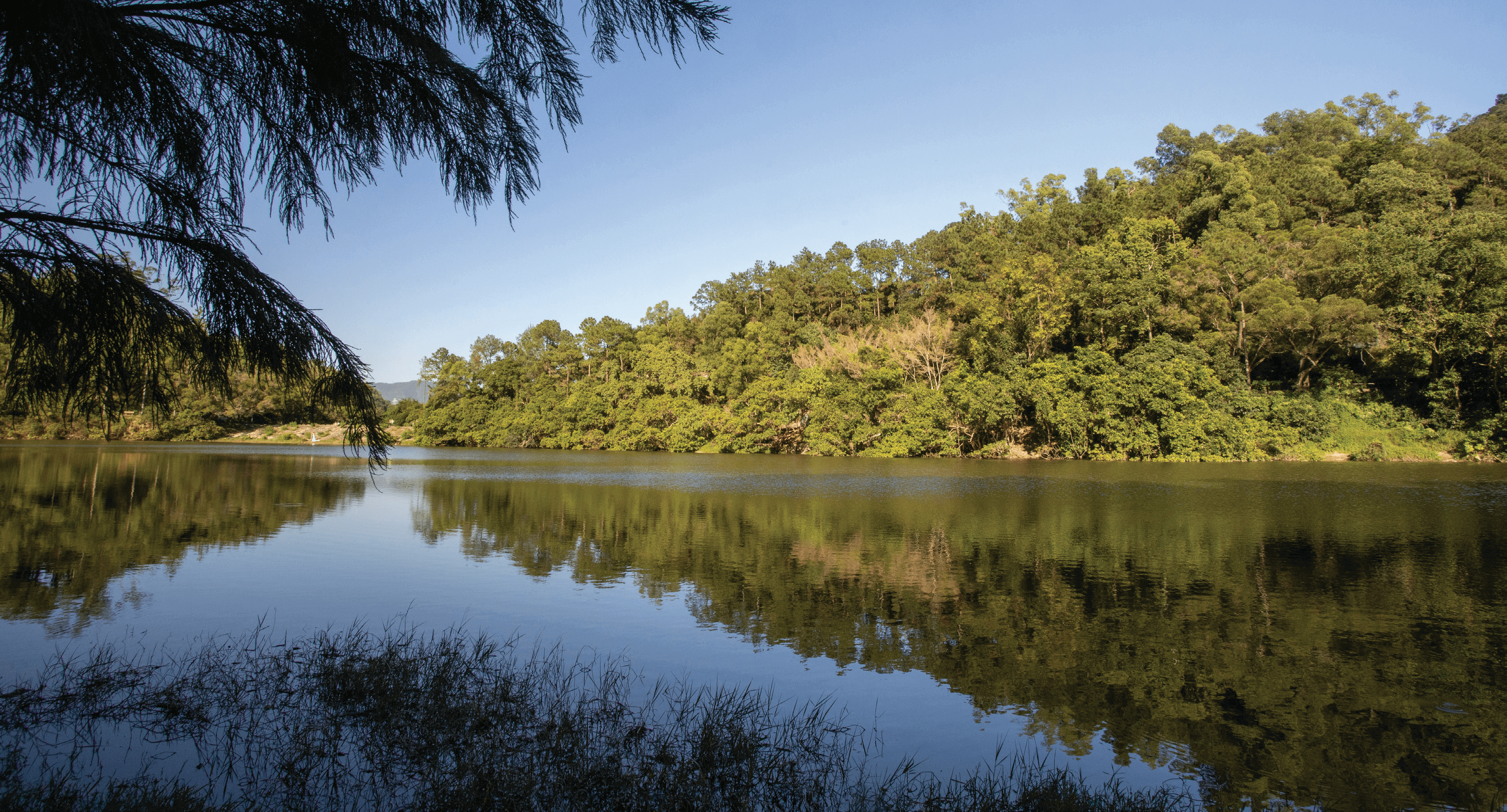
The majority of Hong Kong's reservoirs are situated in the upper parts of river valleys. Rivers are diverted with dams built to create artificial fresh water ecosystems. Water levels in reservoirs naturally increase with rain and again decrease when the water is transferred to various water treatment works. These rapid and significant changes in water levels make it challenging for aquatic plants and animals to adapt to their habitat. As a result, it is difficult for a reservoir to become a fully mature and stable ecosystem. Sometimes, nutrients may accumulate when water circulation is slow. During hot weather with its intense sunlight in summer time, the growth of algae on the water surface can be triggered. This can reduce the clarity of the raw water and cause odour and taste issues, ultimately inducing pressure to subsequent water treatment procedures.
A Natural Reservoir Scavenger
Plover Cove Reservoir, Tai Lam Chung Reservoir, Shing Mun Reservoir and Kowloon Reservoir have previously been found to be particularly prone to algal proliferation. For this reason, since the 1980s the WSD began to explore fish stocking for the natural ecological regulation of reservoirs. Natural ecological regulation uses the feeding habits of different fish species to remove algae in reservoirs, thereby maintaining the quality of the raw water. The WSD regularly releases fish fry, such as silver carp, bighead and mud carp, into these reservoirs. Each fish species plays a different role in different locations to control algal proliferation
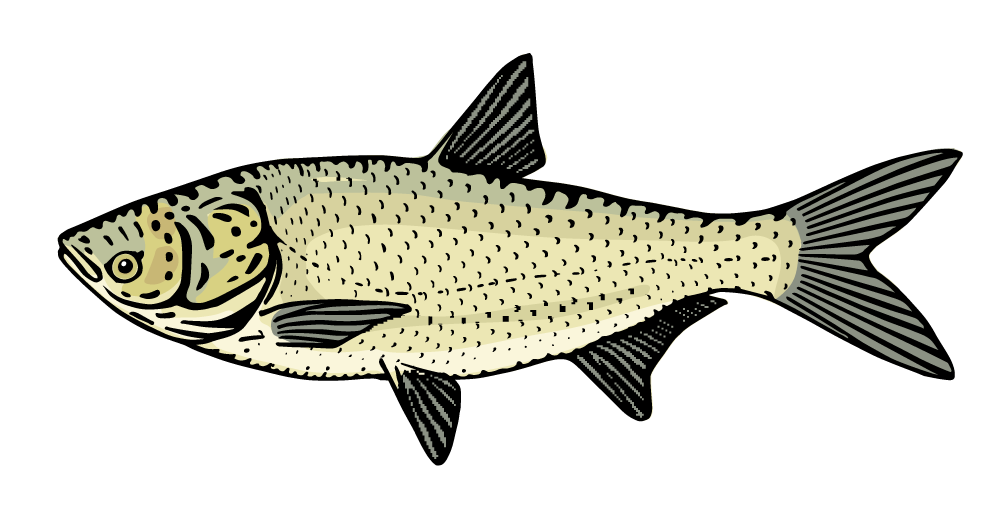
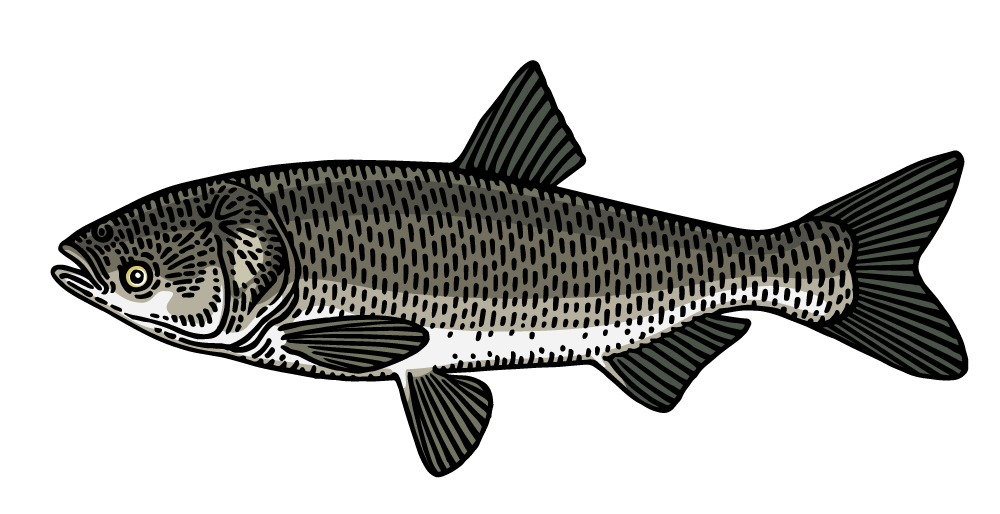
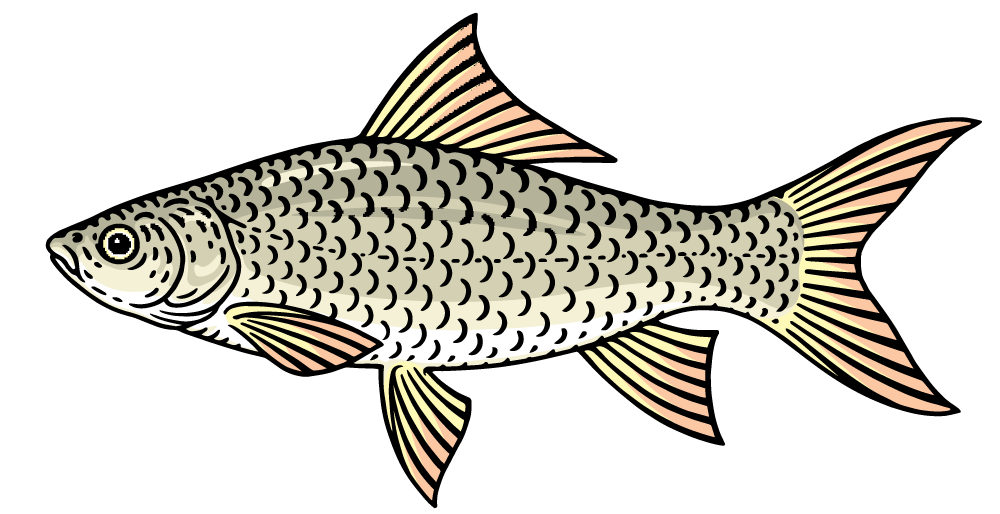
Fishermen in the Reservoir
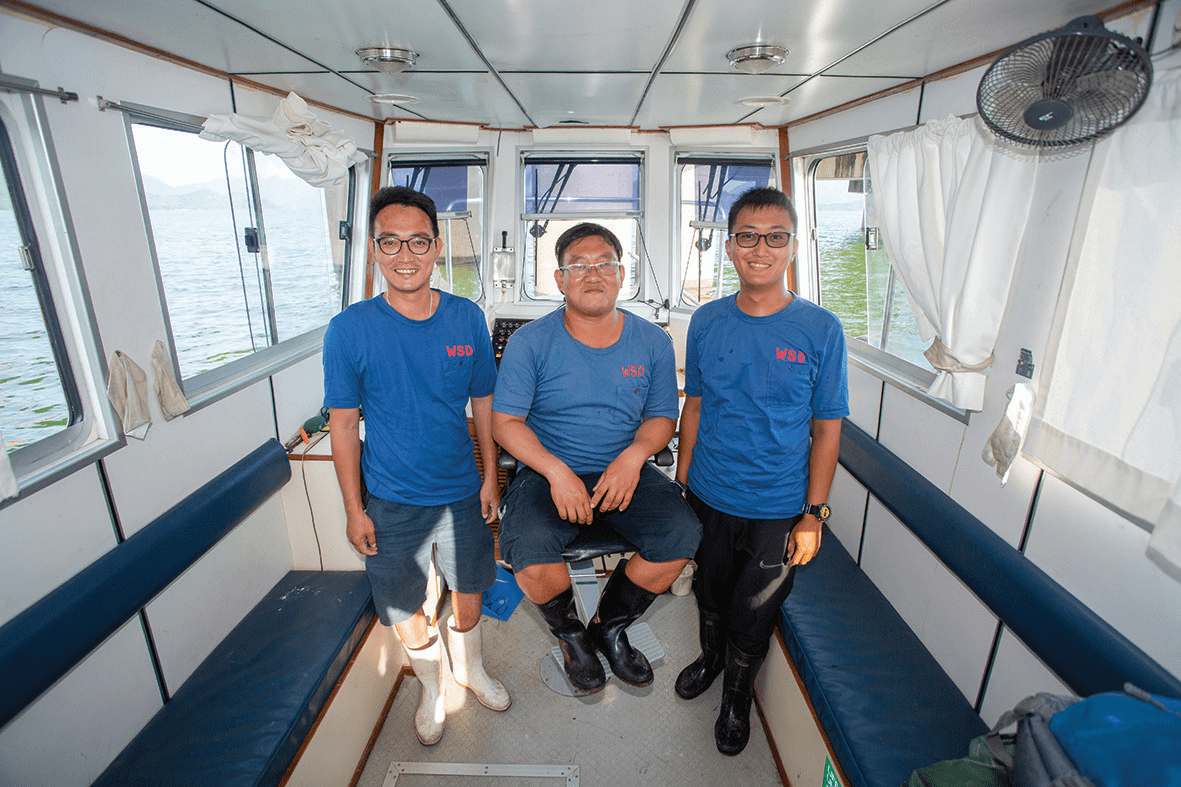
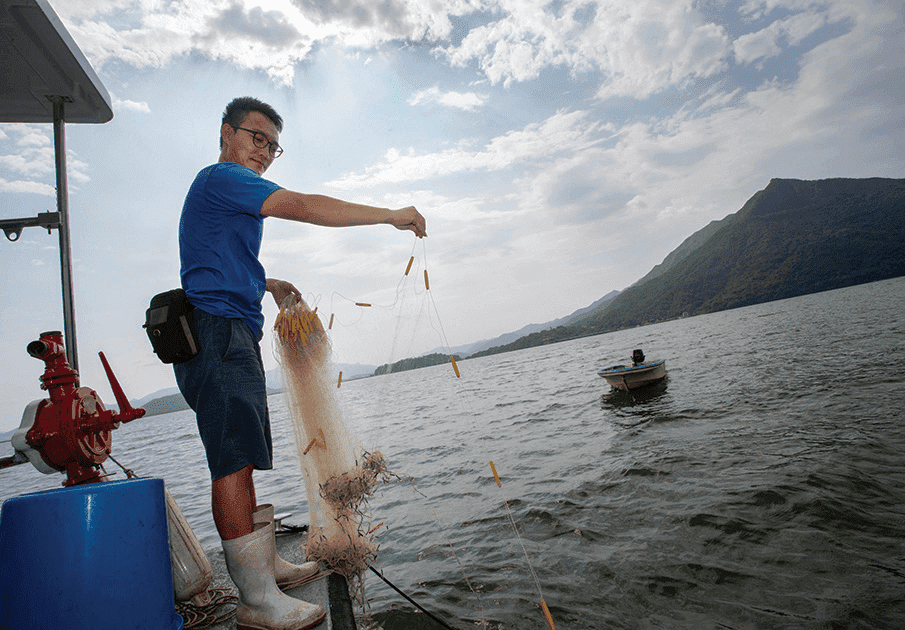
The Artisans (fishing), also known as "reservoir fishermen," are the front-line staff who manage the reservoirs. Prior to joining the WSD, they had experience in the fishing industry and are adept at working on boats. Together with the Launch Master, they form the reservoir crew team and regularly conduct gill-net surveys at various monitoring points. Unlike ordinary fishermen, the fish they catch are not for consumption, but for recording basic information, such as species, size and quantity. The monitoring of changes in the fish population and species of fish maintains the ecological balance of reservoirs.
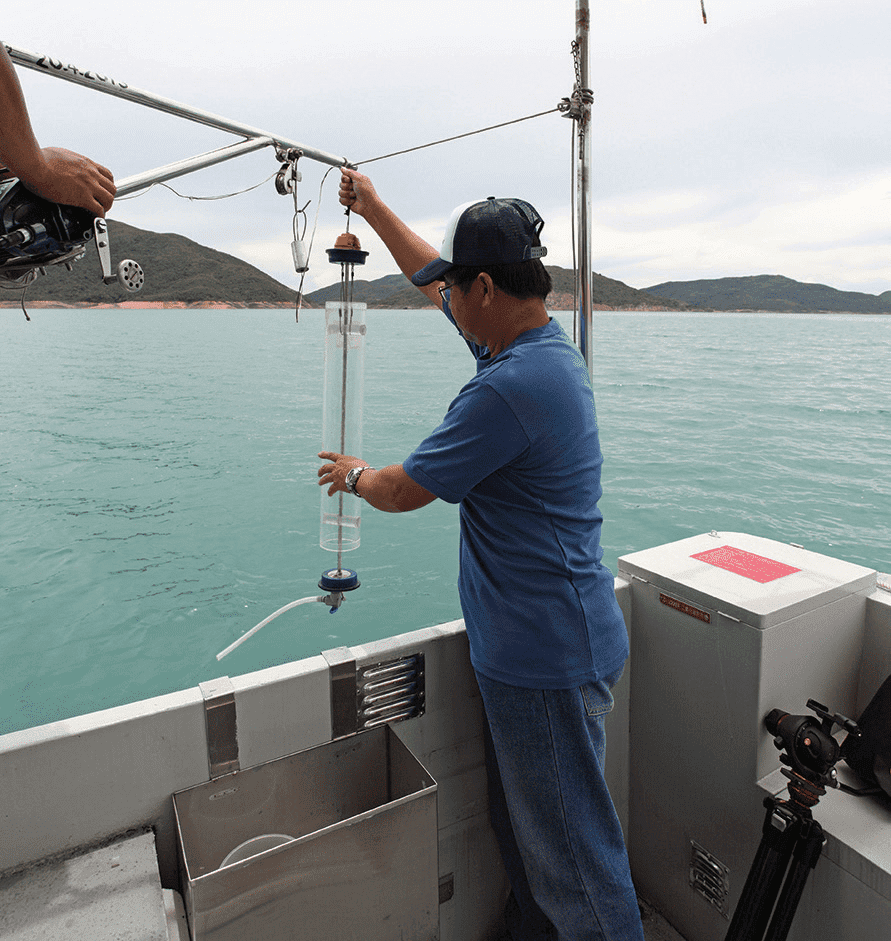
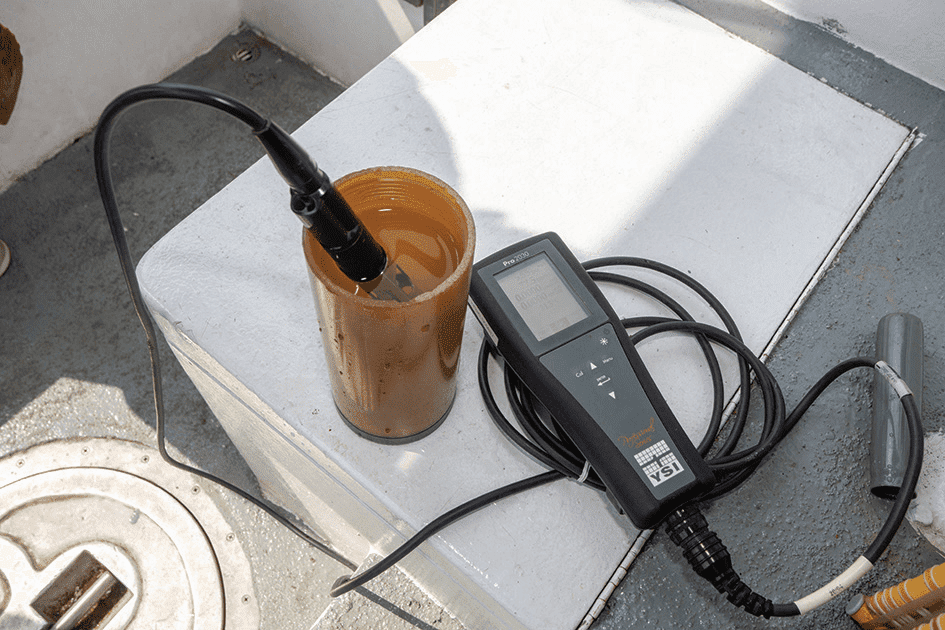
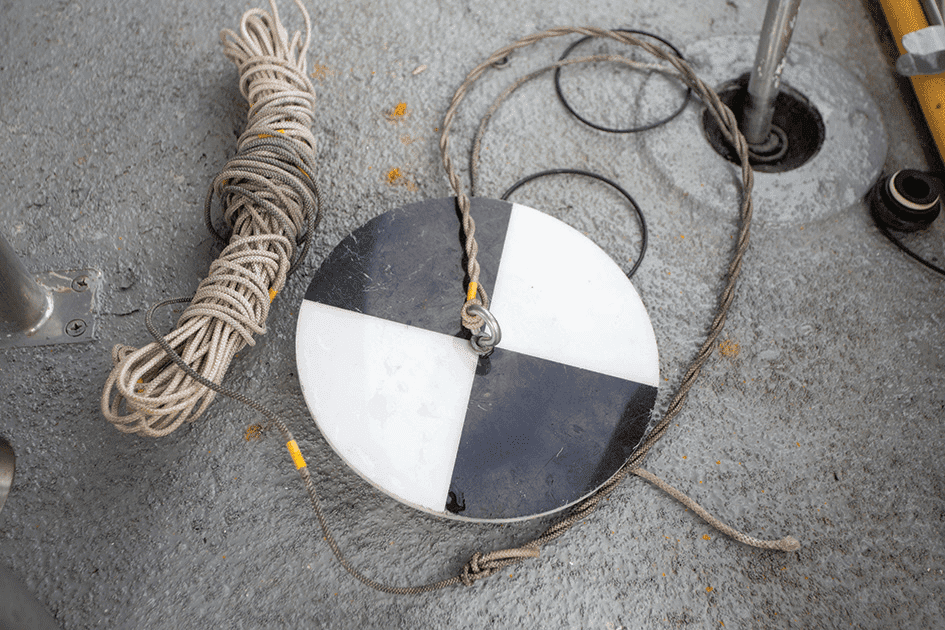
The crew team is also responsible for taking water samples from reservoirs. Due to the large surface area and capacity of reservoirs, there is an uneven distribution in reservoir water quality depending on various factors, such as the duration of sunshine, wind direction and rainfall, etc. The crew team must collect water samples at different monitoring points and depths for laboratory analysis, so as to monitor the reservoir water quality.
The crew team works in the reservoirs every day regardless of the weather. Reservoirs, however, are not always calm with clear water, and during unstable weather, large surface waves might form. During heavy fog, distances become difficult to judge and the crew team relies on their fishermen's experience. A thorough understanding of a reservoir, including known danger areas and which locations should be avoided has been recorded over the years.
“The experience of our frontline staff is important," says Launch Master YIP Chi-on, adding that the water level in reservoirs changes from time to time. "When the chemist is setting the water quality monitoring route for the unmanned surface vessel (USV), the crew team will provide advice. For example, there may be reefs at the bottom of the reservoir in some locations, and this information will help to adjust the USV routes during the times of low water-level.”
Monitoring Water Quality by Unmanned Surface Vessels
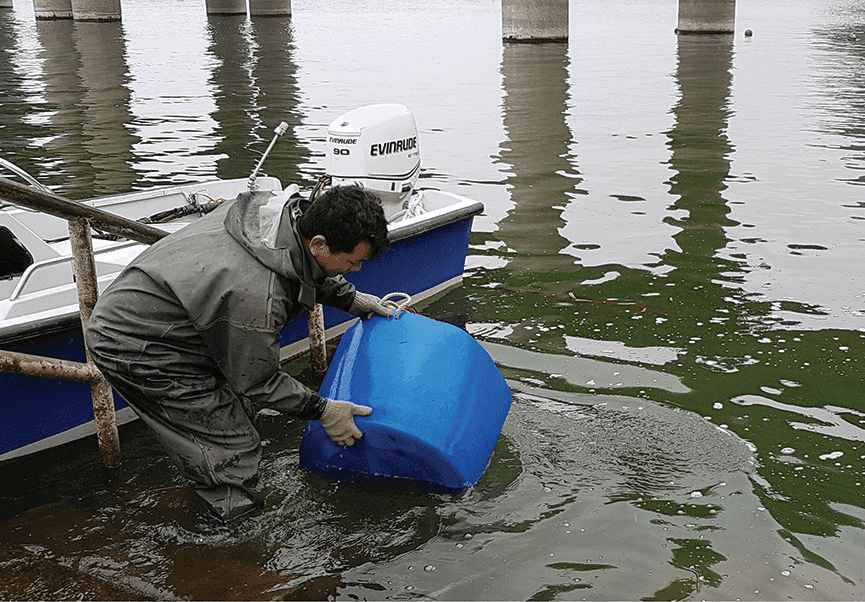
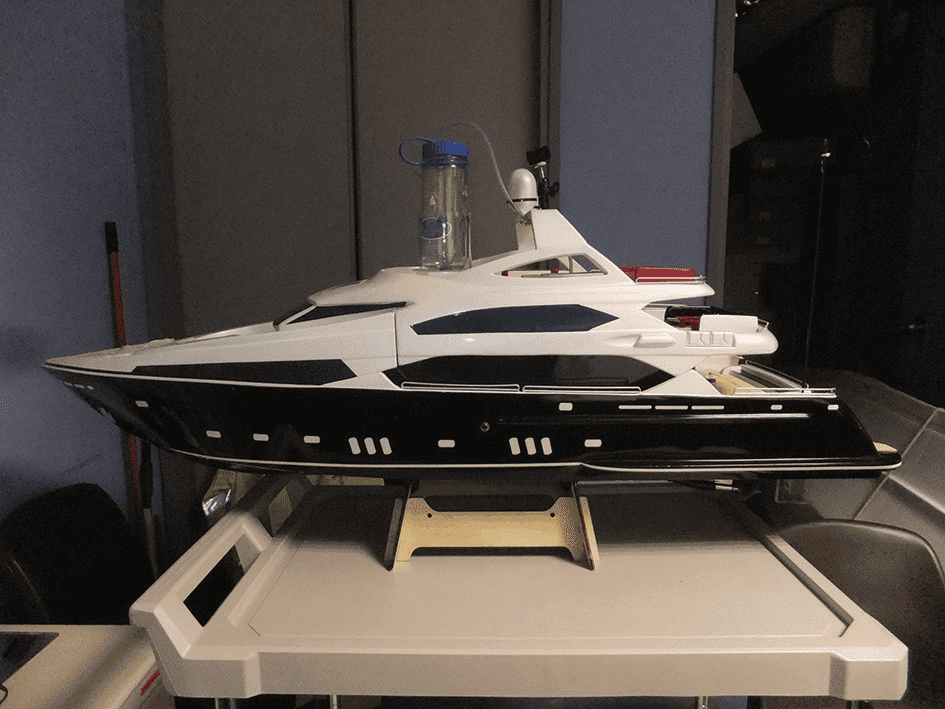
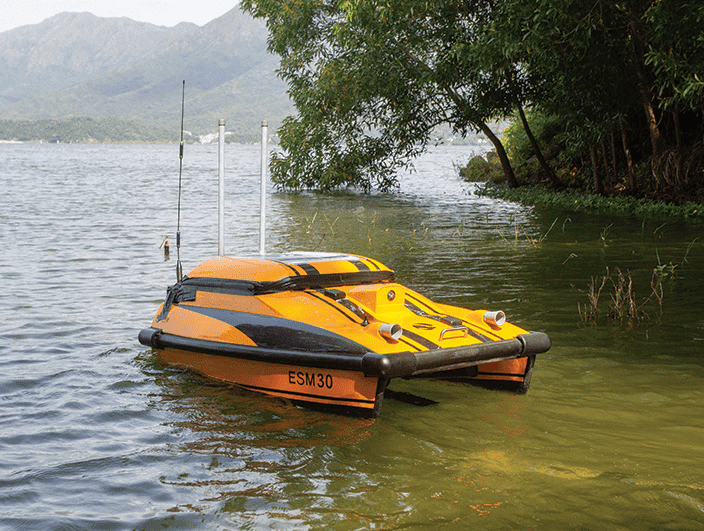
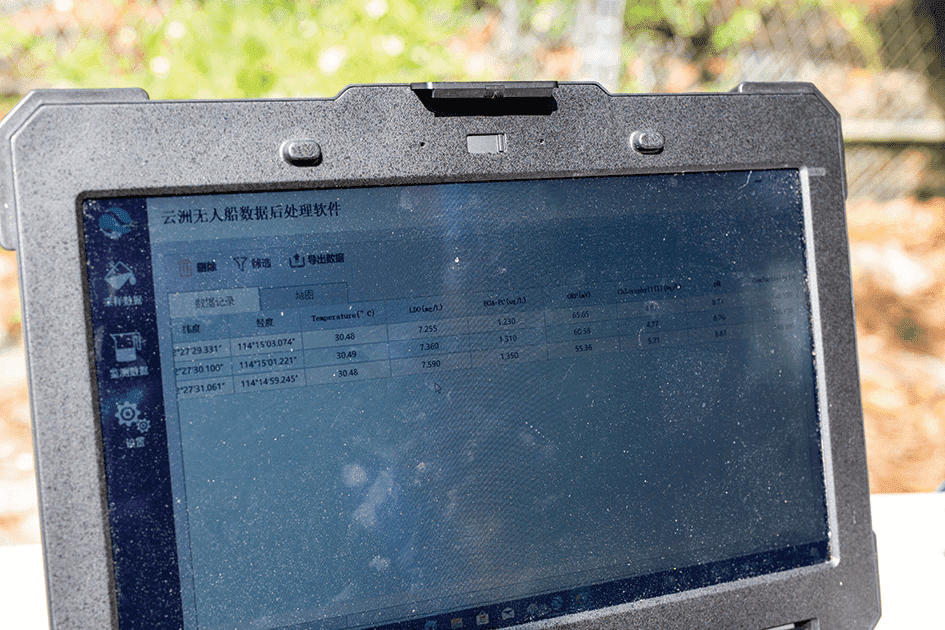
The WSD’s Water Science Division introduced the USV system in 2011 to further enhance and to keep abreast the monitoring of water quality in reservoirs. The first USV was converted from a remote-controlled commercially available recreational boat. The WSD staff installed water suction pumps and sample bottles on board to automatically collect water samples. The second and third generations of USVs were gradually equipped with water quality analysis and global positioning devices. The fourth generation USV system currently in use at the Plover Cove Reservoir was jointly developed by the WSD and its supplier. The USV system now uses four vessels for parallel monitoring of surface water quality. The USVs automatically follow a pre-set route in the reservoir following signals received from the base station. Water quality data will then be sent back to the base station computer for real-time analysis. The WSD has installed a solar panel system on the exterior of the USV storage house at Plover Cove Reservoir. This generates electricity for use by the USVs and reduces carbon emissions.
Compared to water quality monitoring using conventional vessels, USVs can access narrow or shallow parts of reservoirs due to their small size. They allow coverage of more monitoring points at the same time, making them more efficient. In case of water quality emergencies, the easily transportable USVs can be deployed to other reservoirs. Nevertheless, the traditional manual collection of water samples cannot be fully replaced by USVs and the two methods efficiently complement each other. In fact, many related tasks, such as assisting in the set-up and retrieving of USVs, have become new responsibilities for the crew team; meanwhile, the application of new technologies also brings new challenges.
Floating Solar Power Systems
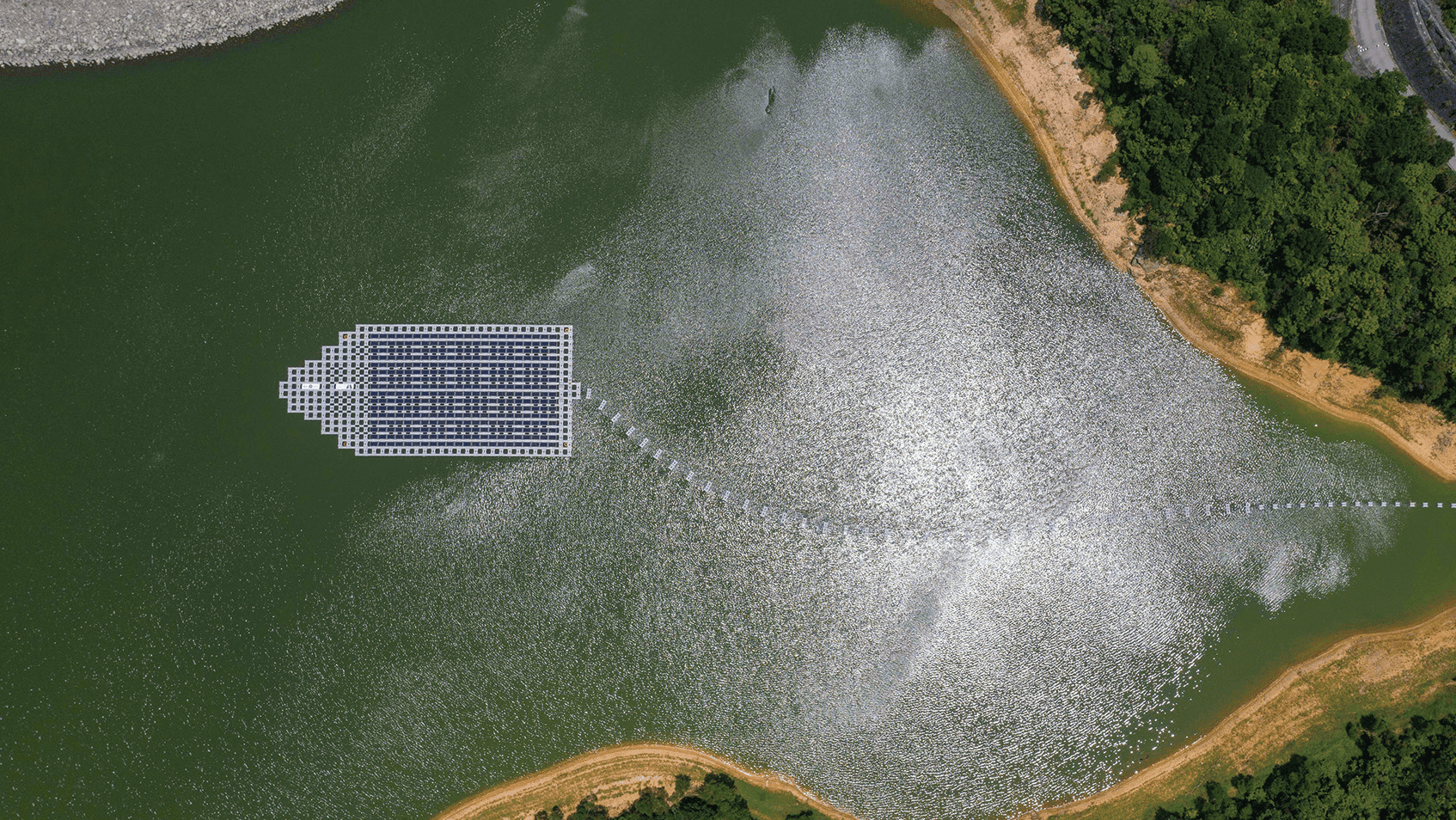
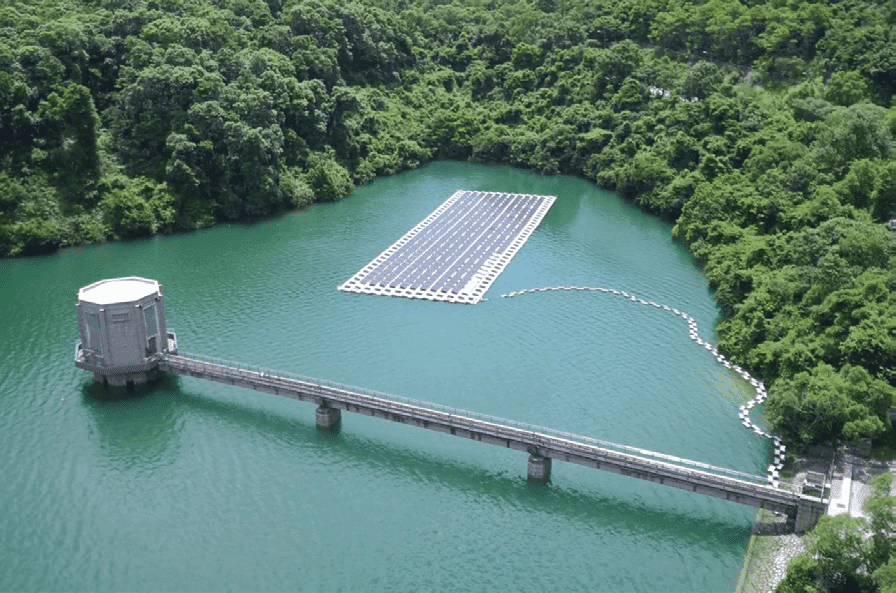
The WSD has been implementing various energy conservation measures to combat the impact of climate change. As well as enhancing energy efficiency in its operations, the WSD is looking into using renewable energy for its water supply facilities. In recent years, floating solar farms have been rapidly developed worldwide. In 2017, the WSD took the lead in installing two floating solar power systems at the Shek Pik Reservoir and Plover Cove Reservoir as a pilot project to demonstrate their feasibility and evaluate their performance.
A floating solar power system is a type of power generation system consisting of a floating platform and solar photovoltaic (PV) panels installed on a water surface. Compared with conventional solar power systems, the floating solar system’s design is an excellent choice for Hong Kong because it makes use of the water surface of the reservoirs without using limited land resources.
Floating solar farms can be used in different bodies of water, including the sea, rivers and even the pit lakes of abandoned mines. SIU Ka-shun, the WSD’s Electrical Engineer responsible for renewable energy explains: “When installing solar farms on Hong Kong reservoirs, it is crucial to consider the technical aspects and its impact on water safety and the ecosystem. The Hong Kong public places great importance on water safety, hence all materials used in the project must comply with international water safety standards. Hong Kong’s reservoirs are also situated in country parks with a high ecological value. The WSD has made appropriate arrangements for the design, material selection and construction methods to minimise the impact on the environment. For instance, a modular design for easy component assembly has been adopted for floating platforms and anchorage systems to facilitate installation and to avoid the use of heavy machinery at construction sites. This reduces the risk of adverse impact to water quality during the assembly operations.”
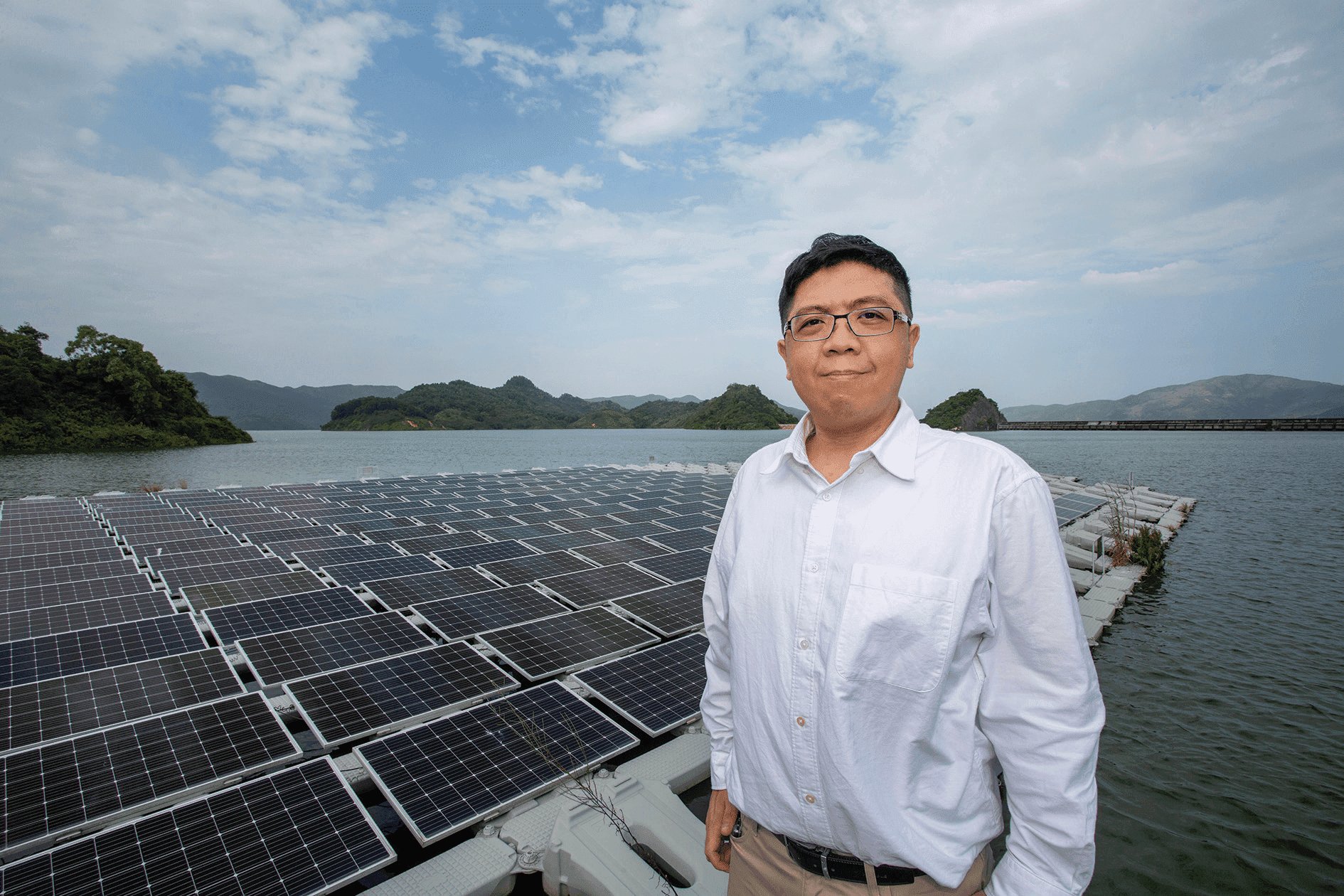
Water samples are regularly taken from different locations in reservoirs for testing. After installation of the floating solar power system, the test results indicate no water quality abnormalities. The solar PV panels are intentionally placed to avoid direct sun exposure. This helps to reduce water evaporation and improve the raw water quality by inhibiting the growth of algae in ponds.
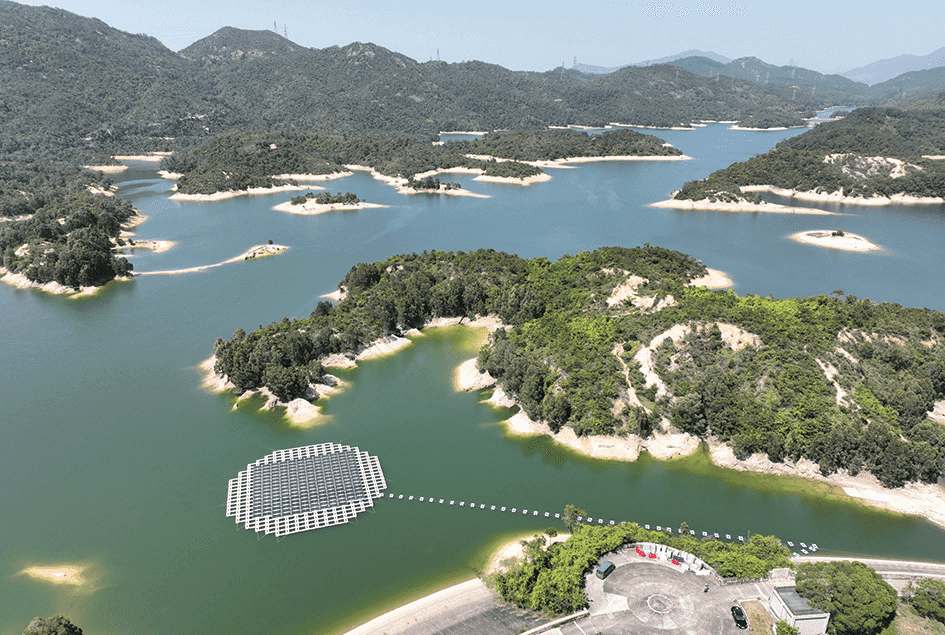
The two pilot floating solar power systems, each consisting of 352 panels, are mounted on a floating platform. The WSD has adopted different ideas in the system design to implement the floating solar system to blend into the environment. Further consideration about the visual appearance of the installations was given for the third floating solar power system installed at the Tai Lam Chung Reservoir in 2022. SIU explains, "As the name of Plover Cove Reservoir is ‘Boat’ Bay in Chinese, we have designed the system in the shape of a boat. The Tai Lam Chung Reservoir, commonly known as 'Thousand Islands Lake', features a circular design to blend in with the surrounding island cluster. We have studied and compared data from both designs while evaluating the fluctuating nature of the system depending on water levels. We still need to ensure that the solar system’s performance is not affected by their visual design."
Floating solar power systems in reservoirs are usually installed near waterworks facilities. They generate electricity and send it through cables to nearby raw water pumping stations or air compressor houses. The large empty space around the reservoir increases the exposure of the panels to sunshine, additionally the water’s cooling effect on the panels facilitates more efficient power generation. Currently, each system can generate up to 120,000 kilowatt-hour of electricity per year, which is equivalent to a reduction of 84 tonnes of carbon emissions.
These pioneer projects offer solid reference data to support Hong Kong’s ongoing efforts to cultivate renewable energy use and prepare for the implementation of larger floating solar power systems.