



| When it comes to controlling the demand for water, conservation is a key tool. We exercise this tool in many ways – along the supply pipeline to stem water loss through system leaks and by using community conservation that calls for contributions from consumers. |
| WATER LOSS MANAGEMENT INITIATIVES | |||||||||||||
|
|
||||||||||||
| PROMOTING WATER EFFICIENT APPLIANCES |
|
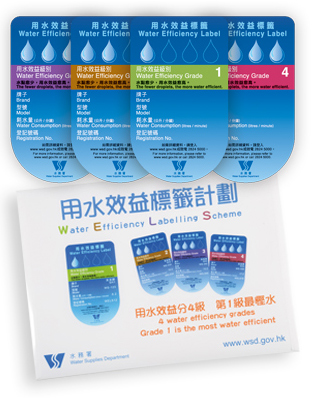
The Water Efficiency Labelling Scheme (WELS) was introduced in 2009 to encourage consumers to use appliances and equipment that conserve water. The scheme began with labels for water efficient showers for bathing and has since been extended to include labels that identify water efficient taps, washing machines and urinal equipment. Private developers have been encouraged to prioritise the use of these devices and other water conservation features in both new developments and buildings that are being renovated or retrofitted. The Department has worked closely with the Hong Kong Green Building Council and the Building Environmental Assessment Method Plus Scheme to formally recognise designs that contain conservation features. The number of credits awarded are determined by the annual water saving and water conservation features adopted. Our own programme of retrofitting plumbing fixtures with water saving devices in existing government buildings and schools has continued over the past year. |
 |
| RAISING PUBLIC AWARENESS |
|
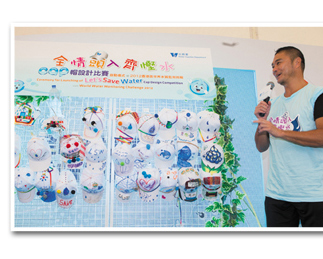
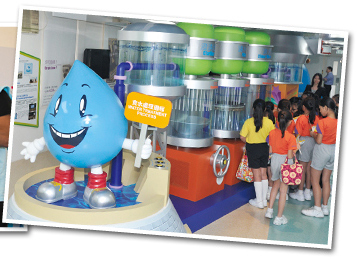
Last year we launched a domestic water consumption study that involved more than 1 000 homes. The study results gave us a clearer understanding of consumption habits in households and the effectiveness of our water conservation programmes. Despite a population growth of 100 000 people since 2010, the demand for fresh water remains at the same level. New conservation awareness initiatives launched over the past year have been based on survey findings. We have established the temporary Water Resources Education Centre at our offices in Mong Kok, primarily to foster interest and understanding about water amongst students. The centre is also open to the general public and features exhibitions, live demonstrations and interactive games, all of which focus on the importance of water conservation. The Centre and its exhibits will move to a permanent location at our New Territories West regional office in Tin Shui Wai. Open days at water treatment facilities during the year continued to help people understand the operational aspects of Hong Kong's supply system while travelling road shows to schools focused on the water cycle, water treatment options and the scarcity of water in parts of the world. Publicity campaigns deliberately target students and school children, working on the principle that a youngster will take strong water conservation messages home to his or her family. Competitions are used in many of our campaigns and the main themes used over the past year for both adult and school competitions alike focused on practical water saving ideas that can be adopted for homes. Awards and citations were announced at ceremonies and winning entries were exhibited at the Sai Kung Jockey Club Town Hall, the Cheung Ching Estate Community Centre and the Leighton Hill Community Centre. Art and design also featured in a special cap design competition for schools. Students were invited to use the “Save Drops for Tomorrow” theme to decorate sports caps. More than 5 000 design submissions were received. |
| WATER EFFICIENCY REVIEW |
|
The Department conducts water efficiency reviews to study water use in selected public facilities and develop best water efficiency practice guidelines for those facilities. The objective is to reduce overall water consumption. The review process began with our own installations and has been extended to the parks and swimming pools operated by the Leisure and Cultural Services Department. The process enables us to develop water saving guidelines without compromising the level of services provided to the public.
|
| ILLEGAL WATER USE |
|
It is an offence under the Waterworks Ordinance (WWO) to draw water illegally from the waterworks without a metered measurement by the Water Authority. The Department is responsible for administering the Ordinance and for taking enforcement action against infringements. Bulk meters have been installed at some existing large housing estates and in rural villages to monitor consumption and identify leakage and unauthorised use. Over the past 12 months, the Department's Prosecution Unit instituted 63 prosecutions against illegal use of water, resulting in convictions in all cases. We have also achieved all the following performance targets:
|
|